2026 House election live results as Democrats and Republicans vie for majority control
The 2026 House election is shaping up as a pivotal moment for control of the House of Representatives.
By News Media House Staff ·
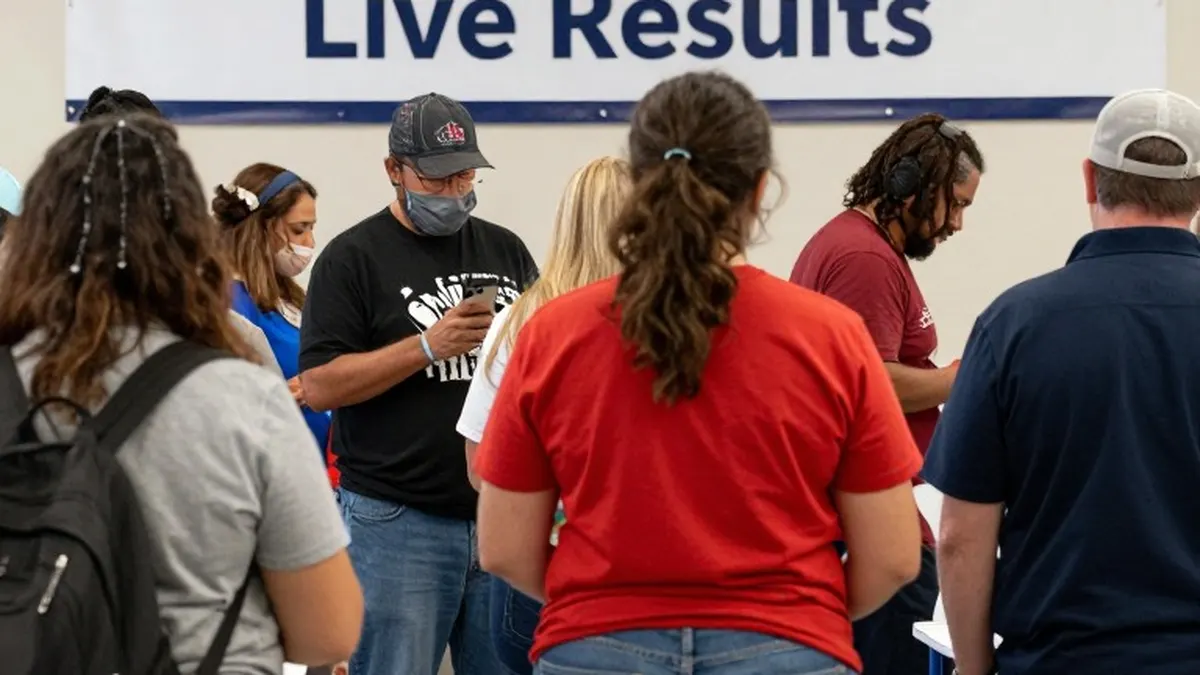
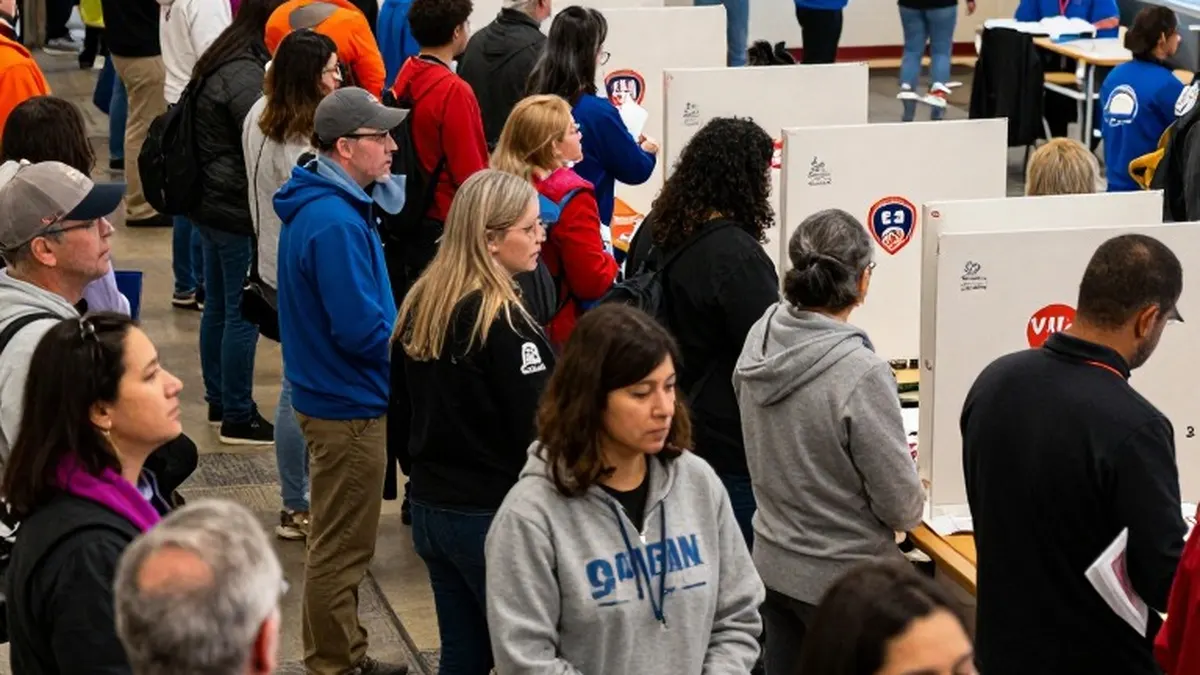
The 2026 House election is shaping up as a pivotal moment for control of the House of Representatives. Polls have begun to close, with all 435 seats in the House of Representatives on Tuesday. The current makeup of the House is 218 Republicans, one independent who caucuses with Republicans, and 214 Democrats, with two vacancies.
Republicans, who have had control of the House since 2023, are defending their narrow majority as affordability issues remain a concern, and the Iran war and President Trump's tariffs have driven up Americans' everyday costs. At the president's urging, Republicans in several states, including Texas and Florida, have shifted to give the GOP an edge in the midterm elections. California was the only Democratic-led effort that was in to counter Republican redistricting.
House Minority Leader Hakeem Jeffries told reporters Tuesday night that Democrats are on the verge of taking back control of the House, but added that they take nothing for granted. We're going to continue to run through the finish line, he told reporters in Washington, D.C. The early vote numbers were strong, and today's vote numbers all across the country are strong in blue states, in swing states and in red states. Jeffries declined to predict how many seats Democrats could win, saying we're working hard to get to 218, and then to win as many seats as we can on top of that.
As of 7 p.m. Eastern, polls have closed in Kentucky, Indiana, Georgia, South Carolina, Virginia and Vermont. The most competitive House races in those states include Kentucky's 6th District, South Carolina's 1st District, Virginia's 1st District, and Virginia's 2nd District.
Here's where control of the House stands: Johnson navigated razor-thin majority defined by GOP divisions. House Speaker Mike Johnson navigated a razor-thin majority during the 119th Congress, two years that were marred by government shutdowns, misconduct scandals and GOP infighting that often stalled the party's agenda. The president's shifting demands made Johnson's job more complicated and the Louisiana Republican had to lean into Mr. Trump to get holdouts on board for important votes.
The defiance on a number of politically sensitive issues ranging from the release of materials related to convicted sex offender Jeffrey Epstein, reining in Mr. Trump on Iran and a vote to impeach Defense Secretary Pete Hegseth coincided with Johnson sending members on recess days, sometimes weeks, early. Lawmakers were last in Washington for votes on Sept. 16, leaving town more than six weeks before Election Day.
Republicans in Congress have also ceded their powers to the White House on tariffs, declaring war and government funding decisions.
Exit polls: Roughly 6 in 10 say Trump is a factor in their vote for the House. President Trump is on track for the lowest approval rating for a president in a, according to early exit polls. Currently at 38%, it's lower than it was during Mr. Trump's first term, and lower than it was for George W. Bush in 2006 when his party lost both houses of Congress.
Midterm elections have often been a referendum on the sitting president, and this one is no exception. Roughly six in 10 say Mr. Trump is a factor in their vote for the House. This is being driven largely by voters backing Democrats, who are overwhelmingly motivated by opposition to Mr. Trump.
But for those backing Republicans, it's less about the president. Back in 2018, most Republican voters said their vote was to support Mr. Trump. That figure is lower today.
Ballot scanners malfunctioning in New York's 17th District. Officials in New York's Westchester County, which includes part of the competitive 17th District, reported issues with ballot scanners Tuesday morning.
GOP Rep. Mike Lawler is in a tough race against Democratic candidate Cait Conley in the district.
The New York State Board of Elections said the problems with the machines were the result of a late programming change in one municipality. A change affecting a contest in one municipality required updated election programming, which was subsequently tested and deployed for early voting and for Election Day machines in that municipality. However, Election Day machines elsewhere in the county continued to use the original programming and therefore could not recognize and accept the ballots being used for Election Day.
In the meantime, voting continues through established emergency ballot procedures. Completed ballots are securely maintained under bipartisan oversight and will be scanned and counted in accordance with established procedures.
The board added that every valid vote will be counted.
On Tuesday afternoon, Lawler told reporters that Democrats and Republicans were working together to resolve the issue.
We've been working in a bipartisan way, Republicans and Democrats, both campaigns, both state parties, both national committees, to come to a solution working with the Westchester County Board of Elections and the State Board of Elections.
Both Lawler and Conley urged voters to stay in line and vote.
Democratic-held districts Trump won in 2024. Under the 2026 boundaries, President Trump won 22 districts in 2024 that are currently represented by Democrats.
They are Alabama's 2nd District, Florida's 9th District, Florida's 14th District, Florida's 22nd District, Florida's 25th District, Louisiana's 6th District, Maine's 2nd District, Michigan's 8th District, Nevada's 3rd District, New Jersey's 9th District, New Mexico's 2nd District, New York's 3rd District, North Carolina's 1st District, Ohio's 1st District, Ohio's 9th District, Tennessee's 9th District, Texas' 9th District, Texas' 28th District, Texas' 32nd District, Texas' 34th District, Texas' 35th District, Washington's 3rd District.
Under the old 2024 boundaries, before several states redrew their congressional maps, there were 13 ticket-splitting districts. From the above list, they included: Maine's 2nd District, Michigan's 8th District, Ohio's 9th District, Michigan's 8th District, Nevada's 3rd District, New Jersey's 9th District, New Mexico's 2nd District, New York's 3rd District, North Carolina's 1st District, Texas' 28th District and Washington's 3rd District.
The president also won California's 9th District, represented by Rep. Josh Harder, and California's 13th District, represented by Rep. Adam Gray.
GOP-held districts Kamala Harris won in 2024. Under the 2026 boundaries, then-Vice President Kamala Harris won eight GOP-held districts.
They are California's 1st District, California's 3rd District, California's 41st District, California's 48th District, Nebraska's 2nd District, New York's 17th District, Pennsylvania's 1st District, Utah's 1st District.
Under the old 2024 boundaries, there were just three Republicans who won in districts carried by the Democratic presidential nominee, Bacon, Fitzpatrick and Lawler.
House Speaker Mike Johnson: The polls are wrong. My bird's eye view and what I've observed myself going around the country. I've been in more swing districts in more blue states than anybody in the whole cycle by far, OK, the polls are wrong right now.
The polls are underestimating support for Republican candidates because nobody wants to pick up the phone and talk to a pollster.
The president's party typically loses House seats in midterm election. Midterm elections are typically rough for the sitting president's party, when members of Congress lack the allure of a presidential candidate atop the ballot to galvanize voter turnout.
Members of the president's party also have to reckon with their leader's sinking approval ratings and the subsequent voter backlash.
Since 1934, there have been just three instances in which the sitting president's party has gained House seats in non-presidential election years, according to the American Presidency Project.
The last time was in 2002, when President George W. Bush had a strong approval rating after the 9/11 terrorist attacks and Republicans added eight seats to their majority. Democrats gained four seats in 1998 when Bill Clinton was in office, though Republicans still retained the majority. Democrats added nine seats to their majority in 1934 during Franklin D. Roosevelt's presidency.
House majority up for grabs. Of the 435 House seats on the ballot, more than 40 are considered competitive. CBS News considers 17 of those races toss-ups, with 13 held by Republicans and four by Democrats.
Republicans have had control of the House since 2023, after four years with Democrats in the majority. Republicans took the reins during the final two years of President Joe Biden's four years in the White House and held on to power for the first half of President Trump's second term.
Republicans currently have 219 seats, which includes one independent who caucuses with the party. Democrats have 214. There are two vacancies that were not filled after the resignations earlier this year of Reps. Tony Gonzales, a Texas Republican, and Sheila Cherfilus-McCormick, a Florida Democrat.
Democrats need a net gain of three seats to win back control of the lower chamber. Republicans in seven states tried to blunt their effort with mid-decade redistricting that sought to give them an advantage in 15 additional districts by making them more favorable to the GOP.
Democrats countered the move by redrawing congressional districts in California, which made five seats less favorable to Republicans.
Originally published by News Media House · Source: CBS News
More News · National news · Report a business · Got a Story?