Blur Closes as NFT Market Enters a New Phase of Consolidation
The shutdown of major marketplace Blur marks the end of an era for nonfungible tokens, prompting experts to analyze the lessons of the five-year boom and bust cycle.
By News Media House Staff ·
The digital asset landscape is undergoing significant changes as Blur, previously the largest marketplace for Ethereum-based nonfungible tokens, has shut down its website. This development comes five years after NFTs experienced a massive surge in popularity and trading activity. The closure of such a prominent platform serves as a clear indicator that the frenetic energy of the initial boom has largely dissipated.
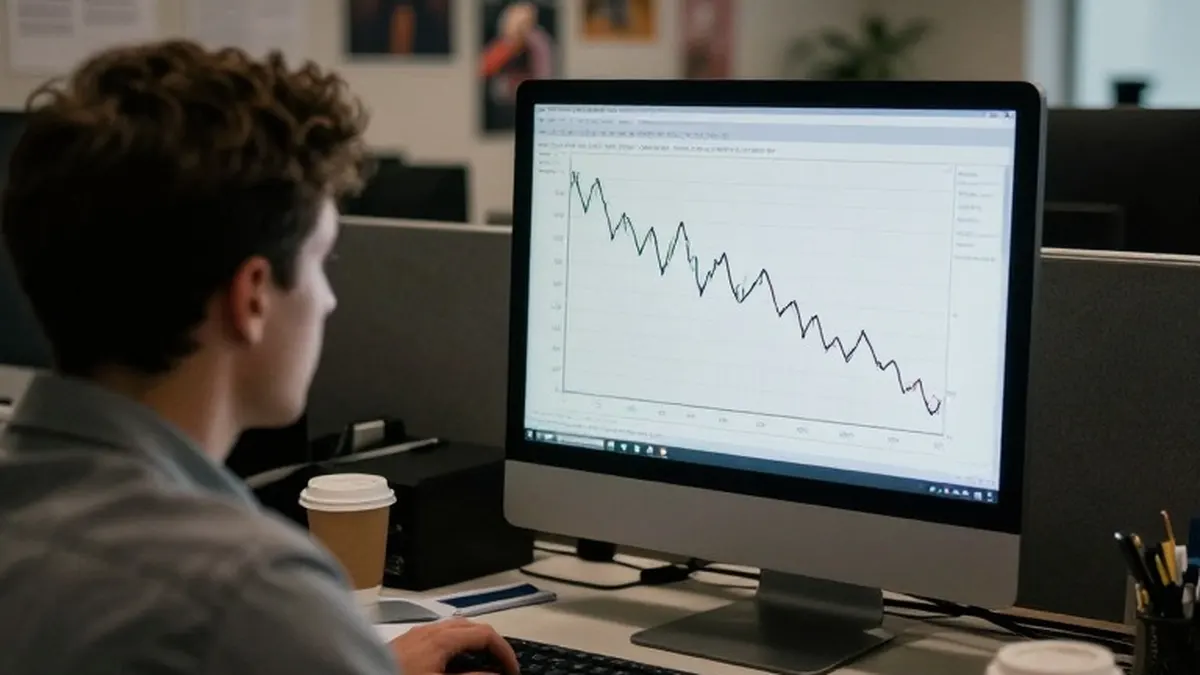
According to data from CryptoSlam published by The Block, the trajectory of the NFT market has been dramatic. In late 2020, weekly trading volume across major blockchains was approximately $4.4 million. By August 2021, that figure had skyrocketed to a peak of $3.2 billion. Since that high point, trading activity has declined by more than 99%, leaving behind a market that is significantly quieter than it was at its zenith.
During the peak of the craze, NFTs became status symbols for celebrities and wealthy collectors. Notable transactions included Twitter co-founder Jack Dorsey selling an NFT of his first tweet for $2.9 million and a digital artwork by Beeple fetching $69.3 million at Christie's. Mainstream culture embraced the trend, with figures like Paris Hilton and Jimmy Fallon showcasing their digital collectibles on television, and even McDonald's releasing NFTs to celebrate the return of its McRib sandwich.
Financial experts suggest that the rise and fall of NFTs offer valuable lessons for investors regarding speculative assets. Evan Mills, a financial advisor at Scholar Advising, notes that while blockchain technology can verify ownership, it does not guarantee that people will value that ownership. He argues that the market attempted to manufacture demand for digital tokens that lacked the deep historical roots of traditional collectibles.
Martin Mulyadi, a professor at Shenandoah University, highlights the structural weakness of most NFTs. Unlike stocks or bonds, the majority of these digital tokens did not generate income. Consequently, buyers hoping to profit had to rely on finding another buyer willing to pay a higher price. When the flow of new buyers slowed, the prices that had been propped up by speculation could no longer be sustained.
The ease of creating new NFT collections also contributed to the market's volatility. While individual collections were often limited, creators could launch new series with little restriction. At the height of the boom in 2022, roughly 500 new NFT collections were being created every day, according to blockchain analytics firm IntoTheBlock. This abundance made it difficult for any single asset to maintain long-term value without a dedicated community of collectors.
For everyday investors, the NFT bust serves as a reminder that popularity does not equate to a sound investment. Advisors often recommend keeping speculative holdings to a small portion of a diversified portfolio, but experts warn that this strategy limits damage rather than creating value. Mulyadi emphasizes that a weak asset remains weak regardless of how small the investment size is.
Mills advises investors to distinguish between speculation and true diversification. Diversification involves owning assets with different economic characteristics that alter the risk and return profile of a portfolio. For collectibles, this requires looking beyond scarcity to assess whether an established market of buyers exists that will value the item over time.
Before purchasing any speculative asset, Mills recommends asking two critical questions: What is the economic reason the asset should generate a return, and what role does it play in the overall portfolio? If an investor cannot answer these questions clearly, the investment may not belong in their holdings. As he notes, a bad investment does not become good simply because an investor owns only a small amount of it.
Originally published by News Media House
More News · National news · Report a business · Got a Story?