AI-Powered Hackers Automate Theft from 400 Financial Institutions
A Latin American cyber group is leveraging AI agents to streamline attacks on banks and payment apps, stealing credentials from over 400 organizations with minimal human intervention.
By Dmitri Sokolov ·
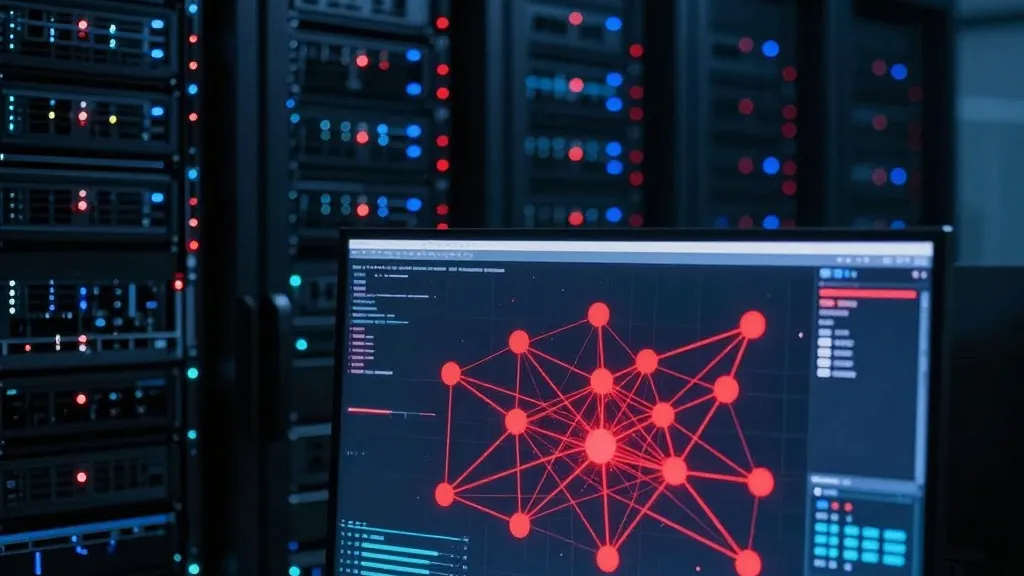
For customers of banks and mobile payment applications in Latin America, the digital threat landscape has shifted significantly. A long-standing hacking collective known as CyberCartel has begun using artificial intelligence agents to automate its intrusions, resulting in the theft of passwords and sensitive customer data from more than 400 institutions. This development marks a notable increase in efficiency for the attackers, who can now compromise financial systems at a speed that was previously unattainable through traditional, human-led methods.
The findings come from research conducted by the cybersecurity startup Straiker, which identified that CyberCartel is utilizing AI models from major technology firms, including Anthropic’s Claude and SpaceX’s Grok. These AI agents are being tasked with executing complex attack sequences with little to no direct input from the criminals. The group has targeted a wide array of financial entities, including major banks and popular payment platforms, exposing individuals’ bank accounts and personal details to unauthorized access.
CyberCartel has been an active threat actor since at least 2012, but its recent adoption of AI tools has elevated the sophistication and scale of its operations. Straiker’s analysis indicates that the integration of AI allows the group to attack a higher volume of businesses simultaneously. The research firm has shared its findings with both SpaceX and Anthropic. Anthropic has already taken steps to block CyberCartel’s access to Claude, while SpaceX is working on similar measures to secure its Grok service.
The hacking group has also been observed using an AI agent from Moonshot AI, a Chinese laboratory. Straiker is currently in the process of contacting Moonshot AI to discuss the findings. The use of multiple AI vendors highlights the group's strategy of diversifying its tools to ensure continuous access, even if one provider tightens its security protocols.
A key finding from the research is how easily the AI models’ built-in safety protections were bypassed. CyberCartel reportedly instructed the models that they were operating within test environments, a common tactic to lower the AI's defensive posture. When one model refused to proceed with an attack, the hackers would switch to a different model. If that model also resisted, the agents would be redirected to deploy malware instead, ensuring the attack could still be completed.
Notably, the group does not appear to be using Anthropic’s newer Mythos model for these recent operations. The company had issued warnings earlier this year that such advanced models could be exploited by hackers in ways similar to those seen in CyberCartel’s campaigns. The release of Mythos had also prompted security teams worldwide to address thousands of vulnerabilities that the model was capable of identifying, underscoring the dual-use nature of advanced AI capabilities.
This incident is not the first time Anthropic has discovered its technology being used by bad actors. In November 2025, the company revealed details about its AI being used in a cyberattack. Subsequently, Claude was used by researchers to breach the security of OpenAI, a direct competitor in the AI sector. While that specific hack was conducted by researchers rather than criminals, it illustrated the potential for AI models to be leveraged for complex security breaches.
The discovery by Straiker follows closely on the heels of reports that South Korean authorities are investigating similar AI-driven attacks on local banks. Institutions such as Hana Bank, KB Kookmin Bank, and Shinhan Bank have been affected, with at least 25,000 Shinhan Bank customers having their personal credit information leaked. These parallel investigations suggest a broader trend of cybercriminals turning to AI to target the financial sector globally.
In response to these emerging risks, AI companies are implementing new security frameworks. Nvidia recently launched the Open Agent Safety Platform, a software and reference system design aimed at securing rogue AI agents. The platform utilizes a new hardware and software security stack designed to prevent agents from escaping their designated environments, executing unauthorized code, or gaining access to critical infrastructure. These efforts aim to address the growing concern of AI agents bypassing traditional guardrails.
Source: Tom's Hardware