Haiti's Armed Forces Launch Major Offensive in Martissant
Police and private security teams killed at least 34 suspected gang members in a significant operation aimed at retaking a key transport corridor in Port-au-Prince.
By News Media House Staff ·
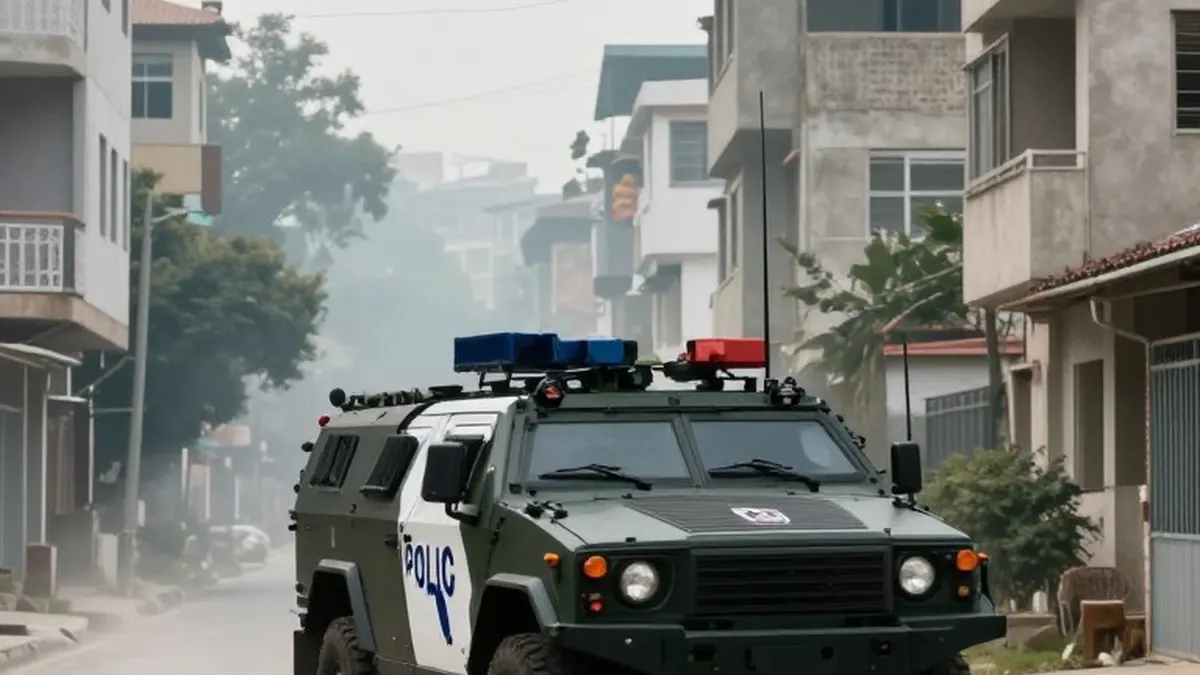
Haitian armed forces initiated an aggressive operation on Thursday to dislodge powerful gangs that have long controlled Martissant, a vital corridor linking the capital to the country's western and southern regions. This marks the first major military push in the area since violent factions seized control of the western tip of Port-au-Prince five years ago. The operation involved police officers working alongside a task force that included members from Vectus Global, a private security firm established by former U.S. Navy SEAL and Blackwater founder Erik Prince.
According to a video posted by Haiti's National Police on X, the fighting resulted in the deaths of at least 34 suspected gang members. Local media outlets reported heavy gunfire and the use of explosive drones throughout the engagement. The police shared footage showing armoured vehicles moving through the community as the forces advanced.
Martissant sits along Route 2, the primary highway leading out of Port-au-Prince to significant western and southern cities. For years, the seizure of this area by gangs has disrupted the national economy by blocking the flow of goods. Before the takeover, thousands of people traveled through the district daily. Since gangs gained control, they have imposed tolls and occasionally opened fire on vehicles attempting to cross, forcing aid workers and civilians to rely on alternative routes or rural back roads.
The struggle for Martissant began in June 2021 when gangs from Grand-Ravine and Village-de-Dieu attacked the Ti-Bois gang. The conflict involved armed men setting fire to homes, killing families, and destroying businesses. They also seized the local police station. A United Nations report from July 2022 noted that the clashes forced at least 19,000 people to flee their homes and affected approximately 800,000 people overall.
A 2023 UN report indicated that gangs operating between Tabarre and Carrefour had demanded roughly 380 U.S. dollars from those transiting through Martissant. By last year, the Center for Analysis and Research in Human Rights observed that more than one million people had been displaced and hundreds of public and private institutions had been relocated due to the gang presence.
As the battle for Martissant continues, the UN-backed Gang Suppression Force has also made progress in other areas. The force stated on Thursday that operations are entering a new phase focused on increasing pressure on gang networks and dismantling strongholds. They are currently active in Tabarre in Port-au-Prince and in the central Artibonite region, where they have faced fire while advancing along Route 5 to remove obstacles established by gangs.
The force also announced that it had cleared and secured a church and a school north of Gros-Morne that had been under gang control. The objective, according to the force, is to restore freedom of movement, reopen access to public institutions, and re-establish state presence in communities that have endured years of gang dominance.
El Salvador has also contributed to the fight against gangs, deploying approximately 2,500 troops last month. This deployment followed an attack on October 18 in which four Salvadoran soldiers went missing. Under orders from President Nayib Bukele, these troops attacked the main residences of two prominent Haitian gang leaders, Jeff and Lanmò San Jou, earlier this month, though neither leader was killed.
Thousands of Haitians took to the streets this week to support Bukele and the Salvadoran deployment. However, experts have criticized the unilateral actions of the Salvadoran troops and noted that the use of explosive drones has resulted in a growing number of civilian casualties. A smaller group of Salvadorans is also working directly with the Gang Suppression Force. El Salvador's legislature passed a law in late September authorizing this participation for another 12 months, a move championed by Bukele and approved by his party-controlled congress.
These ongoing clashes occur as Haiti prepares for its first elections in more than a decade. The country has been without a president since the assassination of Jovenel Moïse in July 2021.
Originally published by News Media House