COP31 Collapse Forces Shift From Global Deals To National Action
With no final agreement in Turkey, experts point to rising temperatures and new side deals as the next front in the climate fight.
By Adrian Kovalenko ·
The United Nations climate summit in Turkey ended Sunday without a final agreement, leaving nations to pursue individual strategies rather than a single global framework. The breakdown centered on disagreements over language regarding the transition away from fossil fuels. United Nations climate chief Simon Stiell stated that the fight continues, noting that the world cannot afford a repeat of this moment.
The failure of COP31 follows a pattern of high-profile diplomatic stumbles. In 2000, talks in The Hague collapsed and required continuation in Germany six months later. In 2009, the Copenhagen summit saw a hoped-for deal fall apart, a failure that preceded the landmark Paris Agreement in 2015. Joanna DePledge, a climate negotiations historian at the University of Cambridge, argued that the current outcome is not the worst in history. She blamed the joint leadership from Turkey and Australia for handling the process poorly, noting that the round was intended for implementing past goals rather than creating new overarching agreements.
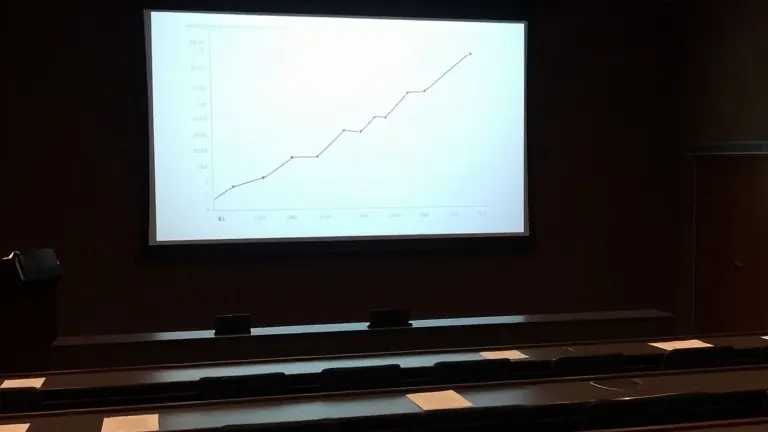
Despite the diplomatic failure, the physical reality of warming continues. The European climate service Copernicus reported that average global daily temperatures exceeded two degrees Celsius above pre-industrial levels six times this month. Zeke Hausfather, a climate scientist at Berkeley Earth, said these spikes indicate the world is approaching the two-degree threshold. However, Michael Mann, a climate scientist at the University of Pennsylvania, cautioned that El Niño weather patterns influenced these November readings, suggesting they should not be over-interpreted as long-term climate change signals.
Johan Rockström, director of the Potsdam Institute for Climate Impacts Research, described the collapse as a political and climate crisis. He suggested the failure may force a serious reform of the COP process. Many experts advocate for changing the voting rules from near-unanimous consensus to majority rule. Mann also proposed financial penalties, such as tariffs, for countries that fail to meet commitments and suggested hosting future talks in non-fossil fuel exporting states.
Side agreements are filling the void left by the lack of a main text. Approximately 80 countries signed a plan in Turkey to ensure 35 percent of global energy use comes from electricity. Fatih Birol, chief of the International Energy Agency, estimated this could reduce emissions by at least eight billion metric tons. Additionally, nearly 60 countries participate in a separate conference focused specifically on phasing out fossil fuels, a process Brazil helped accelerate by offering transition road maps.
The next round of United Nations climate talks is scheduled to take place in Ethiopia next year. António Guterres, the Secretary-General of the United Nations, urged governments and companies to keep demanding action. He emphasized that the true test of climate action will occur beyond the negotiating halls.
Bill Hare, CEO of Climate Analytics, believes the recent failures will remind nations of the importance of cooperation. He stated that countries must stop focusing on fossil fuel producers and begin dealing seriously with the climate change problem. The Paris Agreement remains the primary international framework, requiring countries to increase their plans to cut carbon emissions.