
Spain's data center crackdown becomes election flashpoint as tech investors watch warily
A proposed Spanish decree imposing strict renewable-energy rules on data centers could be approved within days, putting billions of dollars in investment at risk weeks before the Nov. 29 elections.
By News Media House Staff ·
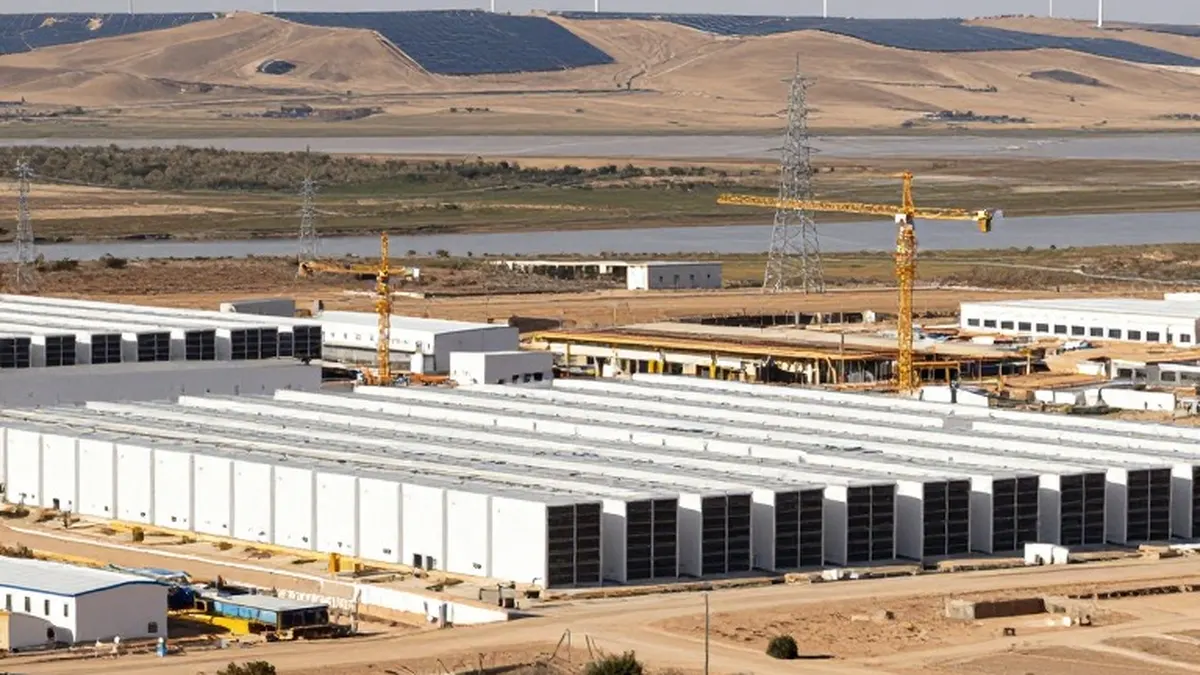
Spain's government is moving to tighten restrictions on one of Europe's fastest-growing data center markets, making the industry a flashpoint in the country's election campaign. The decree from Socialist Prime Minister Pedro Sánchez's government requires no parliamentary approval, could clear the cabinet as soon as Tuesday and is widely expected to pass before the Nov. 29 elections.
Investors such as Amazon, Microsoft and Blackstone-backed QTS are watching nervously, with billions of dollars in investment at stake in one of Europe's fastest-growing tech regions.
The government first introduced the decree in August, partly over concerns about energy demand and prices. A revised version issued on Oct. 26 after fierce opposition still includes strict renewable-energy requirements: data centers would have to draw 80% of their electricity from renewable sources matched hour by hour, and projects could lose grid access if they fail to comply. Projects already in development or awaiting grid connections would also be covered, with a five-year transition period.
S&P warned in an October report: "These requirements could pose insurmountable barriers and act as an effective moratorium."
Data center construction has rapidly become a prominent political issue worldwide. In the U.S. midterm elections, CBS exit polls found data centers were a major influence for more than half of voters. In Spain, the facilities' water and energy demands are part of the election debate as pressure mounts to expand the electricity grid. CBRE estimates that of 10.5 GW of data center capacity announced across Spain and Portugal, only about 4.5 GW is realistically deliverable because of grid, permitting and infrastructure constraints.
Alberto Nadal, the opposition center-right Popular Party's deputy secretary for the economy, has said a conservative government would repeal the decree. Recent polling shows the Popular Party leading, and several seat projections put the PP and far-right Vox together above a parliamentary majority.
The fight is sharpest in Aragón, a landlocked northeastern region governed by the Popular Party that has become one of Europe's fastest-growing digital infrastructure hubs. Investors have been drawn by fast-track permits, abundant renewable energy and land, and international cable connections, and the region expects more than 60 billion euros ($66 billion) in data center and digital infrastructure investment over the next decade. Its president, Jorge Azcón, wants to turn it into the "Virginia of Europe," referring to the U.S. state with the world's highest density of data center sites.
Residents, however, are increasingly worried about noise, water use and strain on the electricity grid. Pilar Alegría, leader of the Socialist Party in Aragón, told a Nov. 15 rally that the election would be decisive for the region's future and for protecting its natural resources, highlighting the Ebro River and the resources data centers use in a region vulnerable to drought.
Speaking the same day, Popular Party leader Alberto Núñez Feijóo sought to reassure investors. "It would be a mistake to squander that advantage through poor planning or regulation that creates uncertainty for investors," he said. Aragón's economy minister, Eva Valle, called for the decree to be scrapped at an AWS-organized event on Oct. 27: "It is necessary to halt the approval of this decree, which abounds in harmful conditions placed on the sector." She accused the government of pursuing "a political agenda."
Amazon Web Services and Microsoft say their Aragón investment plans are unchanged, while urging long-term legal certainty and regulatory predictability from Spain. Google has put a multibillion-euro data center project on hold pending greater regulatory certainty, Spanish newspaper El Mundo reported, citing anonymous sources. Google did not immediately respond to a CNBC request for comment. SpainDC, which represents the industry, says the decree would create the most restrictive data center framework in the European Union and put 80% to 90% of investment at risk. "We are going to use all the institutional, regulatory and legal avenues at our disposal" to challenge the decree, said SpainDC president Emilio Díaz.
Originally published by News Media House
More News · National news · Report a business · Got a Story?