Global datacentres to see 70% rise in emissions by 2030, IEA reports
A new report from the International Energy Agency attributes the projected surge in carbon output to the heavy reliance on fossil fuels in the US and China to power the expanding artificial intelligence sector.
By News Media House Staff ·
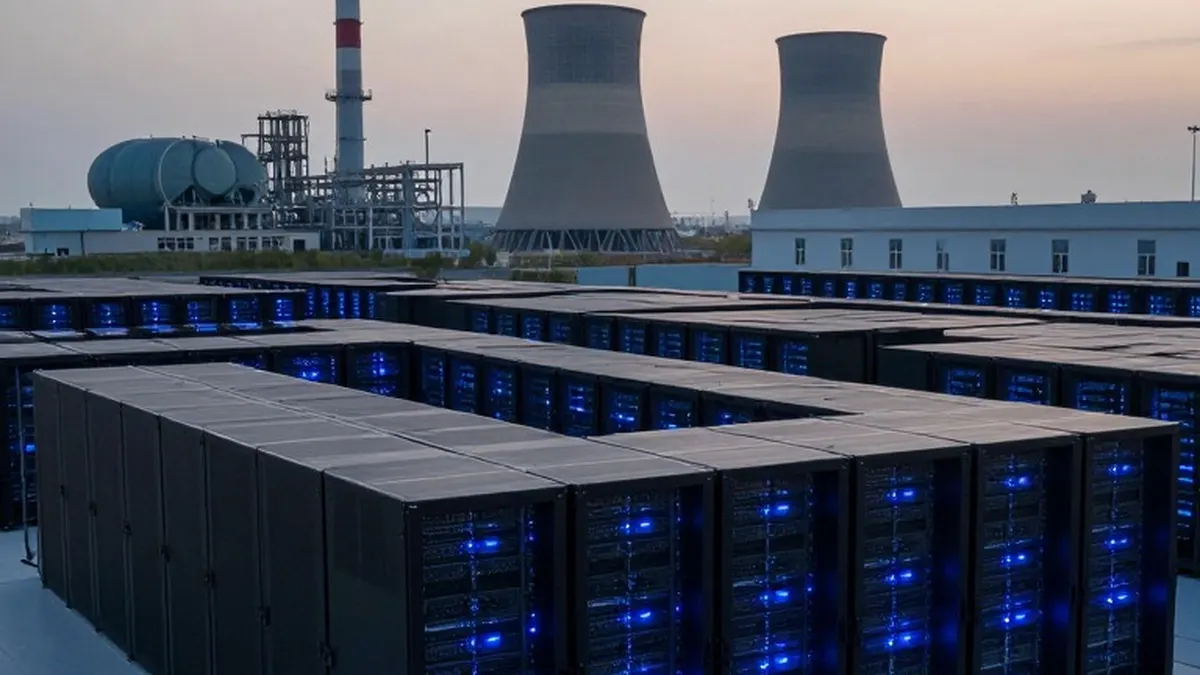
The International Energy Agency has issued a stark warning that global datacentres will generate 70% more carbon emissions within the next four years. This significant increase is driven primarily by the United States and China, which are turning to fossil fuels to support their rapidly growing artificial intelligence initiatives, according to the Paris-based energy watchdog.
The agency's influential annual report indicates that electricity consumption for datacentres will double by 2030 compared to current levels. The global expansion of AI is responsible for three-quarters of this projected growth. As a result, AI datacentres will require an additional 350 terrawatt-hours of electricity annually by the end of the decade, a volume that exceeds the total annual electricity consumption of Great Britain.
Fatih Birol, the executive director of the IEA, noted that the energy landscape is undergoing a permanent shift. He stated that he does not see a credible pathway for the sector to return to its pre-crisis state, particularly after the Middle East war disrupted global markets. The agency described this conflict as the greatest energy market disruption in history, which has made the future of global energy supply less certain.
Despite datacentre developers becoming the largest corporate buyers of renewable energy to connect their servers to local grids, the demand for fossil fuels is expected to grow even faster. This trend is particularly pronounced in the US and China, where the appetite for traditional energy sources is outpacing the adoption of green alternatives for this specific sector.
In China, the IEA forecasts that approximately half of the electricity required for AI datacentres will be generated by coal power plants by the end of the decade. The remaining power will come from renewable sources, with smaller contributions from nuclear reactors and a very limited amount from gas plants.
The United States presents a different energy profile. The country is expected to rely on natural gas for about 60% of its datacentre electricity by 2030. As of August this year, there were plans for 180GW of new gas-fired power plants linked to US datacentres. This proposed capacity is nearly equal to the total gas capacity currently installed across the entire European Union.
The disparity in energy sourcing is further highlighted by a comparison with Canada. US datacentre developers have a much higher appetite for gas power, with their plans being more than 16 times larger than those in Canada, where only 11GW of gas generation is planned for servers. In the rest of the world, AI developers have proposed new gas plants with a combined capacity of just 4GW.
Outside of the US and China, renewable energy is expected to play a more dominant role. In the European Union, datacentres are projected to derive about 70% of their electricity from renewables by 2030. This will be followed by nuclear power, gas generation, and a small fraction of coal power.
To produce these forecasts, the agency analyzed data on the annual global shipment of AI servers, which has increased eighteen-fold since 2020. The IEA also utilized space-based imagery to track the construction of 93 large AI factories worldwide. The analysis suggests that global datacentre capacity has climbed tenfold in the last 24 months to reach 17GW.
By the time these new AI factories are completed, their combined capacity is likely to be around 50GW. The world's existing stock of datacentres currently stands at 120GW, with 80% of this capacity located in China, the US, and the EU. The IEA's central base case scenario predicts that an additional 120GW will be built by the end of the decade, with three-quarters of that new capacity dedicated to AI datacentres.
Originally published by News Media House