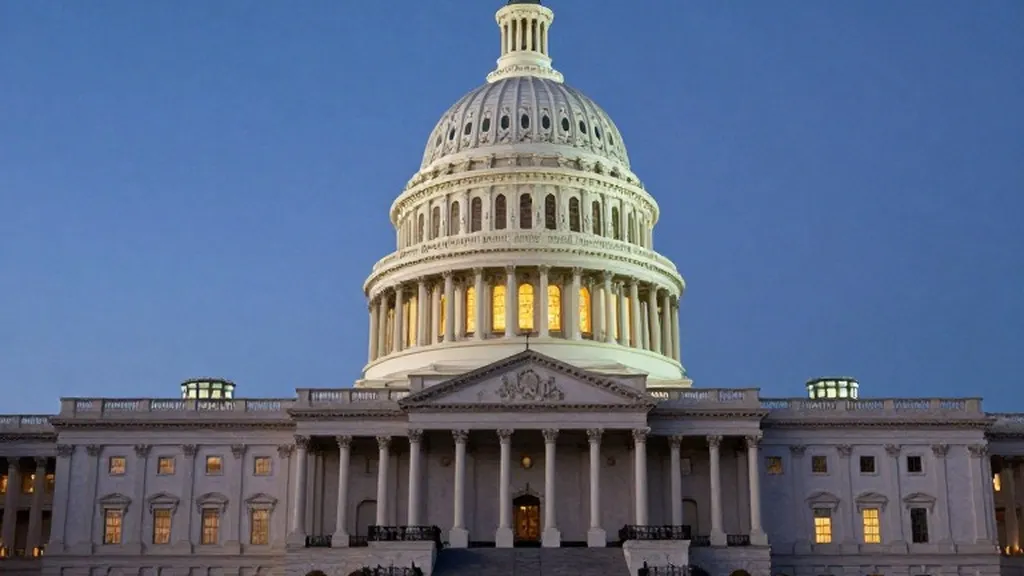
Democrats seize full control of Congress, flipping seven Senate seats and gaining 43 House seats
Voters in New England delivered decisive victories for Democratic candidates, securing majority control of both chambers and shifting the balance of power in the region's statehouses.
By Julia Wang ·
The 2026 midterm election cycle concluded with a decisive shift in power, as Democrats secured majorities in both the U.S. House of Representatives and the U.S. Senate. According to Ballotpedia results updated on November 6, Democrats picked up at least seven Senate seats, all of which were previously held by Republicans. This net loss of seven seats places the election in the top 20% of historical election years in terms of seat swings against a president's party, meeting the threshold for a wave election. The outcome marks a significant reversal for the Republican Party, which had held these positions since the last cycle.
In the U.S. House of Representatives, Democrats gained at least 43 seats, a figure that includes 42 previously held by Republicans and one held by an independent. With results reported as of 4 p.m. EST on November 6, Democrats will hold at least a 250-157 majority in the lower chamber. While the House has not yet reached the specific threshold of 48 seats to be classified as a wave election, the magnitude of the shift is substantial. Uncalled races may still alter these totals, but the current numbers indicate a firm Democratic grip on legislative proceedings in Washington.
For New England voters, the results confirm a strong preference for Democratic leadership in federal offices. In Massachusetts, voters reelected incumbent Senator Edward J. Markey and Governor Maura Healey, maintaining the state's alignment with the new congressional majority. In Rhode Island, incumbent Senator Jack Reed retained his seat, while the open governor's race was won by a Democratic candidate, solidifying party control in the state government. These outcomes reflect a broader regional trend where Democratic candidates performed well in both legislative and executive races.
The political landscape in New Hampshire also shifted toward the Democrats, with the open Senate seat going to a Democratic candidate. This result is particularly notable given the state's historical reputation as a swing district. In the governor's race, incumbent Kelly Ayotte, a Republican, faced a challenging environment, though the specific outcome for her race is part of the broader state trifecta shifts. The new Senate majority will allow Democrats to oversee key committees, including those focused on defense and finance, which have been areas of intense scrutiny following recent international conflicts.
Vermont and Maine also saw significant Democratic gains. In Vermont, where there was no Senate race, the incumbent Governor Phil Scott, a Republican, faced a competitive environment but the state's legislative chambers leaned Democratic. In Maine, incumbent Senator Susan Collins lost her seat to a Democratic challenger, a major upset given the state's traditional leanings. The open governor's race in Maine was also captured by Democrats, completing a trifecta in the state. This loss for Collins is a key indicator of the national mood, as she is one of the few Republicans to hold a Senate seat in a state that voted for a Democratic president in the last cycle.
The shift in control has immediate implications for the oversight of the executive branch. Democrats in Congress are preparing to use their new majorities to investigate executive actions, including those related to national security and education. Rep. Thomas Massie, a Kentucky Republican who lost his primary, moved to force a vote to impeach Defense Secretary Pete Hegseth, citing the war in Iran as a primary factor. While Republicans remain in the majority in both chambers until the new Congress convenes in January, the incoming Democratic leadership has signaled a focus on accountability. House Democratic Leader Hakeem Jeffries supports the impeachment measure, indicating that the new Congress will prioritize a quick vote on the resolution.
The economic implications of the new congressional control are also a focus for New England readers. With Democrats holding the purse strings, they are expected to use appropriations powers to influence federal spending. Sen. Chris Van Hollen, a Maryland Democrat, noted that the committee is interested in using the power of the purse to establish guardrails against executive overreach. This approach may affect federal funding for infrastructure and education in the region. The new majority also means that legislative battles over issues like student loans and education policy will be more intense, with Democrats seeking to reverse some of the changes made by the Trump administration.
The election results also highlight the importance of turnout and regional voting patterns. In New England, high turnout in Massachusetts, Rhode Island, and Maine contributed to the Democratic victories. The region's voters demonstrated a clear preference for candidates who emphasized economic stability and border security, key themes for the cycle. The results suggest that voters are closely watching how the new Congress will manage the economy and respond to national security challenges. The shift in power will likely lead to increased scrutiny of federal agencies and a more active role for state legislatures in shaping policy.
As the new Congress prepares to convene in January, the focus will be on how Democrats can effectively use their majority to pass legislation and conduct investigations. The Republican Party, having lost significant ground, will look to regroup and maintain a strong minority presence. For New England, the alignment of federal and state governments under Democratic control provides a clear path for implementing regional priorities. The election results serve as a mandate for change, with voters in the region expressing a desire for a different approach to national governance and economic policy.