Dexter Southfield Head Asks Families to Let Dishes Wait
Dr. Peter F. Folan argues that delaying cleanup allows for deeper conversations that help children understand their family heritage.
By Julia Wang ·
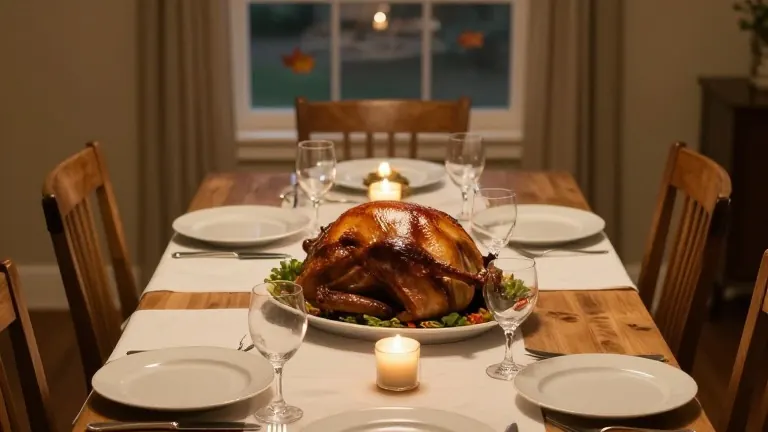
Thanksgiving traditions in the United States have long centered on the communal meal, a practice that Dr. Peter F. Folan argues is at risk of being rushed by post-dinner chores. Folan, the Head of School at Dexter Southfield in Brookline, published a note on November 26 urging families to delay their cleaning routines to prioritize dialogue.
The school leader suggests that the effort required to feed a large group often leads households to hurry through the most valuable part of the day. He notes that the preparation, hard work, and effort of cooking culminate in the moment when family members sit down to share the meal. Folan contends that this time is frequently lost to the immediate pressure of getting everyone fed and the kitchen cleaned.
Folan draws on his own upbringing to illustrate the importance of the table as a space for connection. He states that his parents always made room for guests, a habit that he inherited. He describes food as a primary way of expressing love, a trait passed down from his mother and father. This background informs his view that the physical act of feeding people is secondary to the relational bonds formed during the meal.
The article details how specific conversations can reveal family history to younger generations. Folan describes scenarios where a child learns a grandparent struggled in school or a college student discovers an uncle was uncertain about his career path at age 20. He argues that hearing how relatives navigated uncertainty gives young people courage to face their own challenges.
Folan emphasizes that these exchanges require time that is often sacrificed for efficiency. He advises families to put away phones and ask one more question over a second piece of pie. He notes that even familiar stories hold value if someone at the table is hearing them for the first time. This approach allows children to understand the history behind family traditions and the people they depend on.
The Head of School also points to the lessons children observe in how adults treat guests. He states that children notice who gets heard and how the family responds to differing opinions. He argues that these moments teach the next generation about the kind of home they will create in the future.
Folan concludes by referencing the iconic Norman Rockwell painting of a Thanksgiving table. He expresses gratitude for the lessons he learned around his parents' table, including how to set a place and make people feel at home. He ends by asking families to share their best stories and pour an extra cup of tea, framing these actions as gifts for children.