Flash floods force evacuations across the U.S. Southwest as rivers rise
Storms expected to drop months of rain in two days have cut off towns and stranded residents in Colorado and Arizona.
By Naomi Tesfaye ·
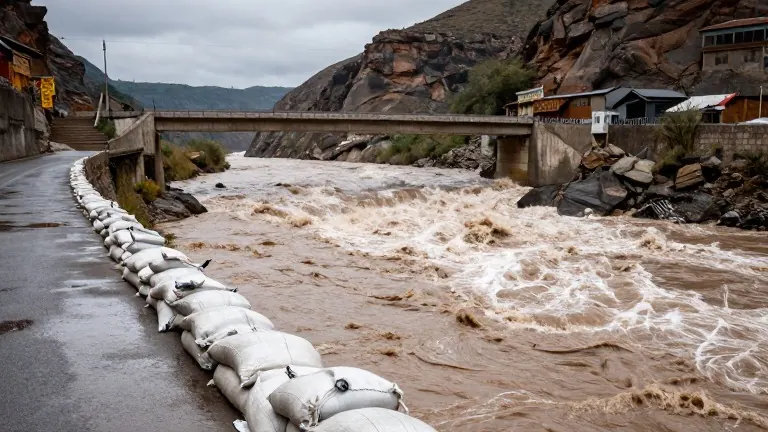
A new round of intense storms forced emergency officials in the U.S. Southwest to order evacuations on Sunday, cutting off road access to several towns as rivers rose toward historic levels. The weather system is expected to dump the equivalent of two to three months of rainfall over the region in just two days, triggering flash floods in normally arid areas.
The conflict centers on Pagosa Springs, Colorado, a town of more than 2,000 people in the Rocky Mountains near ski centers. Officials warned on social media of potential catastrophic flooding after forecasts indicated the San Juan River could reach a peak of 20 feet by 11 p.m. on Sunday. That projection exceeds the 17.8-foot high recorded during the destructive 1911 flood that wiped out much of the town. By sunset on Sunday, the river had reached 14 feet, according to Vicky Schaffer, a county spokesperson.
Authorities closed all entry and exit roads to Pagosa Springs. Residents not under mandatory evacuation orders were told to stay home. The town had only lifted a flood evacuation order from the previous week before issuing a new one Saturday night. Katie German, owner of Bruin Coffee, reported that the city center was evacuated and streets were underwater. She expressed concern that the single bridge accessing the town might be destroyed, preventing trucks from delivering food and fuel. All public roads in neighboring La Plata County were also closed due to flooding.
Similar emergencies unfolded in Arizona. In Sedona, officials ordered an immediate evacuation of residents near Oak Creek as water levels spiked rapidly. The surge trapped several people in their homes. Governor Katie Hobbs said state rescue teams were using helicopters to pull people from rooftops, while state transportation staff helped remove debris. David McAtee, a Yavapai County spokesperson, stated that the evacuation zone included at least 100 homes, with about 20 residents needing emergency assistance for relocation. No injuries or deaths had been reported as of Sunday.
The storm system also impacted northern New Mexico and central Arizona. Yavapai County and Camp Verde issued evacuation orders for residents living near rivers and streams. In Gila County, officials evacuated the entire town of Gisela, a small community of a few hundred residents along Tonto Creek. Tucson experienced flash floods, river rises, and water rescues. In Flagstaff, rain fell nearly all day on Sunday, flooding local roads and overflowing storm drains. Police searched for a man who slipped into strong currents and did not resurface.
Residents in Flagstaff filled sandbags outside the Nuestra Senora de Guadalupe church to stop water from entering the building. Luke Willson said water had entered the garage, basement, and an office with computers. He noted that pumps were running but not removing water fast enough. In the Pinetop-Lakeside area, the local health district reported that sewage was backing up into homes and manhole covers were popping up due to the pressure.
The National Weather Service issued flood warnings for nearly all of Arizona, parts of southern Utah, southwestern Colorado, western New Mexico, and a portion of southern Nevada. Forecasters in Salt Lake City warned that previous storms had saturated the ground, increasing runoff in remote areas like Zion and Capitol Reef national parks. Remote roads were expected to become impassable from the excess flow. The rain began Saturday night and is expected to continue through Monday.
Source: Stamford Advocate