New Hitting Technology Aims to Close the Gap With Baseball's Pitching Boom
High-speed cameras, motion capture, advanced pitching machines and custom bats are being developed to help hitters keep pace after batting averages fell to their lowest level since 1968.
By Ishani Kapalli ·
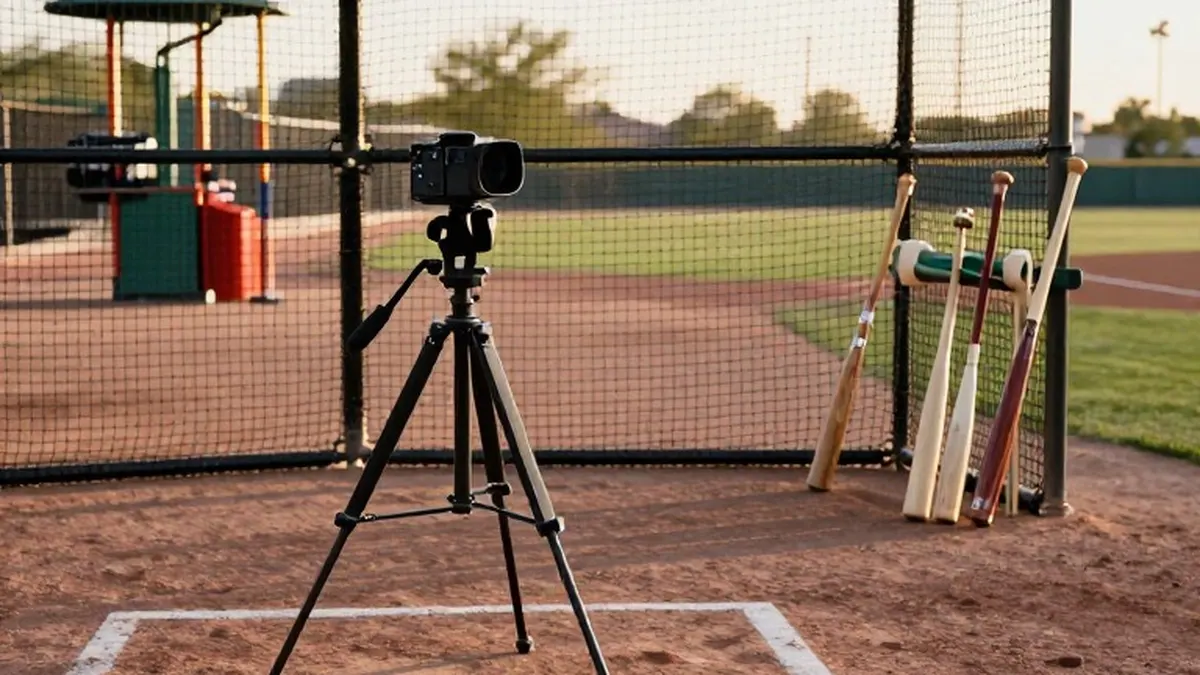
Tim Anderson wanted a closer look at his swing. After a season limited by groin and hand injuries, the Chicago White Sox shortstop set out to build a smoother approach at the plate, and that search took him to Driveline Baseball, first at its main facility in Washington and later at its Arizona location.
"They showed me a lot of stuff. Just break it down all the way from ground up," Anderson said. "Really anything that you want to see, they got it."
Driveline and the Baseball Performance Lab in Louisiana are among the places where a race is underway, along with unmarked buildings around the major leagues. Some of the sport's sharpest minds are trying to narrow the distance between the tools hitters have and the technology that fueled a revival in pitching. Hitters now have high-speed cameras to guide small mechanical changes, and pitching machines that mimic Justin Verlander's curveball or Shohei Ohtani's splitter. Some people even expect top hitters to eventually choose from a range of specialized bats depending on the matchup, much as golfers pick between a pitching wedge and a 9-iron.
The need is clear. The major league batting average fell to .243 last season, the lowest since 1968. Only 1967, the record-low .237 of 1968, and the dead-ball seasons of 1884, 1888 and 1908 were lower. Rule changes, including a new limit on infield shifts, could produce more offense this year, but batters still must put the ball in play. Pitchers threw a record 3,356 pitches of 100 mph or more in 2022, and strikeouts topped 40,000 for the fifth time in five full seasons, excluding 2020, in a sport that had never reached that mark before.
Pitchers adopted biomechanical analysis early to add velocity and shape their pitches, and the same or similar tools may now help hitters. Chris Antonetti, president of baseball operations for the Cleveland Guardians, said hitting technology and the support organizations give hitters have probably accelerated over the past few years. Asked about promising recent developments, he joked: "Yes .. and no."
Pitching technology caught on first partly because results were easy to measure. A grip change on a curveball can show up in spin rate or velocity almost at once. Hitting is harder to quantify. Cubs general manager Carter Hawkins said it was easier to track the ball than the bat, though newer devices now collect more on hitters. He added that a swing is more dynamic and depends on the pitch, which a pitcher fully controls.
One key source of hitting data is the Hawk-Eye camera system, which calculates exit velocity and estimates how far a batted ball travels. This summer it gets a major upgrade, with five high-frame-rate cameras added at all 30 major league ballparks and at Salt Rivers Fields in Arizona. Tested by MLB last season, the cameras record 300 frames per second and can give a more precise view of bat speed and bat path. Conner Watson, lead hitting trainer at Driveline in Arizona, called in-game data and biomechanics potentially "an absolute game-changer."
Watson is also optimistic about motion capture, long used for pitching, in improving bat path. "We're able to quantify it now," he said, while cautioning that researchers are still some way from full answers because they need large sample sizes. Trajekt Sports, meanwhile, makes an advanced pitching machine that can replicate top pitchers and their best pitches.
Bats are changing too. The Baseball Performance Lab, on the Marucci Sports campus in Baton Rouge, grew from a 2019 conversation at a PGA show in Florida between Dr. Greg Rose, a Titleist Performance Institute co-founder, and baseball agent Kent Matthes. It applies golf club-fitting science to bat-fitting. Clients have included Paul Goldschmidt, Nolan Arenado and Matt Carpenter, and several stars last season used bats with hockey-puck shaped knobs tried out in Baton Rouge.
"We're building bats to combat pitch design," said Micah Gibbs, the lab's director of player development. He expects players to use multiple bat variations in a single game someday. Gibbs, 34, a former Cubs third-round pick who played six minor league seasons, said he was a switch hitter who used the same bat from both sides, and wants every hitter to step in knowing they have the best tool for them.
Originally published by News Media House · Source: Boston.com
More Sports · Boston news · Report a business · Got a Story?