
Iran Launches Third Drone Strike on US Radar Site in Bahrain
The attack ends a two-month pause in hostilities as the US deploys a third aircraft carrier to the region and maintains a naval blockade.
By Julia Wang ·
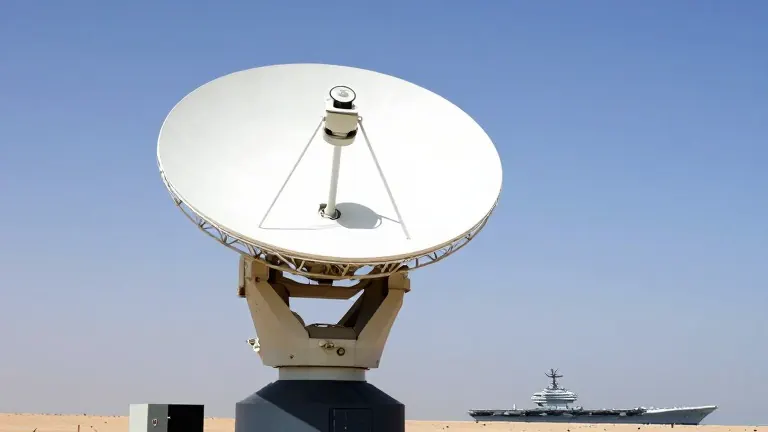
Iran fired drones at a United States radar facility in Bahrain on Tuesday, marking the third attack on American military assets in the Persian Gulf island nation in the past week. The strikes follow a roughly two-month lull in direct combat between the two countries.
Bahrain reported that its air defense systems intercepted the incoming drones. The U.S. military confirmed that no American equipment was damaged and no personnel were injured in the incident.
The conflict began on Feb. 28 when the United States and Israel launched attacks on Iran. Since that date, Washington has enforced a naval blockade in and around the Strait of Hormuz to restrict Iranian oil exports. The blockade has reduced the flow of Iranian crude to global markets, creating economic pressure on Tehran.
President Donald Trump has described the war as highly unlikely to expand with new strikes, yet he ordered the deployment of a third aircraft carrier and additional troops to the region. He told Vice President JD Vance that immediate talks are not required. The arrival of the USS Theodore Roosevelt means the U.S. now has more naval assets in the Persian Gulf, Arabian Sea, Red Sea, and Mediterranean than at the start of the war.
Tehran stated it is retaliating for U.S. strikes on Iranian communications towers and drone surveillance operations. The Revolutionary Guard Corps said that continued aggression against Iranian airspace and the use of regional bases for hostile acts would not go unanswered.
Regional leaders have reacted to the latest barrage. Egypt, Qatar, Saudi Arabia, and the United Arab Emirates condemned the attacks as a violation of Bahrain’s sovereignty. Qatari Foreign Ministry spokesman Majed Al Ansari warned that the fighting poses an extremely grave danger to diplomatic efforts to reach an agreement.
Security analysts suggest Iran is shifting its strategy from waiting to retaliate to actively targeting U.S. operational capabilities. Mostafa Najafi, a Tehran-based security analyst, noted that Tehran is weighing whether escalating the conflict to break the blockade is less costly than accepting its continuation. The U.S. Navy’s 5th Fleet is headquartered in Bahrain and has sustained damage in previous waves of Iranian attacks.