Herzog Condemns West Bank Violence and Urges Diplomatic Dialogue
President Isaac Herzog condemned recent extremist violence in the West Bank and called for strengthened diplomatic ties with Europe and regional partners during his address at the ELNET Jerusalem Summit.
By News Media House Staff ·
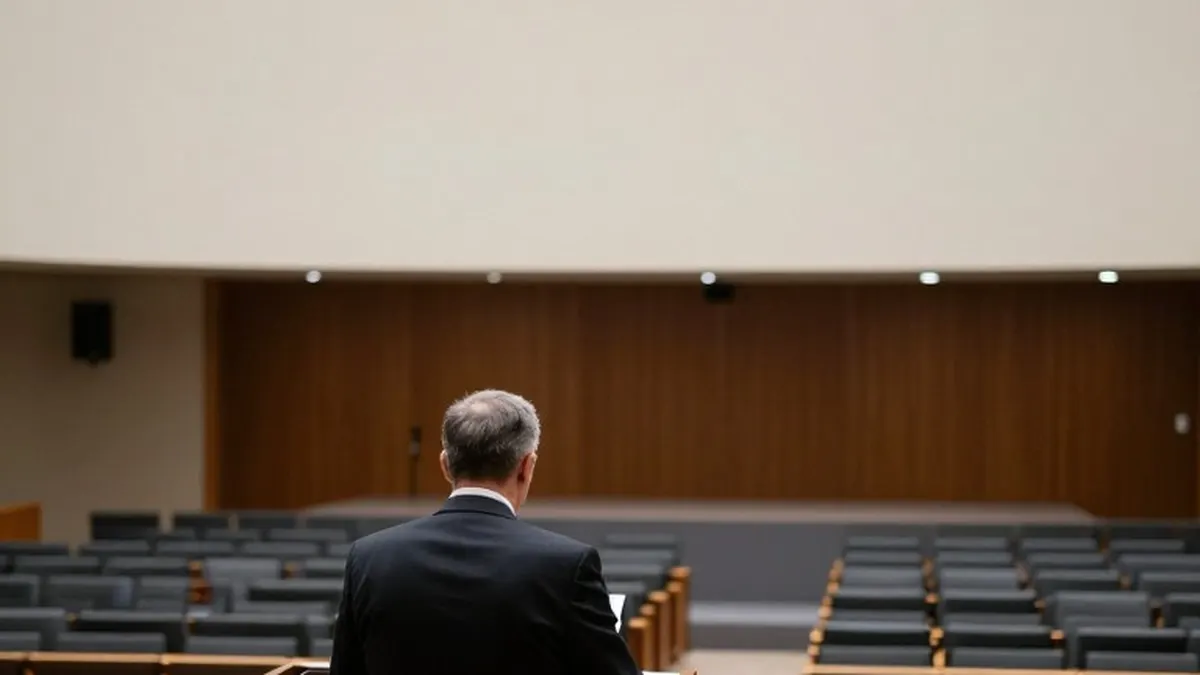
Israeli President Isaac Herzog delivered a comprehensive address at the ELNET Jerusalem Summit on Monday, where he strongly condemned recent acts of violence by Jewish extremists in the West Bank. During the speech, which took place in the presence of leaders from Israel, Europe, and delegations from the United States, the United Arab Emirates, Morocco, and Somaliland, Herzog called for a renewed commitment to diplomatic cooperation between Israel, Europe, and regional partners. He framed his remarks around the need to confront internal extremist violence while simultaneously strengthening strategic alliances in a period marked by regional instability and rising antisemitism.
The president was direct in his assessment of the attacks, describing them as despicable acts against innocent people and communities. He emphasized that such violence, whether it occurs in the West Bank, Judea and Samaria, or elsewhere, violates the core ethical and religious values of the Jewish and Israeli people. Herzog stated that those responsible for these incidents must be held fully accountable under the law, underscoring that the actions of a minority do not represent the broader Israeli society. He characterized the events as a moral failure that struck at the heart of the nation's identity and history.
To illustrate the gravity of the situation, Herzog quoted a description of the attacks as an assault not only on human beings created in the divine image but also on the ethical way of life and history of the people. He assured the audience that Israeli law enforcement agencies are working diligently to identify, arrest, and prosecute the perpetrators to the fullest extent of the law. These comments follow a series of incidents involving suspected Jewish extremists in Palestinian communities, with reports in late November detailing property damage and attacks in several locations. Earlier in the month, the president had warned senior officials that escalating nationalist violence could lead to significant security consequences.
Shifting his focus to international relations, Herzog addressed the growing hostility toward Israel in Europe, noting that it is increasingly accompanied by antisemitism and intimidation of Jewish communities. He drew a clear distinction between legitimate criticism of the Israeli government's policies and attacks that target Israel's identity as a Jewish state. While he acknowledged that disagreeing on strategy or political solutions with Palestinians is a valid form of diplomacy, he argued that the demonization of Israel and the resurgence of antisemitic narratives pose a threat to both European societies and Jewish populations alike.
The president expressed frustration that Israel often faces international criticism while contributing significantly to the security of democratic nations through its confrontation with terrorism and Iranian regional influence. Despite these challenges, he highlighted the importance of maintaining robust scientific and technological partnerships between Israel and Europe. As an example of the benefits of such cross-border collaboration, he cited Technion professor Hossam Haick, an Arab-Israeli scientist and recipient of the Presidential Medal of Honor, whose work was supported through the Horizon Europe initiative.
Herzog also praised the diplomatic relationships Israel has established with the UAE, Morocco, and Bahrain, viewing the participation of delegations from these countries at the summit as a testament to continued regional engagement. He expressed deep personal value for his relationships with the leaders of the UAE and highlighted the growing ties with Bahrain, including a recent meeting with the country's foreign minister. These partnerships were presented as part of a broader framework focused on mutual interests and economic cooperation, with the future of the Abraham Accords and the India-Middle East-Europe Economic Corridor remaining key topics of discussion.
Finally, the president emphasized the foundational role of Israel's peace agreements with Egypt in 1979 and Jordan in 1994 in shaping regional stability. He described the treaty with Egypt as a longstanding anchor and stressed the strategic importance of Jordan to Israel. Acknowledging current diplomatic difficulties, including disputes over water and regional security, Herzog urged the preservation of open communication channels with both neighboring states. He concluded by stating that dialogue with Jordan and Egypt must remain as open and beautiful as the Jordan Valley that stretches between them, regardless of political disagreements.
Originally published by News Media House