Lead Azide Blast Yields Zero Readings at Iowa Army Plant
The Army detonated its entire national stockpile of lead azide in Middletown after three date changes; early EPA data showed no detectable lead in the air.
By Naomi Tesfaye ·
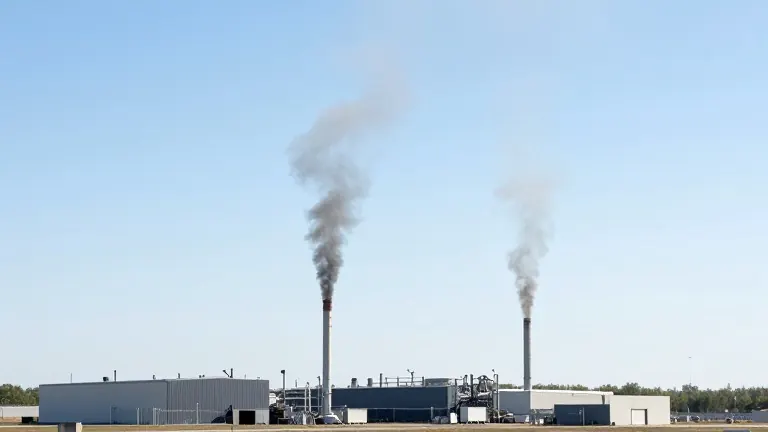
The U.S. Army detonated its entire national stockpile of lead azide at the Iowa Army Ammunition Plant in Middletown at 9:00 a.m. Central Standard Time on Wednesday. The controlled explosion concluded a multi-month process to remove a degrading chemical hazard that authorities warned could have ruptured spontaneously.
Acting Army Secretary Adam Telle posted on social media that the operation "exceeded all expectations and was a resounding success." Telle stated that the threat of an uncontrolled, spontaneous detonation had been eliminated and expressed pride in the troops' precision and mitigation efforts. He noted that the Army is monitoring the Environmental Protection Agency's extensive sensor network across the region.
According to Telle, sensor readings taken shortly before 10:00 a.m. CST registered 0.0 for lead presence. The EPA confirmed in a post on X that its real-time air quality monitors detected no lead in the air throughout the region. The agency stated that its monitors continued collecting data during the entire event, providing continuous verification of the blast's containment.
The detonation date had shifted three times from its original Friday schedule. Judicial documents indicate the Army changed the date to implement additional safety measures and await favorable wind conditions. General Eric Shirley, who led the operation, declared that inaction was no longer an option given the dangerous degradation state of the chemicals used in explosives manufacturing.
FEMA issued an alert for a 20-mile radius, instructing residents between 5 and 20 miles from the plant to stay indoors with windows closed. This precaution aimed to prevent exposure to suspended lead dust, noise, and vibrations. Residents within a 5-mile cone to the southwest faced potential evacuation orders. The Army maintained that barriers around the explosion zone should contain the majority of the generated cloud.
The U.S. Department of Agriculture and Iowa’s agriculture department estimated that approximately 350 farms could be affected by the smoke trajectory. The wind was projected to push the cloud southwest toward Missouri, away from Burlington, a city of fewer than 25,000 residents situated on the Mississippi River. Governor Kim Reynolds said initial information indicated the detonation was successful and that state agencies were analyzing data at the State Emergency Operations Center.
The Army kept media and observers at least 4 miles from the blast site. Field reports indicated two explosion points and two large columns rising into the sky. The Army plans to release video and photographic recordings of the detonation as soon as they are available. A press conference was scheduled for 11:00 a.m. CST to provide updated information on the event's outcome.
More Business · Business Watchdog · Report a business · Got a Story?