Meta Deploys Google TPUs in Production, Marking First External Sale of AI Chips
A new PyTorch-native inference engine allows Meta to run Google hardware without code rewrites, challenging Nvidia’s dominance.
By Fatima Zayed ·
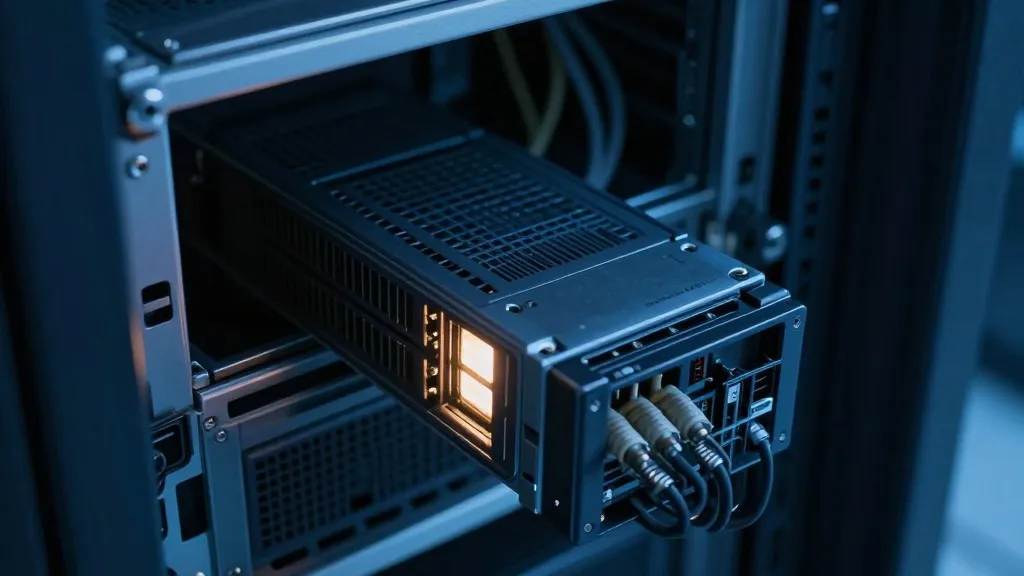
Google’s tensor processing units are now executing production AI workloads for Meta, representing the first time the hardware has been sold to an external customer in this capacity. This milestone was enabled by the release of a PyTorch-native version of the SGLang inference engine, which allows the chips to integrate directly with the industry-standard framework without requiring extensive code rewrites. Previously, running these chips required using Google’s JAX framework, a barrier that often deterred large-scale adopters who preferred the ubiquity of PyTorch.
The collaboration between Meta, Google, and the SGLang team has resulted in what Meta’s PyTorch-TPU lead, Zongwei Zhou, describes as a remarkably mature serving stack. Zhou noted that the system is already live in production, a testament to the close partnership that built the engine. Jana van Greunen, director of PyTorch engineering at Meta, emphasized that the company cannot be constrained by a single hardware architecture. By adopting this new backend, Meta can now deploy its existing PyTorch workloads onto Google TPUs, reducing its reliance on a single vendor’s software ecosystem.
This move follows years of behind-the-scenes efforts to bridge the gap between PyTorch and Google’s hardware. Google previously developed PyTorch/XLA as a bridge, but Meta reportedly used TPUs through that interface from 2020 to 2023 before canceling those contracts. The recent push was specifically designed to accommodate Meta’s refusal to migrate entirely to JAX. While the physical location of Meta’s production TPUs remains unclear, reports indicate that discussions last year led to Google Cloud TPU rentals in 2026 and potential purchases in 2027, culminating in a multi-year rental agreement.
The strategic timing of this announcement is notable, as it came one day after Amazon open-sourced TorchNeuron, its own native PyTorch backend for Trainium chips. Both moves appear designed to loosen Nvidia’s software lock-in, which has long dominated the AI hardware market. By making third-party chips easier to use with PyTorch, Google and Amazon are lowering the switching costs for major tech companies, potentially fragmenting the market that has been heavily skewed toward Nvidia’s GPUs.
Performance benchmarks suggest the new setup is competitive. A tuned vLLM configuration serving the 2.8-trillion-parameter Kimi K3 model reportedly achieved over 700 tokens per second on the seventh-generation Ironwood TPU. This figure, provided by Inferact, outperforms the 452 tokens per second recorded on Nvidia GB200 hardware in comparable tests. Additionally, the new kernels deliver roughly 1.4 to 2 times the throughput of the GB200 baseline at small batch sizes for specific models.
Looking ahead, the SGLang-TorchTPU project plans to expand model support, starting with DeepSeek V4.1 Flash and Reflection Beam. The team aims to provide Day 0 TPU support for new open models by the first quarter of 2027. Google, Meta, and RadixArk are scheduled to share further details at the SGLang Summit in San Francisco in November 2026.
Source: Tom's Hardware