Trump directs Vance to target domestic corruption
The president told the vice president to abandon Iran negotiations and focus on fraud in Democratic-led areas following Republican midterm losses.
By Julia Wang ·
President Donald Trump ordered Vice President JD Vance to shift his attention away from the ongoing conflict with Iran and instead concentrate on fighting corruption and crime in American cities and states controlled by Democrats. Trump made the directive in a social media post on Thursday, framing the domestic issue as more urgent than the foreign war that has consumed the administration's energy for eight months.
The instruction follows a series of events that have strained the relationship between the two leaders. Vance, who served as the lead negotiator for a short-lived truce, has been critical of the war's political cost. Following the Republican losses in the Nov. 3 midterm elections, Vance posted a lengthy analysis on the social platform X. He argued that the conflict and its economic fallout were primary reasons for the party's defeat. "If you'd like to argue it was worth it, that losing the Senate for the next 6 years was worth it, then do so," Vance wrote. "Argue it was a worthwhile cost to pay. Agree or disagree, that's at least honest."
Trump had previously suggested the war was effectively over from a military standpoint. On Thursday, he doubled down on that assessment. In his post, he stated that a deal with Iran is no longer necessary. "We don't need a deal with Iran," Trump said. "Those days have long since passed. We've got their money, Hundreds of Billions of Dollars, and we've got their Strait!" The president told Vance to focus his complete and total attention on his anti-fraud campaign.
This directive arrives as Democrats prepare to take control of Congress in January. They have promised intense oversight of Trump's business dealings, identifying corruption as a top concern for voters. Trump's post partially responded to reports of these oversight plans. It also came after The Wall Street Journal reported on Wednesday that Vance was considering engaging in a new round of direct talks with a senior Iranian official. The vice president's office did not respond to a request for comment.
The White House press office responded to a query by highlighting that Trump sees no need to negotiate with Iran. The president has yet to endorse a successor for the 2028 race. In a CBS 60 Minutes interview that aired Sunday, he said he may or may not get involved in offering an endorsement. Vance is considering a 2028 run for the White House, and voter dissatisfaction with the war could influence that decision.
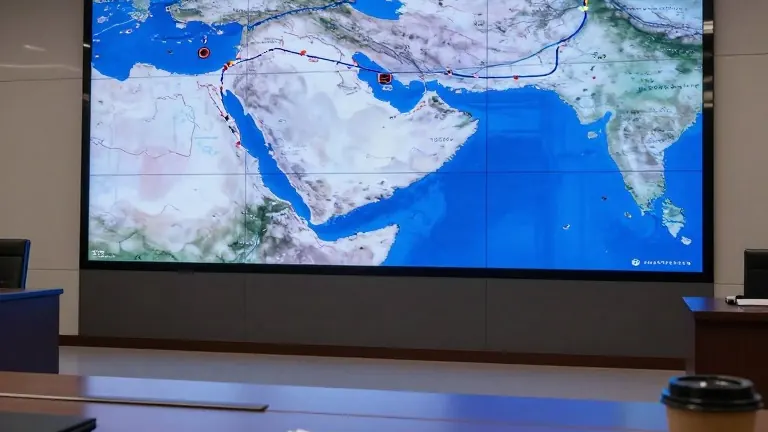
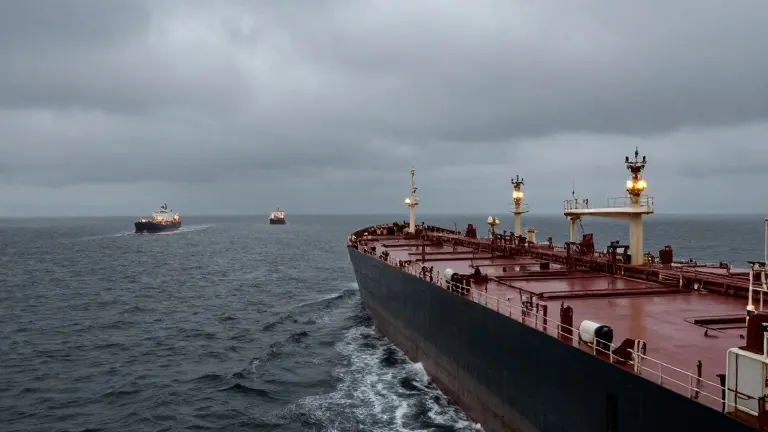
While the political focus shifts domestically, the waters around Iran remain contested. Oil shipments from the Strait of Hormuz have recovered to near prewar levels, but international tankers now rely on U.S. Navy escorts. The British military reported on Thursday that at least two tankers were struck by projectiles in recent days. The United Kingdom Maritime Trade Operations Center said one tanker was hit in the strait on Wednesday and another in the Persian Gulf on Tuesday. Crews evacuated safely in both incidents, with no casualties reported.
Secretary of State Marco Rubio said this week he pressed Group of Seven counterparts in Paris to help protect ships from Iranian attacks. He acknowledged that no headway was made on the issue. Meanwhile, a Saudi-led coalition continues fighting Iranian-backed Houthi rebels in Yemen, making transport through the Bab el-Mandeb Strait precarious.
Iran's parliament speaker, Mohammad Bagher Qalibaf, claimed the United States asked Russian President Vladimir Putin to facilitate direct negotiations. Qalibaf told Al Jazeera that Americans visited Moscow and asked Putin to speak with Iran. He said Maj. Gen. Mohsen Rezaei, secretary of the Supreme National Security Council, briefed Putin on the details. The White House did not directly respond to a query about whether the U.S. asked Putin to facilitate talks.
Trump indicated he is ready to restart strikes if necessary. In an interview on The Hugh Hewitt Show on Thursday, he said he would not hesitate if something did not work out. He also suggested in an interview with Stephen A. Smith that the U.S. has not ruled out strikes on Iran's Pickaxe Mountain facility if signs of activity are detected.