Trump tells Americans Iran war is ending after midterms
The president cited Gulf support and a secure regional status quo as reasons to pause military escalation.
By Adrian Kovalenko ·
President Donald Trump told reporters on Monday that the war in Iran is effectively over. His comments aim to reassure citizens that the United States will not expand its military role in the region following the recent midterm elections. The shift in tone suggests a move toward de-escalation rather than a renewed offensive.
The conflict has lasted nearly nine months. During that time, the administration continued deploying troops to the Middle East. Many observers speculated that the White House waited until after the polls to avoid a negative vote. Republicans lost control of both houses of Congress in that election.
Vice President JD Vance identified the Iran war as a primary factor in the Republican defeat. Despite this political reality, Trump maintained his current strategy. He posted on Truth Social that leaders from Qatar, Saudi Arabia, the UAE, Bahrain, and Kuwait prefer the current status quo. He described this arrangement as the continuation of what he called the Greatest Naval Blockade in History.
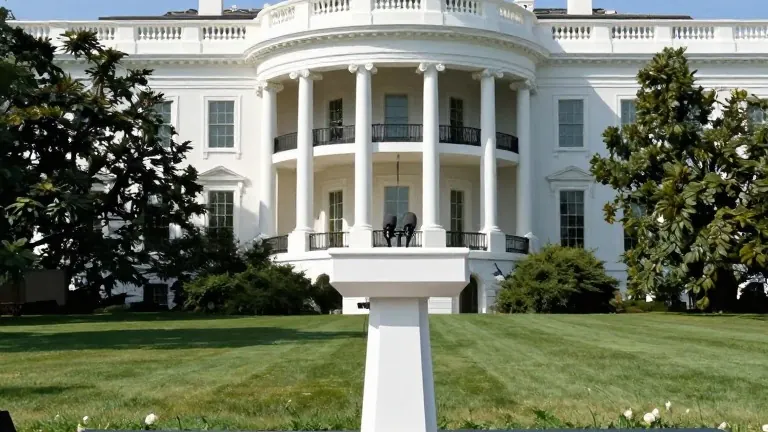
Trump held a press conference at the White House shortly after an Oval Office meeting with Qatari Prime Minister Mohammed bin Abdulrahman Al Thani. The Qatari leader has been lobbying Trump and other Gulf nations to pause hostilities. During the briefing, the president expressed optimism about the timeline. He stated, “We’re seeing momentum toward the end of this conflict. I think it’s going to be ending fairly soon.”
The president acknowledged that the US military remains prepared. He noted that immediate action does not appear necessary at this stage. “At this point, taking the military action doesn’t seem to be a very necessary thing, but we’re locked and loaded, ready to go for any reason,” he said. He emphasized that Israel and its Gulf allies are sufficiently shielded from Iranian threats.
Historical context shows a pattern of optimistic projections from the president. Over the past nine months, he has repeatedly claimed that a final peace deal was imminent without providing concrete evidence. Critics have noted these exaggerated claims regarding the status of negotiations. This current statement fits that established pattern of timeline predictions.
Trump reaffirmed his long-standing position that Iran must not develop a nuclear weapon. He warned that the US would resume full-scale military operations if the situation changed. However, he characterized such a scenario as unlikely at present. He concluded by stating that both the American people and the world would be in a safer position upon the conclusion of the engagement.