Two High-Speed Trains Collide in Central Spain, Killing At Least 10
The crash between a Renfe and an Iryo service suspended rail traffic between Madrid and Andalusia, with local officials expecting the death toll to increase.
By Julia Wang ·
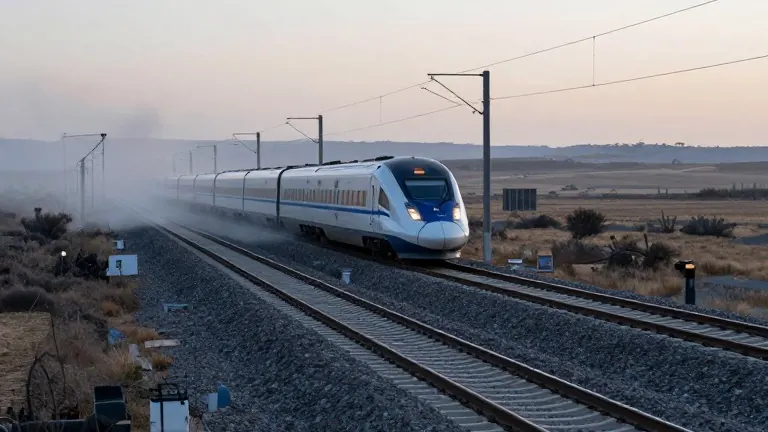
At least ten people died when two high-speed trains collided in central Spain on Wednesday morning.
Esther Padilla, a spokeswoman for the Castilla La Mancha region, stated that the final number of fatalities would likely increase as emergency crews continue their work.
The accident occurred just after 9 a.m. local time, or 5 a.m. Eastern Time. ADIF, the state agency that manages Spain's railway infrastructure, reported the crash took place between the towns of Mora and Orgaz in Toledo province.
ADIF identified the trains involved as a Renfe service and an Iryo train traveling from Madrid to Seville. The impact caused two Iryo wagons to derail, according to a government spokesperson for the Castilla La Mancha region.
The collision forced a suspension of the rail line connecting Madrid with the southern Andalusia region. ADIF confirmed the service halt in a post on X.
Manuel Galan, the mayor of Urda, told Spanish state broadcaster TVE that emergency services requested he prepare a nearby sports hall to house the injured. He confirmed the facility was ready to accept patients.
Prime Minister Pedro Sanchez expressed his sadness over the event in a post on X. He said emergency services were working on-site to assist those affected and ensure their safety in coordination with all relevant authorities. Sanchez extended his sympathy to the victims and their families.
The incident adds to a recent history of rail disasters in Spain. In January, forty-five people died in southern Spain when a train derailed and struck an oncoming train. That crash was the deadliest in the country since 2013, when eighty people were killed in a similar incident.
Spain maintains the largest high-speed rail network in Europe for trains operating at speeds above 155 mph. The European Union reports the network covers more than 1,900 miles of track.
Source: WBTS-CD