Ukrainian village hits 55 dead after Russian drone strikes rescue crews
A second wave of Russian attacks on Komyshuvakha killed at least 55 people and left 50 missing, with the Zaporizhzhia nuclear plant now running on backup generators.
By Adrian Kovalenko ·
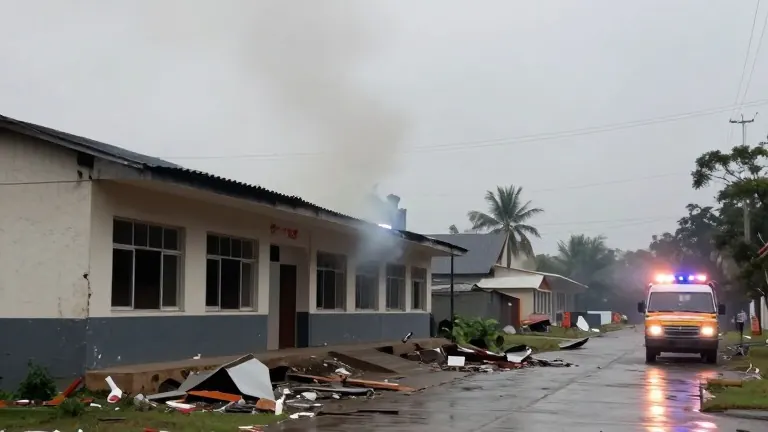
Russian forces struck a village in southern Ukraine on Sunday while rescue workers were already on the scene from a previous attack, killing at least 55 people and leaving 50 others unaccounted for.
Ukrainian officials confirmed that the initial assault occurred on Monday in the village of Komyshuvakha, located near the front line in the Zaporizhzhia region. Russian guided bombs hit an old school and a nearby underground shelter used by residents seeking refuge. The State Emergency Service of Ukraine reported that a Russian drone then targeted the emergency crews responding to that first strike on Sunday. No additional fatalities resulted from the Sunday attack, but specialized rescue equipment sustained damage.
The Military Intelligence Directorate of Ukraine, known as HUR, stated that many of the recovered bodies remain unidentified. DNA analysis is currently underway to determine the identities of the victims. Mykola Krasnov, a 72-year-old resident, told The Associated Press on Saturday that he was still searching for his wife. He reported that she went to receive humanitarian aid when a three-ton bomb fell. Krasnov noted that she did not return home, her body was not found at the site, and she was not listed among the living in the local morgue.
HUR identified several Russian military personnel involved in what it described as a double strike using aerial bombs. This tactic aimed to destroy the school and the underground shelter while targeting emergency teams arriving after the initial impact. Ukraine has frequently accused Russia of using this method to strike responders in rapid succession. On Saturday, police and family members gathered in Zaporizhzhia for the funeral of six officers killed in the Komyshuvakha attacks. Four of these officers died near the old school. Rain fell as mourners held portraits of the fallen colleagues.
Lieutenant Colonel Andrii Khomenko, who had worked with the victims, explained that the officers used every available skill to protect themselves. He stated that when the enemy deliberately gathered civilians in one location and then attacked them, no amount of skill could have saved them. Senior Lieutenant Yuliia Nykonenko noted that the officers risked their lives to save others, including children. She recalled an instance where the group escaped a Russian FPV drone together. Three other neighbors were also buried in Zaporizhzhia. Authorities plan to create a monument in that section of the cemetery.
Community leader Yurii Karapetian lost his wife, Natalia Karapetian, in the attacks. She was distributing bread to people in the shelter when the bombs hit. Karapetian described the pain as unbearable. He said his wife chose to stay in Komyshuvakha to help other residents, many of whom were elderly and lived alone. He urged the international community to act. Karapetian warned that if the world does not stop Russia, the attacks will not stop in Ukraine or anywhere else.
President Volodymyr Zelenskyy called the attack on emergency teams in Komyshuvakha absolute cynicism and brutality on Sunday. In a post on X, Zelenskyy stated that Russian night strikes on energy infrastructure in the Dnipropetrovsk region left more than 600,000 people without electricity. Other regions also experienced power cuts. Zelenskyy reported that Russia launched 115 missiles, 1,900 guided aerial bombs, and more than 3,000 drones against Ukraine during the previous week. Many of these missiles were produced this year. He asked Kyiv's partners to sanction the entities involved in their production. Zelenskyy said that if the world lacks sufficient air defense capabilities to protect Ukrainian skies, it must stop the missiles at the production line. He urged the European Union to impose a 22nd package of sanctions against Russia.
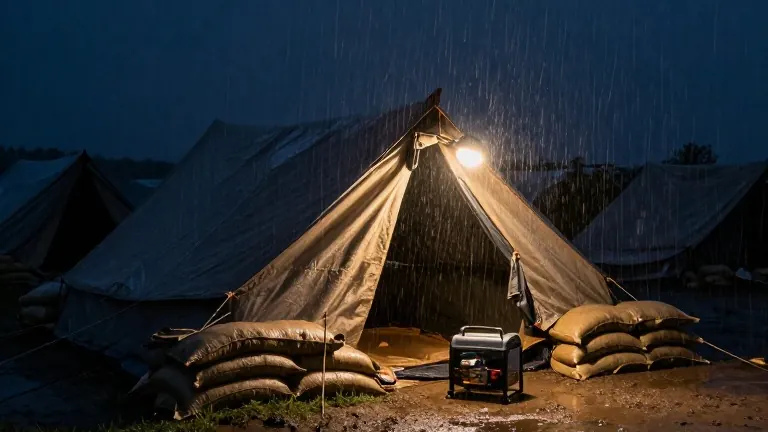
The Zaporizhzhia nuclear plant, which is controlled by Russia and is the largest in Europe, lost its external power supply on Sunday. Plant administration officials reported that a damaged power line, known as Ferosplavna, was disconnected for safety reasons. The plant has been running on diesel backup generators since an automatic protection system triggered the disconnection. The plant was taken offline shortly after Russia captured it at the start of the war, but it requires power to maintain essential cooling systems. External power supplies have been interrupted periodically, raising fears of a nuclear accident if outages persist. Moscow and Kyiv continue to blame each other for attacks that damaged nearby power lines.