
70 Sheep Multiplied to 600,000
A new analysis by the Chida reinterprets the biblical account of Yaakov’s stay with Lavan as a spiritual mission to rescue fragmented souls trapped in livestock.
By Adrian Kovalenko ·
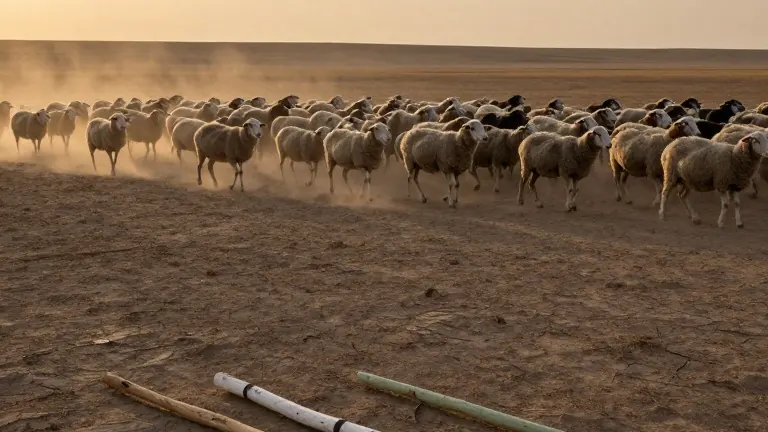
The Chida, R' Chaim Yosef David Azulai, offers a new interpretation of the parsha Vayeitzei that reframes Yaakov’s extended labor with Lavan as a spiritual rescue mission. Rather than a simple economic arrangement, the scholar argues the episode represents the liberation of 600,000 fragments of the original human soul.
The narrative begins with Yaakov agreeing to work for Lavan for seven years in exchange for the hand of Rachel. R' Bachyei notes that Yaakov proposed this specific duration because Rachel was only five years old at the time. He intended to wait until she reached an age suitable for childbearing. Lavan subsequently swapped Rachel for Leah, forcing Yaakov to work another seven years. After fourteen years, Rachel gave birth to Yosef, and Yaakov requested to leave. Lavan persuaded him to stay for another period in exchange for a share of the flocks.
According to the Chida, Adam HaRishon embodied all human souls. After the fall, these souls shattered into 600,000 parts and fell under the control of forces of impurity represented by Lavan. These fragments were reincarnated into animals, specifically Lavan's sheep. Yaakov, described as a reincarnation of Adam HaRishon, arrived to perform the tikkun, or repair, for Adam. His role as a shepherd was not merely occupational but a divine assignment to free the trapped neshamot.
The source states that when Yaakov first arrived in Charan, Lavan owned only 70 sheep. The flock suffered from lions and plagues. Under Yaakov’s care, the number grew to 600,000. This increase mirrors the growth of Yaakov’s family from 70 members to 600,000 during their sojourn in Egypt. The Chida asserts that Yaakov concentrated all 600,000 fragments in the flock during the first fourteen years but did not release them until the final six years of his stay.
The biblical account describes Yaakov using peeled sticks of poplar, almond, and plane to influence the breeding patterns of the sheep. The Chida interprets these three colors as corresponding to the Kabbalistic concepts of Chesed, kindness, Din, judgment, and Rachamim, mercy. This process was a spiritual mechanism for releasing the trapped souls, not a method of simple fertility control.
The text notes that Lavan’s attitude toward Yaakov shifted once the flock grew prosperous. The source identifies this change as a classic form of antisemitism, where a host is comfortable with a subordinate group providing blessings until that group becomes more successful than the host. Lavan and his sons observed their fortune dwindling as Yaakov’s wealth increased.
The Chida connects this narrative to the broader history of Am Yisrael, noting that leaders such as Avraham, Yitzchak, Moshe, and David were all shepherds. This pattern reflects the repeated rescue of the neshamot of Am Yisrael, which are the fragments of Adam HaRishon’s shattered soul, by the leaders of the people.
The article includes a trivia question regarding the age difference between Leah and Rachel and provides the answer to the previous week’s question. The prior answer identified three wells re-dug by Yitzchak named Esek, Sitna, and Rechovot, which symbolize the three Batei Mikdash.