Breaking: 67 Million People Face Strained Grid as PJM Uses Federal Emergency Powers
Federal authorities granted temporary control over data centers and generators to prevent outages during a rare October capacity shortfall in the PJM region.
By Naomi Tesfaye ·
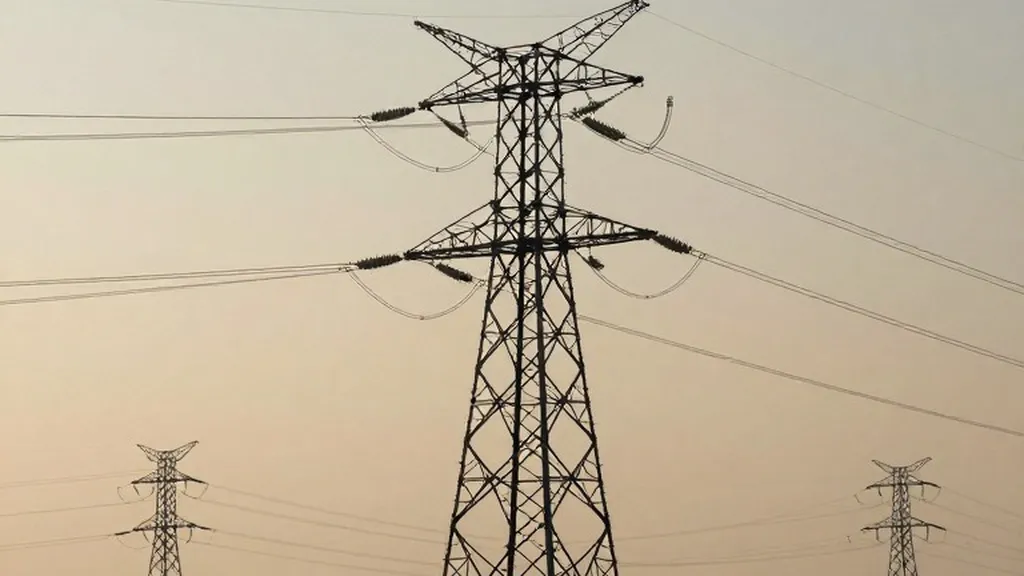
The U.S. Department of Energy declared a power grid emergency across 13 states and the District of Columbia in October 2026, granting PJM Interconnection temporary authority to manage the regional grid. Energy Secretary Chris Wright issued the order on Sunday, October 12, under section 202(c) of the Federal Power Act. The emergency ran from October 13 through October 16, 2026. This federal intervention was necessary because unusually warm October weather collided with the fall shoulder season, a period when generator and transmission owners typically take equipment offline for maintenance. The grid serves approximately 67 million people in Delaware, Illinois, Indiana, Kentucky, Maryland, Michigan, New Jersey, North Carolina, Ohio, Pennsylvania, Tennessee, Virginia, West Virginia, and the District of Columbia.
The strain on the system was driven by a combination of high demand and scheduled maintenance. On Friday, October 9, PJM issued a Capacity Advisory for the following Monday and Tuesday, marking the first use of this procedure. PJM members endorsed this tool in June 2026 for situations where projected conditions indicate an approaching capacity shortfall. The load forecast for Monday, October 12, was about 102,000 megawatts of peak demand, while Tuesday, October 13, was projected at about 104,000 megawatts. These figures were set against previously scheduled generation outages of about 70,000 megawatts plus planned transmission outages. Paul Dajewski, PJM’s senior manager for dispatch, told stakeholders that this volume of outages is typical for the shoulder season.
On Monday, October 12, PJM issued a Maximum Generation Alert and a Load Management Alert for the following day. The Maximum Generation Alert tells transmission and generation owners that conditions will be tight, allowing them to defer or cancel equipment maintenance and testing. It also informs neighboring grid operators that exports from PJM may be curtailed. A Load Management Alert signals potential stress on the grid. On October 13, PJM extended these alerts through October 14 and called on Demand Response programs. These programs pay customers who sign up in advance to cut electricity use when the grid is stressed. Federal officials and PJM clarified that the order was meant to prevent interruptions, not to announce scheduled blackouts. No blackouts occurred, and no mandatory conservation orders were issued. For households, daily electricity use stayed normal, and no action was required.
The Department of Energy stated that PJM wanted to deploy auxiliary, standby, directly connected, battery storage, or other generation resources at data centers, including hyperscaler facilities, and at other large industrial and commercial customer sites. The order allowed PJM to call on generators to run in excess of their operating permits as needed. It also authorized PJM to direct designated generation units to produce electricity and, in limited circumstances, to use backup power reserves. If necessary, PJM could direct data centers and other large electricity users onto their backup generation. This federal power allowed the grid operator to manage resources that normally operate under different commercial or technical constraints.
Scheduled transmission line outages also limited how much electricity could move between zones. Generation was bottlenecked in some areas because of transmission limits, particularly resources serving congested zones in Washington D.C., Maryland, and Virginia. These specific zones are identified as the BGE, Pepco, and Dominion zones. On Friday, October 16, PJM issued another Capacity Advisory for Monday, October 19. This forecast showed a load of about 94,573 megawatts against expected generation outages of about 72,000 megawatts plus planned transmission outages. PJM had also used Department of Energy emergency orders during two unseasonably warm September periods, from August 31 to September 4 and September 15 to 18. During those times, PJM deployed Demand Response to help manage the system.
PJM states that the shoulder-season reprieve is not what it used to be. Most of the new, rapidly growing demand comes from data centers and other energy-intensive large-load customers. Their consumption does not fall with the weather; it is a 12-month, 24/7 phenomenon. That expanding demand is outpacing new transmission and electricity supply coming onto the system. Unseasonably hot or cold weather now arrives outside the traditional peak seasons, creating additional pressure on the grid infrastructure.
According to the PJM Winter Outlook published on November 5, 2026, PJM expects sufficient resources to reliably meet demand this winter under expected conditions. However, reserve margins continue to tighten as demand outpaces new supply. PJM expects 182,426 megawatts of operational capacity to serve a forecast winter peak of approximately 147,500 megawatts, plus about 3,200 megawatts of average exports to neighboring systems. That peak, driven by demand growth, would set a new winter record if reached.
Reliable winter operations depend on strong generator performance during extreme cold, especially where transmission constraints limit deliveries. These constraints are most acute in the BGE, Pepco, and Dominion zones in Maryland, Virginia, and the District of Columbia. Michael Bryson, PJM’s senior vice president of operations, said, "Our goal is to coordinate operations with the generation and transmission owners and proactively manage the system to perform at high levels when consumers need energy the most."