Ecuador Imposes Night Curfew in Five Coastal Provinces to Combat Surge in Criminal Violence
The measure restricts movement from midnight to 5 a.m. for ten days in regions where over 90% of homicides are linked to criminal activity.
By Julia Wang ·
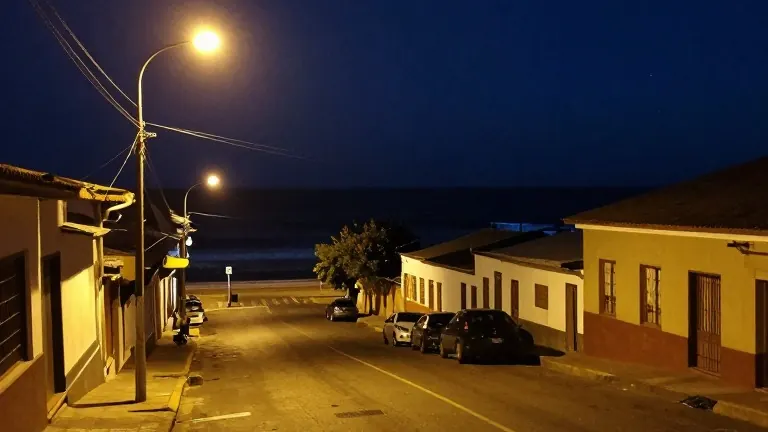
Ecuador began Sunday with a mandatory curfew in five coastal provinces, a restriction that limits freedom of movement from midnight to 5 a.m. for the next ten days. The decree applies to Guayas, El Oro, Los Ríos, Esmeraldas, and Manabí, areas identified by the government as having the highest rates of criminal incidents in recent months. Interior Minister John Reimberg stated on Friday that the government would implement important measures for security, though he did not provide specific details on the enforcement strategy.
The Ministry of the Interior posted on X that special operations were deployed to ensure compliance with the new order. A police report cited in the executive decree notes that more than 90% of murders in these territories are connected to criminal violence. The report also points to a continuation of crimes such as extortionate kidnappings, extortion, homicide, and the theft of firearms.
The country has faced five years of escalating insecurity driven by criminal bands tied to transnational drug trafficking. This trend led to 2025 becoming the most violent year in the nation’s history, with 9,216 murders recorded, a rate of 50 per 100,000 inhabitants. Official figures indicate that homicides decreased by 8% between January and September, representing roughly 500 fewer cases compared to the same period in the previous year.
Diego Pérez, a security expert and professor at the Institute of Higher National Studies, offered a different perspective on the effectiveness of the curfew. He told The Associated Press that the measure aims to make the government's actions visible rather than addressing the structural center of violence. He described the strategy as media-oriented, noting that it does not affect the hard core of criminal organizations.
Pérez argued that these groups are flexible and can easily move personnel to other provinces if pressure increases in one area, such as Guayas. He warned that this could lead to an increase in crime indices in other regions. This is not the first time President Daniel Noboa’s administration has applied a curfew, having done so in March, May, and September of this year, while highlighting positive results each time.
The security strategy has also drawn criticism from domestic and international human rights defense organizations. Pérez pointed to a latent risk of institutional weakening due to the intensive and extensive use of the Armed Forces. The curfew marks the latest attempt to manage a crisis that has defined the country's social and political climate for the past decade.
Source: Stamford Advocate