France Blames Iran for Cyber Sabotage of 700 Retail Refrigeration Units
The French National Cybersecurity Agency says Iranian hackers raised temperatures in supermarkets and butcher shops, spoiling food and targeting small power plants.
By Naomi Tesfaye ·

European critical infrastructure has become a primary target for destructive cyber campaigns in 2026. On Monday, the French government formally accused Iranian military hackers of launching a coordinated attack against the nation's retail and energy sectors.
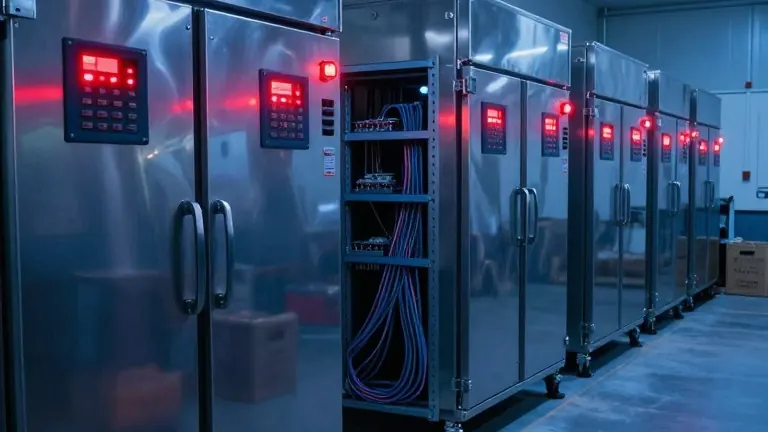
The French National Cybersecurity Agency, known as ANSSI, reported that the intruders took control of refrigeration controllers at approximately 700 retail locations. The group included supermarkets and butcher shops. During the attacks, the hackers increased the internal temperatures overnight. This action spoiled millions of dollars' worth of food inventory. The agency also confirmed that several small hydroelectric power plants were targeted, resulting in what it described as moderate effects on operations.
French Foreign Minister Jean-Noël Barrot characterized the campaign as the first large-scale cyberattack aimed at sabotage on French national territory. He stated that the operation constituted a major attack on the nation's interests and the security of its people. The Paris Prosecutor's Office has opened an investigation into the Iranian cyber unit Shahid Kaveh, which the government links to the Islamic Revolutionary Guard Corps. The prosecutor's office is requesting the issuance of international arrest warrants.
The incident fits a pattern of attacks on refrigeration systems across the continent and beyond. Similar disruptions occurred in grocery stores in Sweden and Ireland last week. In a separate case in France, staff at a major blood bank had to manually save blood samples after their cooling systems failed. In the United States, food spoiled on military bases over the summer, though the Department of Defense has not officially confirmed a cyber link to those disruptions.
ANSSI identified the hackers through digital infrastructure connections, ties to a propaganda outlet, and traces of the Farsi language in the code. The agency noted that the scale and aggression of the attack were distinct. The French government is the first to formally assign blame for this specific wave of destructive operations.
Cybersecurity experts say the tactics align with the known strategy of Iranian state actors. Alex Orleans of Sublime Security said the attacks show an attempt to reassert power through physically disruptive operations. Ari Ben Am of the Foundation for the Defense of Democracies noted that Shahid Kaveh has a history of offensive cyber operations against French interests, including the Charlie Hebdo magazine and digital kiosks at the 2024 Paris Olympics.
Secretary of State Marco Rubio, attending the G7 meeting in Paris, declined to comment on information sharing with France. He remarked that the French are quite capable of handling the attribution. Rubio expressed surprise at the targets, noting that France is not directly involved in the ongoing conflict between the U.S. and Iran. Iran has not yet responded to the accusations.