Stony Brook Researchers Find Lithium Solution to Boost Flow Battery Capacity
A new study suggests replacing sodium or potassium with lithium in ferrocyanide electrolytes could make renewable energy storage more affordable and efficient.
By Julia Wang ·
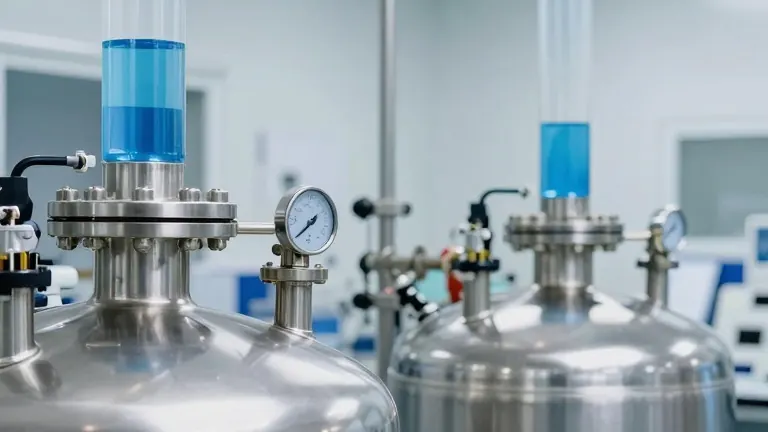
Lithium-based ferrocyanide electrolytes dissolve active materials at rates six to eight times higher than their sodium and potassium counterparts under strongly alkaline conditions. This specific solubility improvement could allow redox flow batteries to store more energy in the same volume of liquid, addressing a key cost barrier in renewable energy infrastructure.
The finding comes from a study released by Professor Nav Nidhi of the Department of Materials Science and Chemical Engineering at Stony Brook University. Nidhi collaborated with Kuldeepsinh Raj, a PhD candidate at Stony Brook, and Professor Xiaoliang Wei’s team at Purdue University. The research team sought a more affordable alternative to vanadium-based redox flow batteries, which are reliable but expensive due to the cost of vanadium.
Redox flow batteries operate differently from traditional lithium-ion batteries. They store energy in two separate tanks filled with liquid electrolytes that are pumped through a central cell. A membrane prevents the liquids from mixing while allowing ions to pass. In this system, the power output is determined by the size of the central cell, while the energy capacity is determined by the size of the external tanks.
Nidhi noted that conventional lithium-ion batteries lock energy and power together, requiring larger batteries for greater storage. In contrast, flow batteries allow engineers to increase energy storage simply by using larger tanks or more electrolyte without changing the electrochemical cell size. This design flexibility is critical for bridging the gap between renewable generation and consistent demand.
Mahla Sarfaraz Khabbaz at Purdue University led the experimental work, while Raj led the computational modeling. The team investigated how replacing sodium or potassium ions with lithium ions in ferri/ferrocyanide-based electrolytes would affect solubility. Cheaper alternatives to vanadium, such as ferrocyanide using iron paired with sodium or potassium, have historically suffered from lower solubility, limiting their energy storage potential.
Raj explained that molecular dynamics simulations and quantum chemistry calculations revealed why lithium improves performance. Lithium ions interact strongly with both water and ferrocyanide, forming connected, water-containing structures that remain dissolved even at high concentrations. These molecular-level interactions explain the enhanced solubility and delayed saturation observed in the lithium-based electrolytes.
The increased solubility presents a trade-off regarding viscosity. As electrolyte concentrations rise, the liquid becomes thicker, making it harder to pump. This increased viscosity can potentially reduce battery efficiency. The team must balance the gain in energy density against the mechanical costs of moving more viscous fluids through the system.
The researchers believe this type of energy storage will be especially useful for renewable energy grids. Raj noted that solar farms could store electricity generated during the day and release it during the evening when demand peaks. Making flow batteries more affordable, energy-dense, and durable could help renewable energy become a more reliable part of the electricity supply.
The study aims to lower the cost of long-duration energy storage. By identifying a cheaper chemical pathway that offers higher solubility, the team provides a new option for developers looking to integrate solar and wind power into the grid without relying on expensive vanadium or solid-state lithium batteries.