Halloween Economics: $13.5 Billion U.S. Expenditure vs. $940 Million U.K. Total
National Retail Federation data indicates Americans will spend nearly 14 times more than Britons on the holiday, driven by commercial infrastructure and adult participation.
By Adrian Kovalenko ·
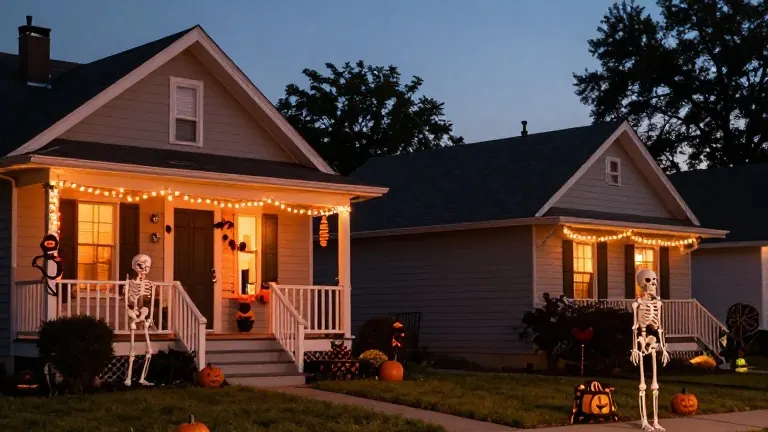
U.S. consumers are projected to spend $13.5 billion on Halloween this year, according to the National Retail Federation. This figure stands in sharp contrast to the $940 million expected in Britain. The disparity represents a per-person spending difference of roughly three times between the two nations.
Koen Pauwels, Distinguished Professor of Marketing at Northeastern University, attributes the gap to the specific structure of American retail and social habits. He noted that the holiday carries no religious mandates or required family dinners. Instead, it functions as a vehicle for pure participation and self-expression. Pauwels observed that Americans have extended the tradition to include adults, pets, and extensive home décor.
The commercial dominance of the holiday in the United States stems from its placement in the retail calendar. It sits between back-to-school sales and the Christmas season without a competing major holiday. Candy manufacturers, retailers, and pop-up chains have built a dedicated ecosystem around this period. Pauwels described the situation as an open commercial slot that allowed the industry to flourish.
The holiday’s origins trace back more than 2,000 years to Samhain, a Celtic festival observed in Scotland, Ireland, Wales, and northern France. Celebrated between October 31 and November 1, the event marked the end of the harvest season. The Ulster Folk Museum in Northern Ireland notes that the boundary between the living and the dead was believed to be thin during this time. Communities lit bonfires to attract good spirits and ward off evil ones.
Celtic traditions included wearing costumes to hide from spirits and eating harvest fruits that would not last the winter. Apple pies and barmbrack, a fruit bread, were baked with hidden charms such as rings or coins to predict fortune. These practices evolved as Roman festivals and later Catholic observances merged with existing rites. The three-day period known as Allhallowtide eventually encompassed All Hallows’ Eve, All Hallows’ Day, and All Souls’ Day.
In Britain, the 16th-century Reformation pushed All Hallows’ customs to the margins. Bonfire Night, commemorating the failed 1605 plot to blow up Parliament, became the predominant autumn fire festival. Irish and Scottish immigrants brought many customs to North America in the 19th century. The tradition of carving pumpkins replaced the original use of turnips, a shift driven by the abundance of native pumpkins in America.
Postwar suburban development further cemented the holiday’s status in the United States. Walkable streets and front porches facilitated neighborhood trick-or-treating, a practice organized in the 1930s and 1950s to reduce vandalism. Francis Blessington, professor of 17th-century English literature at Northeastern University, noted that people historically did anything to appease the dead or rid themselves of evil spirits.
Halloween has recently gained commercial traction in the United Kingdom, largely as an American import through film and television. Pauwels stated that spending in the U.K. has grown steeply, particularly among younger consumers. However, certain customs remain distinctly American. Britons have not fully adopted the practice of competing with neighbors through elaborate displays such as 12-foot skeletons in front yards.
Source: Northeastern Global News
More Business · Business Watchdog · Report a business · Got a Story?