Historic Congressional Cemetery hires first death doula
Laura Lyster-Mensh leads tea-filled conversations and 'death cafes' to help visitors discuss mortality openly.
By Adrian Kovalenko ·
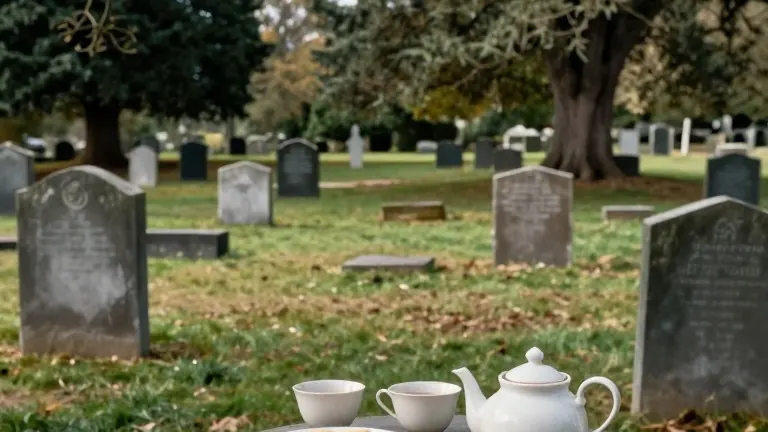
Historic Congressional Cemetery in Washington, D.C., has hired a death doula to help visitors talk about mortality. Laura Lyster-Mensh is the first person to hold this specific role at the national landmark. Her job is to guide conversations about end-of-life care and grief.
A death doula provides support during the final stages of life. This includes planning final moments and giving rest to tired caregivers. Lyster-Mensh says her focus at the cemetery is promoting what she calls "death positivity." She walks with visitors through the grounds, encouraging open dialogue about death without fear.
Lyster-Mensh acknowledges that the phrase "death positivity" can sound strange to those who are grieving. She believes the concept actually helps people live better lives. "I actually think that death positivity is about living better. Because what are we afraid of? When we turn that and we look at it as boundaries on our life that make life precious, we can feel better," she said.
She organizes regular events known as "death cafes." At these gatherings, she serves tea and cookies. She also uses a deck of cards called "the death deck." These cards are designed to start discussions about dying. "At first people will say, 'Death, oh, I don't want to do that,'" Lyster-Mensh noted. "But you pull out one of these cards and you start talking and you learn things about the people that you care about and you start real conversations."
Lyster-Mensh observes that people often avoid these talks until it is too late. She advises visitors to slow down their daily pace. "I think we try to speed through everything. We try to speed through grief. We try to speed through happy moments, we hoard it. But you can't really be present if you're hoarding it," she said.
The cemetery hosts these events to create a space for difficult topics. The initiative aims to make conversations about dying less awkward for the public. Lyster-Mensh continues to lead these sessions for visitors of the historic site.