Lebanese family returns to burned home after Israeli withdrawal test
The Kadouh family found their house set on fire and their trees uprooted during the first trial of the US-brokered ceasefire plan in southern Lebanon.
By Adrian Kovalenko ·
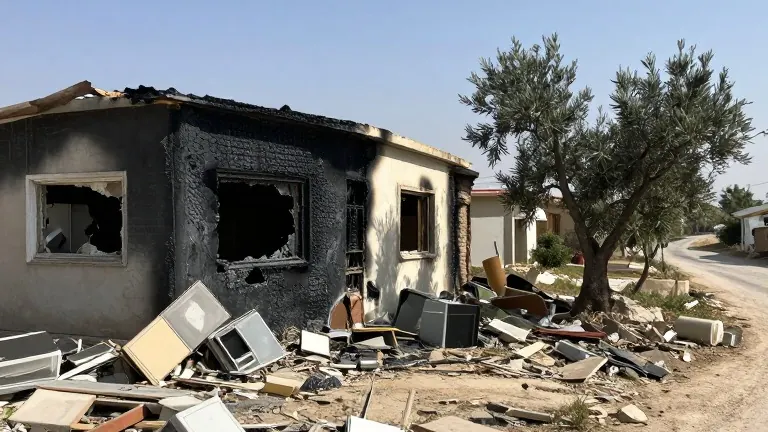
The Kadouh family returned to their village of Zawtar al-Gharbiyah in July to find their 40-year-old home reduced to a charred shell. Israeli forces had occupied the residence and set it on fire during the first test of a US-brokered plan for a military withdrawal. The family, which includes five children, had lived in the house for decades after Atef Kadouh saved money from two decades of work in Saudi Arabia.
The withdrawal plan aims to keep Iran-backed Hezbollah out of the southern border region. Hezbollah began firing rockets in October 2023 in solidarity with Hamas, prompting Israeli air strikes and a ground invasion. Israel states it continues attacks in south Lebanon to eliminate threats to its northern border. The Israeli defense minister has acknowledged the destruction of more than 20,000 homes in a self-declared security zone.
The family’s return is complicated by the death of their youngest son, Adel Kadouh. The 27-year-old sports teacher volunteered as an ambulance driver when the war began. Israeli forces killed him and four other medics in a drone strike on March 28. They were struck while burying a 75-year-old man who had died in a hospital. Lebanon’s Health Ministry reports that Israel has killed more than 135 first responders and medical staff in the past two years.
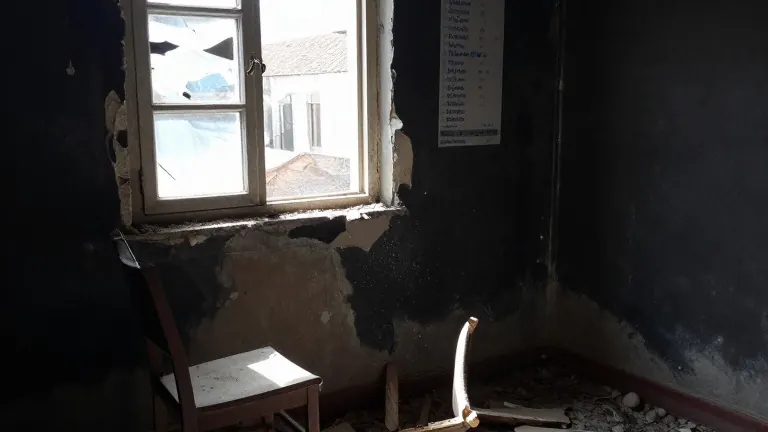
Inside the wrecked home, bullet holes pierced the refrigerator, freezer, and washing machine. Furniture and appliances were pushed over the second-floor balcony and smashed on the ground below. The ceiling in their 18-month-old grandson’s room was scorched, with soot dripping onto walls decorated with teddy bears. A spent missile propulsion unit with English markings lay in one of the rooms. The family found no running water or electricity after Israeli forces destroyed the solar panels.
The Lebanese army told the family that many houses in the village were rigged with explosives. The army dismantled the devices left by Israeli forces. The Israeli military stated that its policy bars burning homes or leaving explosives, though it did not reply to specific queries about the damage to the Kadouh house. The army also used a bulldozer to uproot the family’s pine, olive, and avocado trees, as well as a fig tree brought from Italy.
Atef Kadouh noted that the Lebanese state did not send soldiers to protect the village or check on the residents after their homes were destroyed. He described the local government as deliberately underequipped to avoid threatening Israel. The family now relies on the Lebanese army for protection, though Kadouh compares the army’s rifles to Israeli F-35 fighter jets.
The US-brokered ceasefire remains in effect, though smoke still rises from nearby villages where Israeli attacks continue. The Kadouh family has begun tending to rose bushes that have started to bloom again. They plan to rebuild their home on the land they describe as their life’s work.