Lebanese family returns to burned home as Israeli troops withdraw
Villagers in Zawtar al-Gharbiyayh face shattered infrastructure and missing water after a U.S.-brokered plan for military handover.
By Julia Wang ·
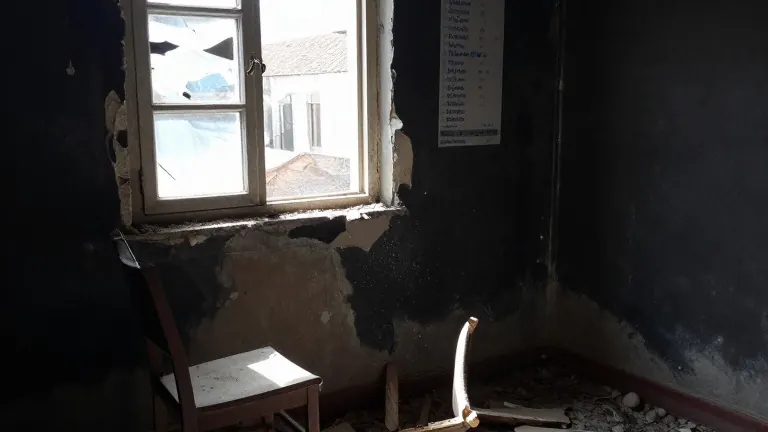
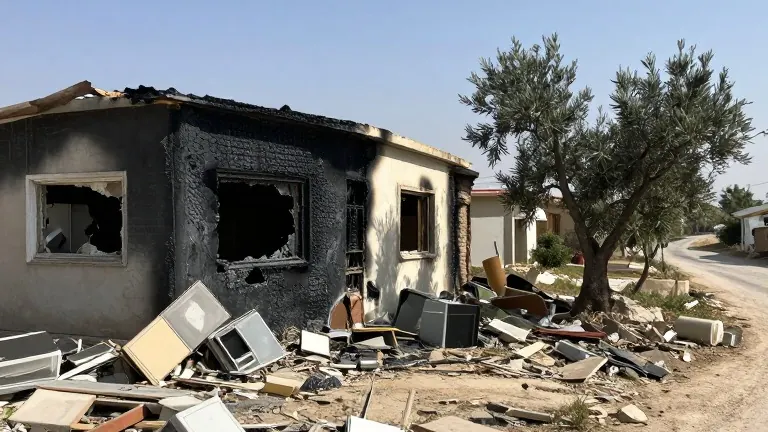
Atef Kadouh returned to his home in Zawtar al-Gharbiyayh in July to find his house on fire and his property stripped. The village was the first site for a U.S.-brokered plan to pull Israeli forces out and hand control to the Lebanese army.
The Israeli military occupied the home before leaving it. They set it on fire during their departure. Blackened food packets and rotting sandwiches lay on the kitchen floor. Bullet holes poked through the refrigerator, freezer, and washing machine. Soldiers pushed furniture over the second-floor balcony, smashing it against the ground below. A work roster written in blue Hebrew marker named the soldiers who stayed.
The damage extended to the family's agricultural assets. The Israeli army used a bulldozer to uproot pine trees. These trees produced pine nuts, a key cash crop for the family. The military also demolished the family garage and destroyed their tractor. The home now lacks running water and electricity. The Israeli military destroyed the solar panels that previously powered the house.
Kadouh lost his youngest son, Adel, during the conflict. Adel was a 27-year-old sports teacher and ambulance driver. The Israeli military killed him and four other medics on March 28 in a drone strike. The first responders were burying a 75-year-old man when the strike hit. Lebanon's Health Ministry says Israel has killed more than 135 first responders and medical staff in the past two years. The Israeli military said militants sometimes use ambulances to move weapons. It did not provide proof for this claim in response to the specific airstrike.
The Lebanese army told the family that it dismantled explosives left in the house by Israeli forces. The army said it rigged many houses in the village to be blown up. The Israeli army stated that military policy bars burning homes or leaving explosives. It did not reply to questions about why this specific house was damaged or set on fire.
Kadouh said the family feels abandoned by the Lebanese government. He noted that no state officials or political parties checked on them after the destruction. He said the Lebanese army has not protected the village because it is deliberately underequipped. He compared the army's rifles to Israel's F-35 fighter jets.
His wife, Soumaya Yaghi, pointed out the spots where fruit-bearing cactus, olive trees, and avocado trees once stood. She said the family raised their children through hard work on this land. The family now lives in the wrecked home with a photo of their deceased son propped near the doorway.