Montreal Summit Tests EU-Canada Alliance
Leaders gather to define a new partnership structure while debating the label of associate membership.
By Julia Wang ·
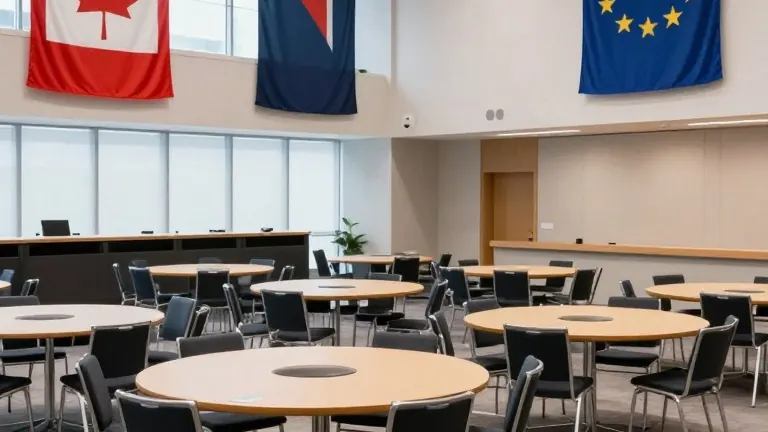
Canadian families and businesses face new opportunities for travel, study, and trade as Montreal hosts a two-day summit between Canada and the European Union. Prime Minister Mark Carney and European Commission President Ursula von der Leyen are meeting to formalize a framework for closer cooperation. The goal is to reduce both sides' dependence on the United States in trade and defense.
The central point of contention is the official status of Canada within the bloc. Von der Leyen proposed the label of associate member last month. She posted on social media upon arriving in Montreal that Europe wants to bring Canada closer than ever before as an associate member. This designation implies a level of integration that goes beyond previous arrangements with non-European nations.
Resistance to the specific title is already evident among EU partners. Anand Sundar, a special adviser at the European Council on Foreign Relations, noted that France and Germany are unhappy with the term. He suggested the label may not survive the summit negotiations. Carney downplayed the importance of the name, stating that specific nomenclature matters less than the tangible benefits for Canadians. He cited opportunities for students, businesses, and researchers as the primary drivers of the deal.
The summit aims to launch an Alliance for the Future. This framework covers trade, defense, critical minerals, technology, and research. It would establish regular meetings between Canadian ministers and European commissioners. It also expands access to the Erasmus+ program for student exchanges. Officials hope to develop this partnership for possible endorsement in 2027.
Canada will not formally join the EU, which would require aligning its laws with the bloc’s regulations. Carney ruled out full membership. Canadian officials stated the country would not assume the EU’s general budget obligations, though it might contribute to specific programs. Any enhanced partnership will require a vote in Canada’s Parliament.
Defense ties are a key component of the new relationship. Canada is the only non-European country in the EU’s 150-billion-euro SAFE defense procurement program. Ottawa is currently reviewing plans to buy 72 additional American-made F-35 fighter jets. It is considering Sweden’s Saab Gripen as an alternative. Canada has already committed to an initial 16 F-35s.
Trade dynamics are shifting rapidly. The United States accounted for 71.7% of Canada’s merchandise exports in 2025. Carney wants to double exports to other countries over the next decade. The two sides are exploring European Investment Bank financing for critical minerals. They are also working on digital trade rules and methods to stabilize mineral prices.
President Donald Trump has suggested the arrangement could be a hostile act. He threatened tariffs on Europe if he views it as unfriendly. A senior Canadian official told reporters Wednesday that the closer relationship reflects longstanding shared interests rather than a direct move against Washington. The summit concludes Friday with formal leaders’ talks.
Source: The Boston Globe