NYC Schools Chancellor Faces Call to Merge Small High Schools
With 72 underenrolled high schools sharing buildings, educators urge the city to pool resources and close campuses to fix academic gaps.
By Naomi Tesfaye ·
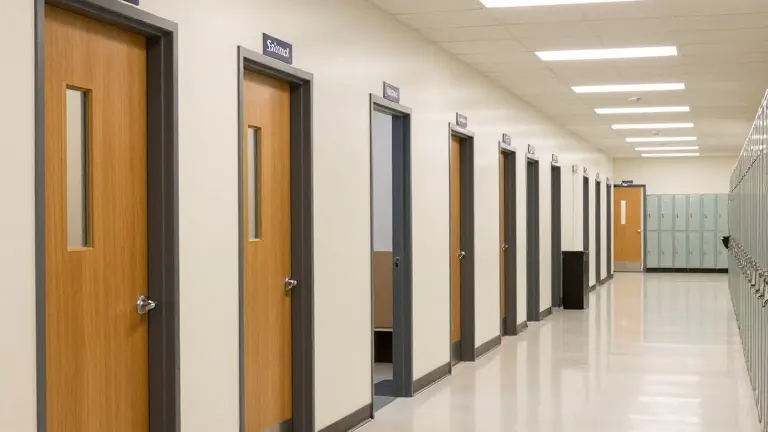
New York City Schools Chancellor Kamar Samuels faces increasing pressure to address the growing number of underenrolled high schools in the city.
An analysis by Chalkbeat found that 72 of the city's high schools with fewer than 250 students operate on shared campuses. These institutions cluster students with the fewest academic opportunities in buildings where enrollment has dropped for years. The situation has intensified scrutiny on the administration as it enters its second year.
Johanna Bjorken, a parent leader in Lower Manhattan, wrote to city officials in September after learning about the conditions at Murry Bergtraum High School for Business Careers. Her son attends a school on the same campus. While his school offers Advanced Placement Calculus, Murry Bergtraum had only one math teacher last year. Students there took only Algebra I and II and sometimes attended night school to meet graduation requirements. The school’s per-student budget was nearly twice the city average.
“I was shocked to hear that students, some of whom may very well play volleyball or soccer with my child, have to go to night school for basic graduation requirements, and moreover, that the school’s situation has been known for many years with no action,” Bjorken said in her letter.
Amy Piller, principal of Urban Assembly Maker Academy on the Murry Bergtraum campus, said the system pits schools against each other. She noted that schools on shared buildings need to share resources the most. Piller’s school is a finalist for a grant to convert an unused locker room into a shared academic space for all schools on the campus.
Samuels told parent leaders this week that the Education Department is considering creating campus working groups for high schools. He indicated at a town hall last week that he is not crafting a single citywide plan. Instead, five working groups are devising blueprints for underenrolled schools in their districts. None of these groups includes high schools. City officials have not provided a timeline for this work.
Some campuses have already begun pooling resources. At the Theodore Roosevelt campus in The Bronx, principals of six co-located schools opened advanced courses to the entire campus a decade ago. Michael Barakat, principal of Bronx High School for Law and Community Service, called the scheduling challenging but necessary. At the Lehman High School campus in The Bronx, six schools aligned their bell schedules in 2016 to share courses.
Mike Sill, secretary of the United Federation of Teachers, said the department often leaves principals up to their own devices. He noted that while some principals pool course offerings, others lack guidance as rosters shrink. Shael Polakow-Suransky, president of Bank Street College of Education, said sharing core academic subjects is harder than sharing electives due to conflicting grading policies and instructional models. Vivian Orlen, former Manhattan high school superintendent, described resource pooling as a Band-Aid rather than a systemic solution. Barakat agreed that merging schools is the logical next step, but he hopes principals will continue to work with colleagues in the meantime.
Source: THE CITY