
Psoriasis Reveals Systemic Immune Inflammation
New guidance from specialists emphasizes that late-life skin symptoms often signal deeper immune activity rather than isolated dermatological issues.
By Julia Wang ·
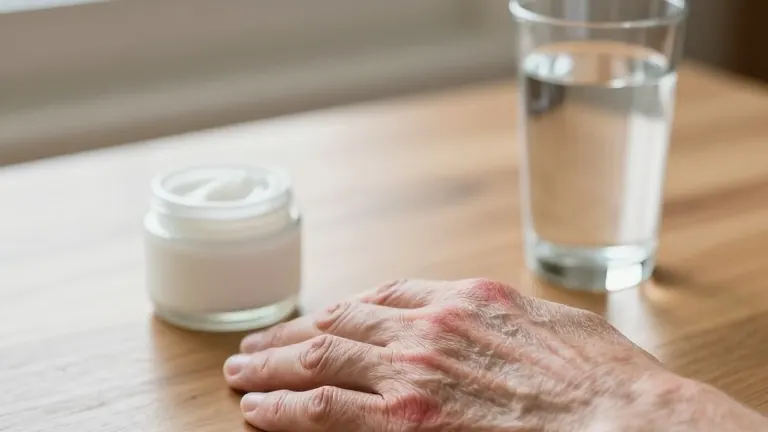
Psoriasis functions as an immune-mediated inflammatory disease rather than a simple skin condition, according to Dr. Rhea Rogers, a board-certified physician. Rogers stated that the disorder can develop at any age and involves systemic inflammation that manifests through the skin and nail beds. Patients often observe scaly patches, redness, itching, or nail changes such as pitting, discoloration, or lifting.
When swollen or tender joints appear alongside a rash, Rogers noted that the condition extends beyond the surface. "Then you have to start thinking further, because it is a clue that you have some systemic inflammation going on underneath, and it is systemic," Rogers said. She explained that psoriasis also increases the risk for cardiovascular disease and diabetes, indicating underlying susceptibility to other health issues.
Genetics play a role in developing the condition. Gerontologist Sam Cradduck, who has lupus, noted that two of her children have psoriasis, with one also suffering from psoriatic arthritis. Cradduck explained that a genetic predisposition combines with triggers to initiate an inflammatory response. "When you have autoimmune diseases already in your genetic history, you have a predisposition, and then something triggers it. Then the inflammatory response takes off, and there you go," Cradduck said.
Rogers identified stress, infection, skin injury, and specific medications as common triggers. These medications include beta blockers, lithium, and antimalarial drugs. Cradduck compared stress-induced flares to acne breakouts before major events, noting that the same stressors affect those with autoimmune conditions. Getting sick can also cause flares because the immune system is already not regulating properly.
Aging expert Amy O'Rourke advised patients to avoid long, hot showers and to use moisturizer consistently. She recommended consulting a doctor immediately if an infection develops. O'Rourke pointed to the National Psoriasis Foundation as a resource for information on causes, triggers, treatments, and diet. Cradduck reported that her daughter has had good results with a prescribed cream and has not experienced a flare in some time.
Rogers cautioned against assuming late-life skin changes are psoriasis without checking for fungal infections or medication reactions. She urged patients with joint involvement to seek specialists who can look for other autoimmune disorders. "Once it becomes no longer a skin disorder, this is a systemic disorder," Rogers said. "If you have one autoimmune disorder, you have others. Go to someone who knows how to look for it."
Katherine Ambrose, an aging well coach, encouraged viewers to interpret body signals as feedback rather than judgment. Rogers urged patients to identify personal triggers, while Cradduck suggested meditation, de-stressing, medications, and oatmeal baths as supportive measures. Active flares require treatment because they do not resolve on their own.