Tesla Scraps Right-Hand Drive Plan, Stranding $150 Australian Deposits
The electric automaker has voided thousands of reservations in the region, citing prohibitive costs for re-engineering its pickup truck for local markets.
By Mei Lin ·
Tesla has formally terminated the production pipeline for the Cybertruck in Australia and New Zealand, a decision that leaves thousands of regional customers with cancelled orders. The company sent notification emails to reservation holders today, confirming that their deposits will be refunded and their pre-orders are now void. This move effectively ends a nearly seven-year wait for an electric pickup that the manufacturer no longer intends to build for the right-hand-drive markets.
The timeline of this cancellation stretches back to November 2019, when Australian consumers began paying A$150 to secure a spot in the queue. For years, Tesla maintained a public presence in the region, occasionally closing the reservation page without immediate refunds. In May 2022, the company quietly replaced the order button with a 'Get updates' prompt, leaving existing holders in limbo. By 2024, executives continued to signal optimism, with CEO Elon Musk suggesting certification for other markets could occur 'sometime next year,' yet the truck never received the necessary local adaptations.
The core financial obstacle preventing the launch was the vehicle's design. The Cybertruck is manufactured exclusively in left-hand drive, which requires significant re-engineering and certification costs for markets like Australia and New Zealand. Tesla has determined that the projected sales volume does not justify this capital expenditure. The automaker’s international strategy has thus far been limited to left-hand-drive countries, including South Korea, the UAE, and several Middle Eastern nations, while the truck remains blocked in the EU due to pedestrian safety regulations.
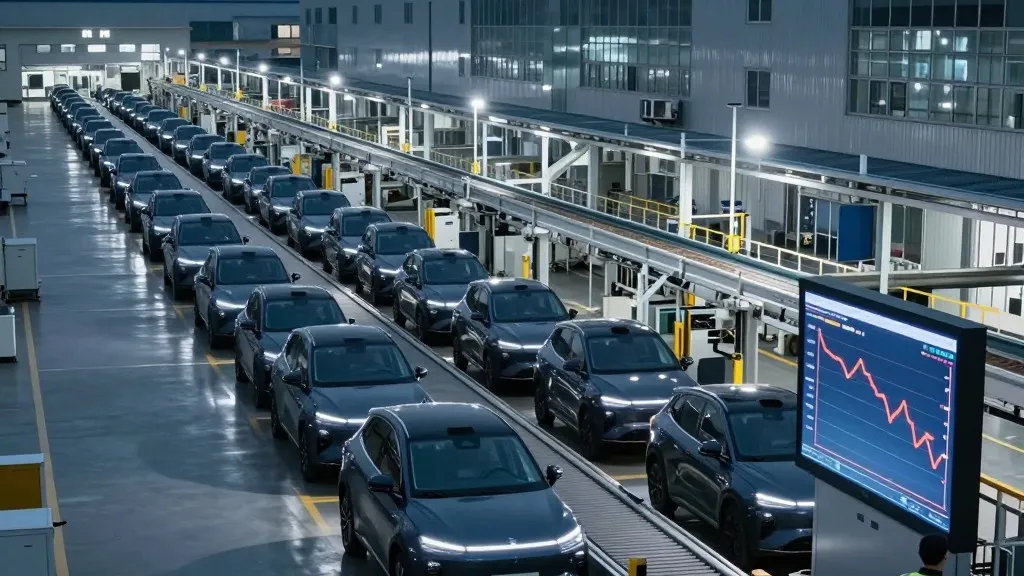
Market data suggests the Cybertruck is facing demand headwinds that make a niche international rollout difficult. In the third quarter of 2026, Tesla delivered just 8,295 units categorized as 'Other Models,' a segment now dominated by the Cybertruck since production of the Model S and Model X ended. Analysts estimate that Cybertruck sales in the recent quarter hovered between 7,000 and 8,000 units, translating to an annual pace of roughly 30,000 vehicles. This figure is a fraction of the 250,000 units annually that the production line was originally designed to handle.
In its communication to customers, Tesla stated that after careful consideration, plans to produce the vehicle for the region have been discontinued. The email confirmed that full refunds for any payments made would be processed within 30 days. To mitigate the impact on the customer base, the company is offering a strategic incentive: a free one-year subscription to Full Self-Driving (Supervised) for those who switch their pre-order to a Model 3 or Model Y, both of which are already available in right-hand-drive configurations.
This cancellation follows closely on the heels of Tesla’s Q3 2026 earnings report, released just one day prior. The timing suggests the decision was made in direct response to the current financial landscape and production realities. While Australia was once considered a significant market for the vehicle, with crowdsourced data indicating it held roughly 3% of all global reservations, the changing product specifications have altered the value proposition. The current model is more expensive and offers less range than the version originally promised in 2019.
The move signals a broader shift in how Tesla approaches its international expansion for the pickup segment. Rather than investing in costly local adaptations for smaller markets, the company is focusing on placing existing left-hand-drive units in compatible regions. This strategy confirms that the Cybertruck is currently a niche product, primarily supported by the North American market where demand has also cooled significantly since its peak in 2024.
For Australian and New Zealand investors and consumers, the cancellation represents a finality to a long-standing ambiguity. While the refund process begins now, the experience underscores the risks of early-stage reservations for vehicles that undergo significant engineering changes during long development cycles. Tesla is now looking to convert the remaining goodwill from these reserved customers into sales of its core sedan and SUV lines, which remain its primary revenue drivers in the region.
Source: Electrek