UNSW researchers find smart car apps enable domestic abuse control
New data shows 67 percent of Australian car brands offer digital keys, creating new ways for perpetrators to track and restrict victims' vehicles.
By Julia Wang ·
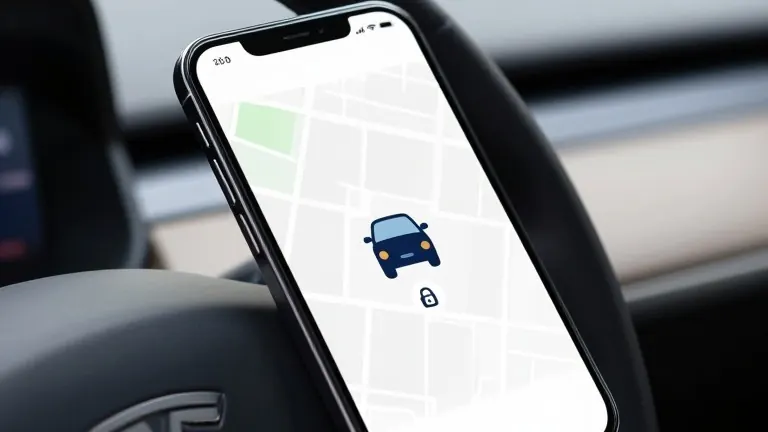
University of New South Wales researchers released a report on Tuesday detailing how smart car technology is being used by perpetrators to control and track victims of domestic violence. The study examines how connected vehicle functions, which manufacturers market as safety and convenience tools, are being exploited to monitor movements and limit mobility in abusive relationships.
The data reveals that 67 percent of car brands in the Australian market advertise digital key access. This feature allows drivers to unlock or start engines using mobile phones. The report warns that this connectivity gives abusers the ability to remotely terminate or restrict a victim’s ability to use the vehicle. By deactivating the digital key, a perpetrator can strand a victim in an unsafe location or prevent them from escaping.
Geolocation is the most widespread feature, advertised by all 15 of the top car brands studied. While marketed as vehicle tracking services, the report notes this tool enables real-time monitoring of a victim’s movements. Additionally, 60 percent of these brands offer a zone exit alert. This function triggers an alarm if the car leaves a designated area. Researchers suggest abusers can set small boundaries around a home to receive notifications when a victim attempts to leave.
Speed and acceleration restrictions are advertised by 20 percent of the top brands. These features are often intended for young drivers or valet services. However, the report identifies cases where abusers limit a vehicle to 40km/h. This restriction prevents victims from safely using highways or escaping at speed. In Australia, a man was found guilty earlier this year of using a connected car app to enforce a 40km/h limit on his ex-partner's driving.
The study outlines three primary scenarios for this exploitation. These occur when the abuser owns the car and created the account, when they are granted access as a secondary user, or when they impersonate the victim to create an account. In the United States, a woman discovered in 2022 that her ex-husband had used a car app to track her location. The carmaker reportedly refused to remove his digital access to the vehicle.
Katharine Kemp, a data privacy expert at UNSW and co-author of the report, stated that carmakers must adopt safety by design principles from the early stages of development. She noted that many functions, including tracking and remote control, are managed via smartphone apps, creating specific opportunities for misuse. The report emphasizes that there is almost no current accountability for manufacturers to limit these potential misuses.
The researchers recommend that carmakers evaluate how functions might be misused during the design phase. This process should determine if a feature should be offered if the risks outweigh the benefits. Emma Buxton-Namisnyk, another co-author, highlighted the lack of widespread understanding regarding how these technologies can be exploited in abusive relationships. The report calls for improved industry safeguards to address these gaps.
Last year, eSafety Commissioner Julie Inman Grant raised concerns after receiving reports from frontline workers. She noted that more than 90 percent of new cars sold in Australia by 2031 will have embedded connectivity. Inman Grant called for urgent action to make these vehicles safer. The government is currently reviewing these issues as it finalizes its Second Action Plan to End Violence Against Women and Children.
Tanya Plibersek, the minister for social services, stated that the government is considering further actions to address the risks posed by smart devices. She mentioned that the government has developed a support service to help frontline workers manage technology-facilitated abuse. Plibersek noted that new forms of violence are emerging, with devices such as smart fridges and electric vehicles being used to stalk and control victims.
More Business · World news · Business Watchdog · Report a business · Got a Story?