Internal Memo Reveals US Agency Concerns Over Rising Gulf Shipping Costs
Documents show the US Maritime Administration warned that the Iran blockade is driving up war risk premiums and reducing tanker capacity in the Gulf.
By News Media House Staff ·
Internal documents obtained by Al Jazeera reveal that the US Maritime Administration, known as MARAD, has formally acknowledged the disruptive effects of Washington’s maritime blockade against Iran. The agency’s alert highlights how the conflict is negatively impacting commercial shipping, specifically through increased insurance premiums and a reduction in available cargo capacity.
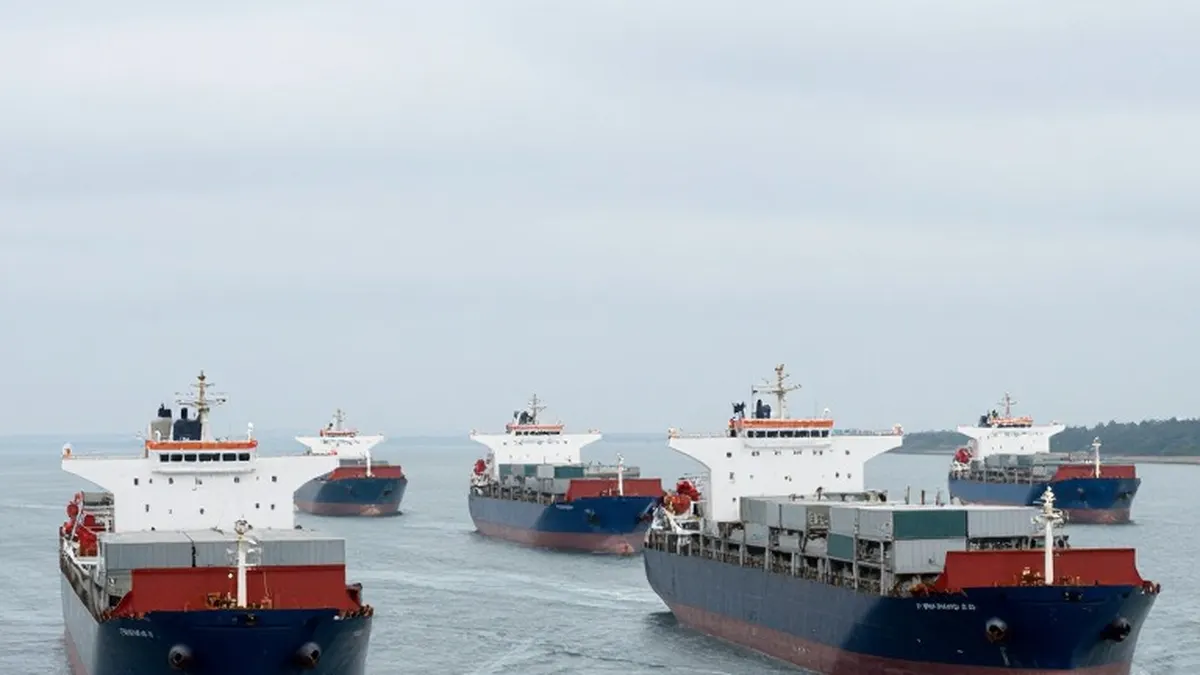
The alert was issued following an announcement by US Central Command, or CENTCOM, that it had disabled a Panama-flagged bulk carrier named Ocean Molica. The vessel was targeted for attempting to breach the blockade. This incident occurred alongside unattributed attacks on three other tankers in and around the Strait of Hormuz.
MARAD administrator Stephen M. Carmel shared the alert with a subordinate on October 12. The memo, titled “Alert: Hormuz risk expands beyond the strait,” stated that merchant ships now face kinetic action from both sides of the conflict. It noted that the threat has spread to Gulf anchorages and the Gulf of Oman, increasing the likelihood of further spikes in war-risk premiums and crew refusals to sail.
In an email exchange, Carmel requested information from Michael Yarrington, an official at MARAD’s Office of Marine Insurance, regarding how the insurance market was reacting to the attacks. Yarrington replied that his team had contacted associates in London and compiled a summary of rising premiums based on news reports. The emails also referenced core deliverables for MARAD’s war risk insurance efforts, though those specific details were redacted before release.
The emergence of this memo comes at a time when a definitive end to the Iran war remains uncertain. Months of intermittent negotiations between Washington and Tehran have not yet produced a lasting peace. US President Donald Trump recently dismissed the immediate need for a peace deal, stating on social media that the US has secured significant financial gains and control over the Strait.
Todd Huntley, a retired US Navy captain and legal scholar, suggested that MARAD’s monitoring is likely intended to inform other branches of the US government. He observed that while MARAD typically issues general alerts, it is unusual for them to discuss specific consequences such as insurance rate increases. Huntley believes some officials may have underestimated or ignored these risks when implementing the blockade.
Ian Ralby, CEO of maritime security consultancy I.R. Consilium, noted that the administration appears focused on preventing ships from aiding Iran’s economy rather than on broader strategic considerations. He suggested that potential economic consequences may have been considered but deemed unimportant by decision-makers who appear unperturbed by the global fallout.
Global shipping has been severely affected since US and Israeli strikes on Iran began on February 28. According to the International Maritime Organization, approximately 130 attacks on vessels have been recorded, resulting in at least 25 seafarer deaths. October was the worst month for shipping, with 35 vessels targeted.
Costs for shipping lines have surged dramatically. OPEC data shows that insurance for an oil tanker carrying crude from the Middle East to East Asia increased roughly 200-fold from January to the end of October. Industry estimates indicate that war risk cover now costs 3.5 percent to 7.5 percent of a vessel’s value, up from less than 0.25 percent before the war.
The turmoil has also driven up the prices of crude oil and fertilizer, which have risen as much as 60 percent and 112 percent respectively. The economic impact of the war has been a significant factor in recent US politics, contributing to the Republican defeat in the November 3 midterm elections, where Democrats secured majorities in both the Senate and the House of Representatives.
Originally published by News Media House