117 million independents to decide 2026 midterms despite two-party grip
Polling shows 52 percent of likely independent voters backing Democrats, while structural barriers and high campaign costs keep third-party candidates from winning most federal seats.
By Naomi Tesfaye ·
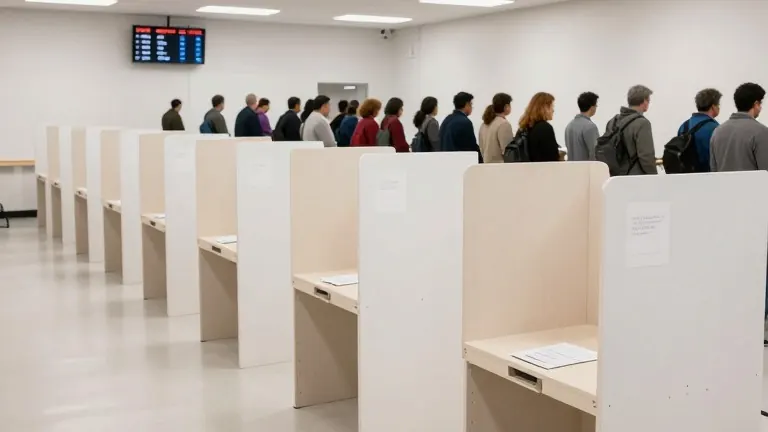
American voters face a decisive choice on Tuesday as 117 million adults identify as politically independent. This group now constitutes nearly half of the US electorate, a demographic that could determine control of the US Congress and state legislatures. While these voters reject the labels of the two major parties, the structure of the election system continues to favor Democratic and Republican candidates.
The Pew Research Center reports that 44 percent of US adults consider themselves independent. This figure exceeds the 29 percent who identify as Democrats and the 28 percent who identify as Republicans. However, most of these individuals still lean toward one of the major parties. Only 7 to 10 percent of the total electorate describe themselves as having no partisan leaning at all. Polling firm Marist indicates that 52 percent of likely independent voters support Democrats in the 2026 midterms, compared to 39 percent who back Republicans.
Rick Bennett, a former Republican Party chair in Maine, is running for governor as an independent. He aims to become only the third independent to hold that office in the state's history. Bennett argues that the electoral system is designed to frustrate independent voters. He notes that millions of eligible voters reject major party labels, yet few cast ballots for independent candidates. Political scientist AJ Simmons agrees that 2026 is shaping up to be a strong cycle for independents, though they have historically struggled to gain high levels of support.
The winner-take-all electoral system and single-member congressional districts work against outsiders. Voters often avoid backing independent candidates to prevent splitting the vote. This dynamic reinforces the dominance of the two major parties. Bernard Tamas, a political scientist at Valdosta State University, states that legal barriers are rarely the primary obstacle. Instead, the cost of running for office is the main hurdle. The 2024 presidential cycle saw $14.8 billion spent on federal elections. The 2026 midterms are projected to reach up to $11.6 billion in political advertisement spending alone.
The Democratic National Committee raised nearly $252.3 million for the 2026 midterm campaign. The Republican National Committee took in about $341 million. Independent candidates raise significantly less money and have lower name recognition. The US offers virtually no public support for political parties and does not set limits on campaign spending. Lesley Shedd, a Republican strategist, says that many self-described independents are actually partisans who do not agree with every issue in their party platform.
The Independent Leadership Council, launched in July by former Senator Joe Manchin, has raised more than $10 million to support independent congressional candidates. Simmons identifies two states where independent candidates may impact the outcome. In Nebraska, independent Senate candidate Dan Osborn is viewed as the most likely alternative to win. The Nebraska Democratic Party did not replace its withdrawn nominee, leaving Osborn as the main challenger to Republican Pete Ricketts. In Montana, former University of Montana president Seth Bodnar is running against Republican Kurt Alme. He is backed by the Independent Leadership Council.
Simmons notes that Montana's Democratic Senate candidate, Alani Bankhead, could draw support from the same center-left voters that Bodnar targets. This could result in a three-way race that allows the Republican candidate to win. In Idaho and South Dakota, independent candidates are not expected to win but may force Republicans to spend more resources on seats they previously considered safe. The presence of independent candidates often pressures major parties to implement new policies or govern more effectively.
Source: Al Jazeera