College Admissions: A Race for Declining Student Numbers
Institutions are dropping barriers to entry as the pool of traditional-age applicants shrinks and acceptance rates rise nationwide.
By Julia Wang ·
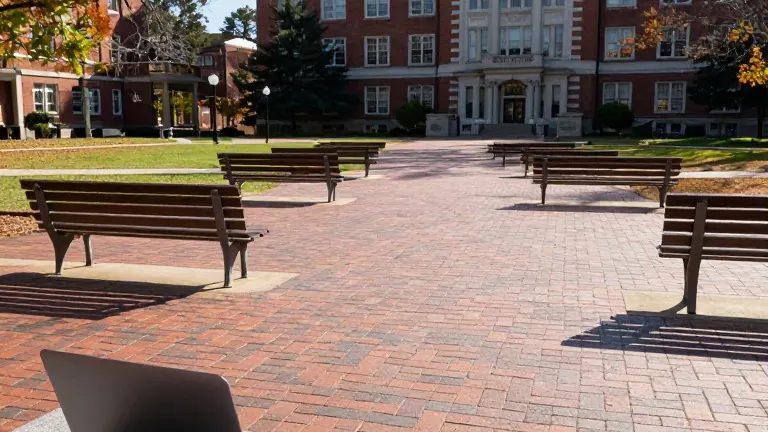
Colleges are abandoning their historical distance to compete for fewer students.
The traditional-age freshman population in the United States is projected to drop by 13 percent over the next 15 years, according to the Western Interstate Commission for Higher Education. The share of high school graduates choosing to attend college has also fallen, declining from 70 percent in 2016 to 63 percent in 2024, per the Bureau of Labor Statistics. Meanwhile, the number of Common App users submitting applications to an average of more than seven schools each continues to climb. This shift makes it difficult for enrollment managers to predict final yields. Federal data shows that the average yield at public institutions fell from 32 percent in 2014 to 22 percent in 2024. At private, nonprofit colleges, the figure dropped from 24 percent to 18 percent over the same period.
Administrators at Skidmore College in Saratoga Springs, New York, are responding by involving faculty in the recruiting process. Previously, the admissions office handled all interactions with prospective students. Now, professors open their labs and classrooms to applicants. Jess Ricker, the college's vice president for enrollment, stated that the goal is to help students feel valued and find a place of belonging. Marc Conner, Skidmore's president, noted that even with a stable enrollment of 2,719 students, the institution faces the same market pressures as other schools. He encouraged everyone on campus, from dining hall workers to groundskeepers, to be welcoming to visitors.
Other institutions are adopting similar strategies. At Ohio Northern University, at least one faculty member meets with every visiting applicant. Washington College in Maryland designates specific Fridays for faculty to sit with prospective students during the admissions season. Johnnie Johnson, the college's vice president for enrollment management, explained that he initially faced resistance from faculty who preferred to focus solely on teaching. He countered by highlighting the financial link between student enrollment and programmatic funding, including staff raises. Johnson noted that faculty are aware of colleagues at institutions that have closed or cut programs due to declining numbers.
The National Association for College Admission Counseling reports that nearly 8 in 10 first-year applicants to public colleges and 7 in 10 to private institutions are accepted. Those figures are up from 68 percent and 65 percent, respectively, about a decade ago. Angel Pérez, the association's CEO, attributed the public perception of difficulty to a focus on elite schools like Harvard and Stanford, which admit about one in 25 applicants. NACAC data shows that only 33 colleges and universities in the country admit 10 percent or fewer of their undergraduate applicants. A Pew Research Center survey found that more than 40 percent of 18- to 29-year-olds incorrectly believe college admission is harder now than it was for their parents' generation.