Johnson's 'Chaos' Warning Now Reality as Democrats Seize House and Senate
Speaker Mike Johnson predicted two years of turmoil if Democrats won, and his party's loss of the House triggers the aggressive oversight he warned was coming.
By Julia Wang ·
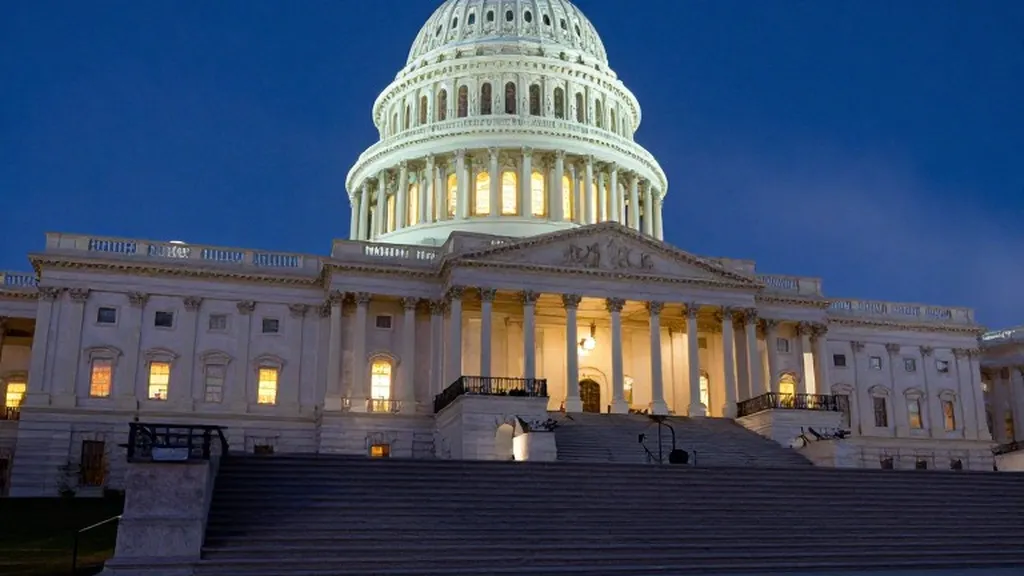
Speaker Mike Johnson warned voters in late October that a Democratic-controlled House would bring chaos every day for two years. His prediction, made in interviews with Fox News and in a USA Today op-ed, framed the midterm election as a choice between building and destroying. With the results now in, Democrats have secured a majority in the House, ending the Republican hold that Johnson had defended with his own words. The new Democratic leadership has already signaled an immediate shift in tone toward the executive branch, validating the conflict Johnson outlined as the central stakes of the race.
In his op-ed, Johnson described a Democratic House as being held hostage by the DSA, the Democratic Socialists of America. He cited strategist James Carville, who admitted he would prefer Republicans keep the House rather than see Democrats win by a narrow margin because of the socialist influence. Johnson argued that this shift was not merely a change in leadership but a fundamental dismantling of the party's centrist wing. He pointed to France as a dark harbinger, describing violent riots and looting as the inevitable result of decades of misguided policy and lax border enforcement.
Johnson’s campaign focused heavily on the contrast between Republican results and Democratic rhetoric. On Fox News, he stated that the polls were underestimating Republican enthusiasm, yet the final count showed a significant swing against his party. He claimed that Democrats wanted to abolish borders and prisons, defund the police, and put men back in women's sports. He argued that voters were savvy and paying attention to what he called the insurgent left. The Republican majority had previously claimed to have delivered historic results, including the largest tax cut in history and a secured border, which Johnson used as the primary argument for retaining control.
The Republican record under Johnson included $4.6 trillion in lower taxes and a $1.6 trillion reduction in wasteful government spending. Johnson and his allies pointed to the lowest violent crime rate in 126 years and the largest decline in prescription drug costs in 60 years. They also highlighted the creation of Trump Accounts for children and the first nationwide school choice program. These achievements were central to the message that Republicans had delivered on their promises while navigating one of the smallest House majorities in history, a point Johnson made repeatedly in his final days of campaigning.
Despite these claims of success, Johnson noted that Democrats had forced three government shutdowns, including the longest in U.S. history. He argued that Republicans still managed to pass the Working Families Tax Cuts and the One Big Beautiful Bill. The op-ed emphasized that Americans remembered being silenced by left-wing ideologues who wrecked schools and communities. Johnson believed that voters would not be discouraged by unreliable polls or pundits, but the turnout and results suggest that dissatisfaction with the president's party was the dominant factor in the swing.
New England voters played a significant role in the national shift, with several key states contributing to the Democratic gains. In Massachusetts, polls were open from 7 a.m. to 8 p.m., and the state’s incumbent Senate seat held by Edward J. Markey remained a focal point. The governor's race saw incumbent Maura Healey face a competitive field. In Rhode Island, polls also closed at 8 p.m., with Jack Reed running for re-election in the Senate and an open governor's race. The timing of these polls aligned with the broader national trend of increased Democratic engagement in traditionally mixed or blue states.
Vermont’s unique voting schedule saw polls open between 5 a.m. and 10 a.m. before closing at 7 p.m., with no Senate race on the ballot. Governor Phil Scott faced re-election in a state that often leans independent. In Maine, polls operated from 6 a.m. to 8 p.m., and incumbent Susan Collins was up for re-election in the Senate, a race that proved pivotal in the final tally. The open governor's race in Maine added another layer to the state’s political landscape. These regional details underscore the breadth of the Democratic wave, which was not limited to coastal urban centers but extended into the New England interior.
New Hampshire offered a different dynamic, with poll times varying by municipality. The state had an open Senate seat and incumbent Governor Kelly Ayotte seeking re-election. Ayotte had been a key figure in the Republican strategy to hold the Northeast, but the overall national momentum made holding these seats difficult. The variation in poll times required careful coordination from local election officials, reflecting the decentralized nature of voting in the region. The results from these states contributed to the overall narrative of a Democratic mandate for change.
The transition of power in Washington is already underway, with Democratic leaders preparing for aggressive investigations. Rep. Robert Garcia, who is poised to chair the House Oversight Committee, has described the new era as one where Democrats will fight back against what he calls the Trump crime family. This rhetoric mirrors Johnson’s warning about retribution, suggesting that the two years ahead will be marked by intense scrutiny of the executive branch. The contrast between the two parties’ visions for the next two years is now the defining feature of the political landscape.
Johnson’s final message before losing the gavel was one of confidence in the Republican record, but the results speak to a broader electorate seeking a check on the presidency. The Democratic majority in the House, combined with their gains in the Senate, creates a unified front that can push legislation and investigations with greater ease. The specific warnings Johnson made about chaos and DSA influence now serve as the baseline for the opposition’s strategy, as they move to implement the agenda he described as radical. The coming session will test whether the predicted chaos materializes or if the new leadership manages to find a path forward.