No Clear Winner in Israel
Historic Arab party turnout complicates coalition talks as Netanyahu and Eisenkot race for Knesset seats.
By Julia Wang ·
Prime Minister Benjamin Netanyahu faces a potential stalemate after Israeli voters delivered no decisive mandate in Wednesday's election. The lack of a clear winner sets the stage for weeks of complex negotiations between the incumbent and a fragmented opposition.
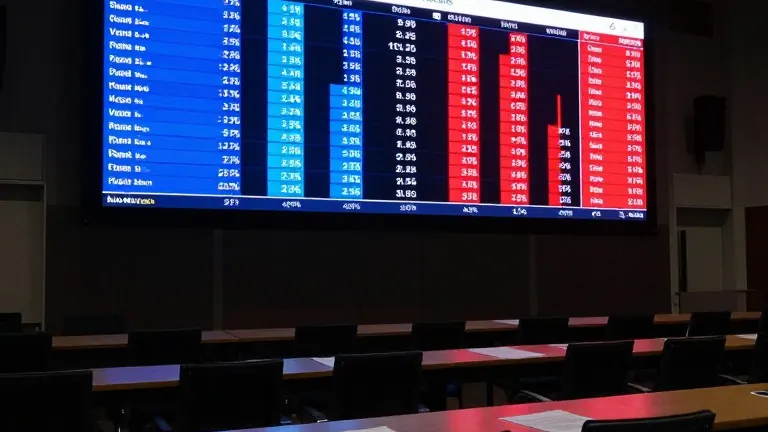
With 85 percent of ballots counted, Netanyahu's Likud party holds 20.8 percent of the vote. His chief rival, former military chief Gadi Eisenkot, leads the Yashar party with 16.1 percent. Likud's share dropped from 23.4 percent in the 2022 election. Neither side appears capable of securing the 61 seats required for a majority in the 120-seat Knesset.
Voter participation reached 78 percent, the highest level since 1999. Arab-led parties captured 14.9 percent of the vote, marking a historic performance. These parties now hold a potential path to influence government formation despite Netanyahu's public rejection of an alliance with them.
Netanyahu, seeking to remain the country's longest-serving prime minister, dismissed the possibility of partnering with Arab parties. He warned against forming a "dangerous government" that might include them. Eisenkot has indicated he is open to such a partnership under specific conditions, including Arab party recognition of Israel as a Jewish state and Hamas as an extremist group.
President Isaac Herzog holds the power to invite any leader to form a government, not just the head of the largest party. He stated on Wednesday that the goal is to avoid another round of elections. If no coalition can secure a majority, Israel could face new elections early next year. The country has held five elections between April 2019 and November 2022 due to similar deadlocks.
The election results reflect deep divisions over national identity and security policy. Far-right National Security Minister Itamar Ben-Gvir saw his support decline. Many voters expressed frustration with his rhetoric regarding Palestinian detainees and the war in Gaza. Eisenkot pledged to form a government focused on national unity, promising "a new era" of hope.
Arab party leader Mansour Abbas declared that his party is no longer on the sidelines. In Tel Aviv, voter Hanna Doukhan said she sees no possibility of forming a government without Arab participation. In Nazareth, Awni Zoabi described the results as a return to rationality, noting that the Arabic language has long been treated as a crime in public discourse.
Source: WHDH