
Northeastern students face 'derusting' gap after academic breaks
Athletes report that co-ops and study abroad programs create skill deficits that require months to reverse.
By Naomi Tesfaye ·
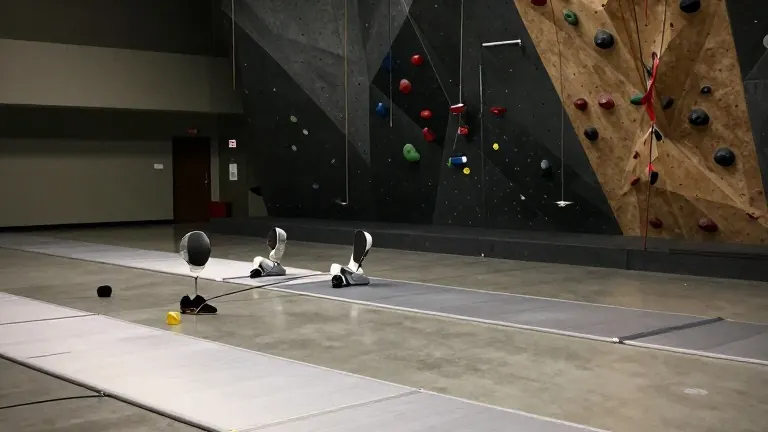
Alex Ma returned to the climbing gym after a nine-month hiatus, feeling unmoored by a lack of physical recall. The fourth-year biology major, a former member of the Northeastern Climbing Team, described the experience as following his own shadow. He noted that seeing routes he previously conquered triggered confusion about how he ever managed those moves. The phenomenon, known as derusting, affects athletes who pause their training for extended periods.
The academic calendar at Northeastern University often forces these pauses. Programs such as the co-op rotation, the N.U.in initiative, and study abroad opportunities require students to step away from their teams. Elliot Davidson, a third-year health science major and student coach for the club fencing team, experienced this gap during his Oakland Scholars Program. He prepared for nationals while grappling with missing instincts and a lack of fluidity. Davidson recalled thinking he would be overwhelmed by the competition. He went on to post his best fencing performance of his career at that event.
Ma first encountered the term derusting through video games but found it applicable to many physical hobbies. He observed that even a two-week break from consistent climbing alters the feel of subsequent sessions. Ashley Maestrado, the president of the Northeastern Club Fencing Team and a fourth-year behavioral neuroscience major, stated that approximately 80% of her team members take breaks. These pauses often result from co-op work, the N.U.in program, or fatigue from high school athletics.
Zachary Guan, secretary of the Northeastern Swim Club and a third-year major in data science and economics, noted that most swimmers quit the sport at some point. He attributed this trend to parental pressure to start young. Ma agreed that this shared history of stopping and starting is common among climbing team members. He argued that there is rarely a single moment when an athlete feels fully restored. Instead, progress appears in small, unexpected ways. These moments accumulate until it becomes clear that the athlete has been improving for a longer duration than they have been derusting.
Breaks do not always diminish an athlete's identity. Maestrado suggested that a pause can reinvigorate passion. She stated that without a break before college, she would have been turned off from fencing. Club sports offer a lower-pressure environment compared to high school leagues. Guan described club sports as less rigorous, noting that attendance is optional and the primary goal is enjoyment.
Maestrado advised athletes to focus on the process rather than the outcome. She recently left the fencing team due to competing priorities, not because of skill loss. Alex Ballard, a second-year law student and swim club coach, approaches derusting with introspection. He asks athletes to determine why they want to return. He distinguishes between wanting to recapture past performance and wanting to enjoy the sport again. Ballard said the biggest mistake is trying to be exactly where one was before.
Ballard believes athletes must close the chapter on their previous peak to grow. He consolidates competitive swimmers with recreational ones to create a mesh of training and fun. Davidson, the fencing coach, aims to make the environment enjoyable to restore love for the sport. Both coaches emphasize that the instinct to compare is natural but requires mental strength to overcome.
Ma said his return was not an overnight process. He described going through a stage of grief because climbing was a major part of his life. He noted that he has developed skills in areas that were weaknesses during his prime. The progression relies on patience and support from coaches and the community. These factors allow for advancements that may have seemed impossible at the start of the return.
The process of derusting is a standard part of the collegiate athletic experience at Northeastern. Students manage this cycle through co-ops and other academic programs. Coaches and teammates provide the structure needed to bridge the gap. The goal is not to return to a previous state but to build on a new foundation.
Maestrado’s advice centers on enjoyment. Guan values the optional nature of club sports. Ma has moved on from the climbing team. Davidson and Ballard continue to coach their respective teams. The students manage their training schedules alongside their academic and professional obligations. The cycle of pausing and returning continues for the next cohort of students.