U.S. Envoys Seek European Role in Ukraine Peace Talks After Moscow and Dublin Visits
Steve Witkoff and Jared Kushner brokered a prisoner swap and agreed on the next round of negotiations, where European representatives are expected to join the main session.
By Adrian Kovalenko ·
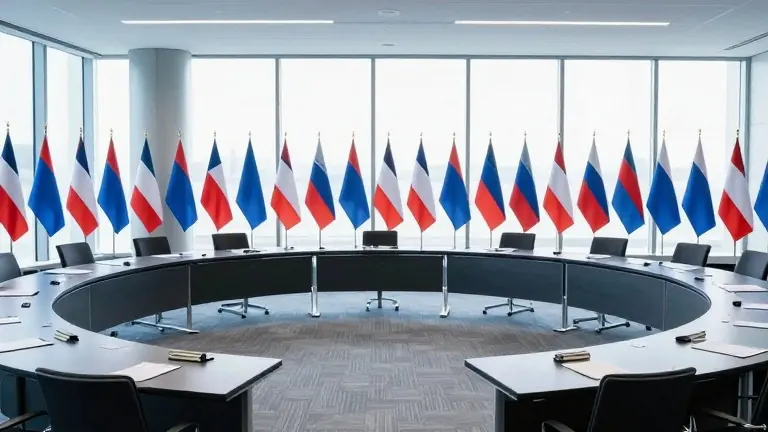
U.S. special envoys Steve Witkoff and Jared Kushner spent Thursday moving between Moscow and Dublin to advance Washington's peace efforts for Ukraine. The diplomatic sprint followed a week of stalled negotiations that required direct intervention to maintain momentum.
The team met with Russian President Vladimir Putin for approximately two hours at the Kremlin. They subsequently traveled to Ireland, where they spoke with Ukrainian President Volodymyr Zelenskyy for more than an hour. These conversations capped a week of talks that included a session in Abu Dhabi, United Arab Emirates. That meeting marked the first direct discussions between Ukrainian and Russian representatives in nine months.
The Abu Dhabi session yielded no major breakthrough beyond an agreement to swap a large number of prisoners, though the exact figure has not yet been announced. The delegations also agreed to hold another round of talks. Witkoff and Zelenskyy confirmed that Europe would join that next session, although they did not specify which countries would participate.
A central goal of the Moscow meeting was to secure Putin's approval for European representatives to be part of the main negotiations. Currently, European security advisers have only participated on the sidelines. Zelenskyy stated in Dublin that Europe would not remain separate in the future. He said, "Next meeting, Europe will be during negotiations, will be a negotiation team.. They will have a voice." The U.S. and Ukraine want Europe to appoint a single negotiator, a demand Kremlin spokesman Dmitry Peskov rejected. He argued that Europe must name a representative before joining and criticized the continent's internal disagreements.
Putin's aide, Yuri Ushakov, described the talks as "substantive, constructive, frank and useful." He reported that Putin reminded the U.S. envoys of Moscow's 2021 proposals demanding NATO roll back its military deployments in Central and Eastern Europe. Putin stated that any European troops sent to Ukraine after a ceasefire would be "absolutely unacceptable." He added that Russia would regard such a deployment as a security threat and a legitimate target, potentially resuming the war immediately.
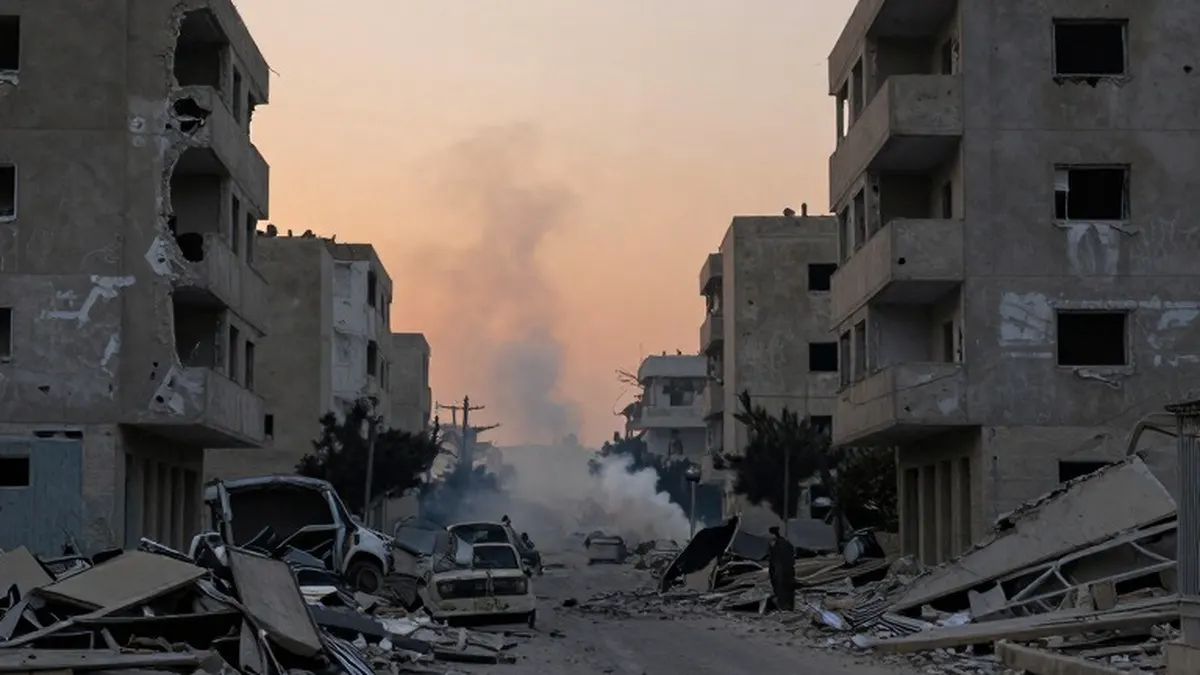
Fighting continues along the 1,200-kilometer front line as another winter approaches. Russia’s Defense Ministry said its air defenses downed 71 Ukrainian drones overnight. The ministry also claimed strikes on a drone-manufacturing plant in Kyiv and three other facilities producing missile fuel and drone components. The Ukrainian air force said Russia launched missiles and 123 drones, 73 of which were jet-powered. Hits were recorded at 17 locations.
Zelenskyy reported that Ukraine is experiencing slowdowns in the U.S. Starshield satellite internet system. He said military units recorded significant disruptions, including speed restrictions limiting Ukrainian drones to 161 kph. Zelenskyy noted that a military investigation found these restrictions were not random errors. Last month, similar limits severely disrupted operations. SpaceX CEO Elon Musk previously acknowledged that his company throttled the service in Ukraine for about a week, stating the system could not be used for offensive strikes against Russia.
A Russian serviceman was killed in St. Petersburg early Thursday when his vehicle exploded. The Investigative Committee, the country's main criminal investigation agency, confirmed the death but did not identify the victim. The Fontanka news outlet reported the victim was a colonel. Several senior Russian military officers have died in bombings that Moscow blames on Ukraine.