US Consumer Tech: New FCC Rules Target Chinese Hardware
The Federal Communications Commission is using national security waivers to restrict imports of drones, routers, and robot vacuums.
By Julia Wang ·
The Federal Communications Commission is tightening rules on foreign hardware entering the US market.
The agency has expanded its Entity List to cover consumer gadgets, not just telecom infrastructure. Starting in December 2025, the FCC banned all future foreign drones unless makers obtained a waiver. This month, the commission added bans on foreign routers, robots, and power inverters. The government cites national security risks for each category. However, officials have not released public evidence detailing specific threats from these devices. The rules apply to new imports, leaving existing units in circulation untouched.
Router manufacturers face mixed outcomes under the new guidelines. TP-Link, a major global producer, launched Wi-Fi 8 routers but cannot import them without a waiver. The company sent a letter to the FCC stating it will invest nearly $1 billion to build US factories. It plans to create hundreds of jobs in research, manufacturing, and construction over four years. In contrast, competitors Netgear and Asus received blanket waivers for all new routers. Both companies manufacture their gear in Asia but have not publicly committed to US manufacturing plans. Asus recently confirmed its exemption allows it to bring early Wi-Fi 8 units to market without a stated US production timeline.
The drone sector faces stricter scrutiny on enforcement. The FCC recently blocked applications from Jovistar, a company labeled a front for DJI. TÜV Rheinland, a subcontractor for the agency, reviewed the firm's paperwork. The commission also decertified two Chinese test labs, SLG-CPC Test Laboratory and Shenzhen STS Test Services. Officials said these labs provided false test results during the authorization process. A vote is scheduled for October 29 to ban all Chinese testing labs by 2028. This move would require reciprocal economic relationships for future lab approvals.
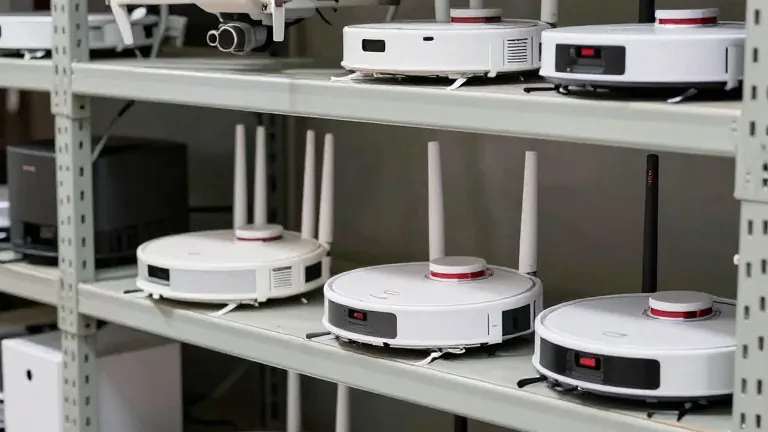
The robot ban impacts household devices more than industrial machines. FCC media relations director Katie Gorscak confirmed that the rule covers robot vacuum cleaners. The ban targets advanced robotic devices deemed a risk to national security. It does not check the security features of the products themselves. It simply restricts items built outside the United States. No major robot vacuum companies currently manufacture these units in the US. Online marketplaces like Etsy and Amazon now face pressure to verify the FCC status of listed items. Sellers can still list banned cameras if the units were imported before the ban took effect.
The agency is also looking at how devices reach consumers. The FCC is taking comments on a plan to force online platforms to validate each gadget's authorization before listing it. This would shift verification duties from manufacturers to retailers. Companies like Xtra Technology, which sells camera clones, are pausing new product launches while they sort out their status with the commission. The FCC proposed a $25,000 fine against Xtra for failing to respond to previous correspondence. The company has removed its latest model from its website and is refunding preorders.
Source: The Verge