Collins Selects 'Mogging' as 2026 Word of the Year
The term, which saw a 210% usage spike, originated in online male communities but has shifted toward ironic, playful use among younger generations.
By Julia Wang ·
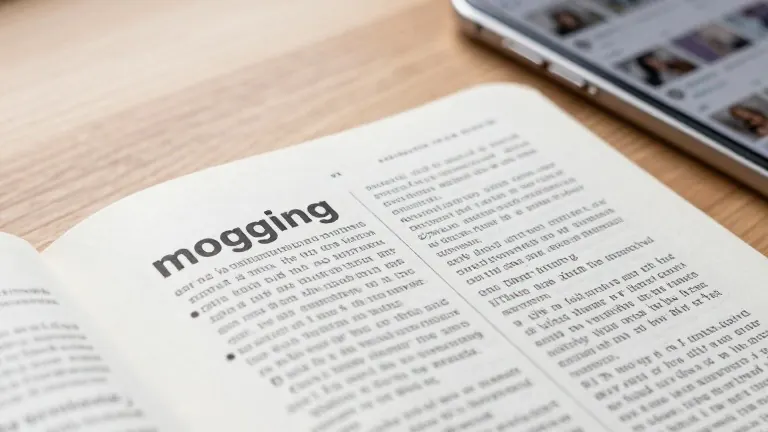
Collins Dictionary named 'mogging' its Word of the Year for 2026 on Monday. The term recorded a 210% increase in usage this year. The selection marks the 13th annual iteration of the award, which identifies language that reflects current social preoccupations.
The dictionary defines mogging as outshining or outperforming another person. It notes that the term is used primarily by Generation Z and Generation Alpha. The usage is often playful and ironic, particularly when one person upstages another. While the term applies to general performance, it is most frequently directed at physical appearance.
Alex Beecroft, managing director at Collins, described the term as an example of younger generations adopting specific language. He said they have turned the word into humorous slang. Beecroft stated that this process allows these groups to make the language their own while simultaneously 'mogging' older speakers.
The term has roots in the 'manosphere,' an online space focused on male dynamics. Tony Thorne, director of the slang and new language archive at King's College, explained that the word circulated online in the 2010s. It likely derives from the acronym AMOG, which stands for Alpha Male of Group. In its early form, the language was generated by men focused on physical dominance and sexual prowess.
Thorne noted that the term shares a linguistic lineage with 'looksmaxxing,' a TikTok trend describing efforts to maximize physical attractiveness. He observed that these trends often reduce human worth to algorithmic facial scores. One specific variant, 'frame mogging,' refers to how an individual's shoulder width, torso, and posture can make another person appear structurally inferior.
The popularity of the term accelerated during the pandemic. Thorne attributed this growth to increased screen time and constant social media exposure. By 2024, the word appeared regularly in memes, reaction posts, and livestream clips. Users also created variations such as 'lifemogging,' 'stylemogging,' and 'carmogging.'
Collins also released a list of other new and notable words for 2026. The list includes 'bixie,' a hairstyle between a bob and a pixie cut. It also features 'ghost job,' describing a position advertised with no intention of hiring. Additionally, the list defines 'Manchesterism' as a political philosophy associated with Andy Burnham that combines regional devolution with social progress.
Source: Metro