Judge sets strict alert rules for arch build
Federal courts require one-hour notice for planning decisions and 30-minute alerts for site activity before the memorial can break ground.
By Julia Wang ·
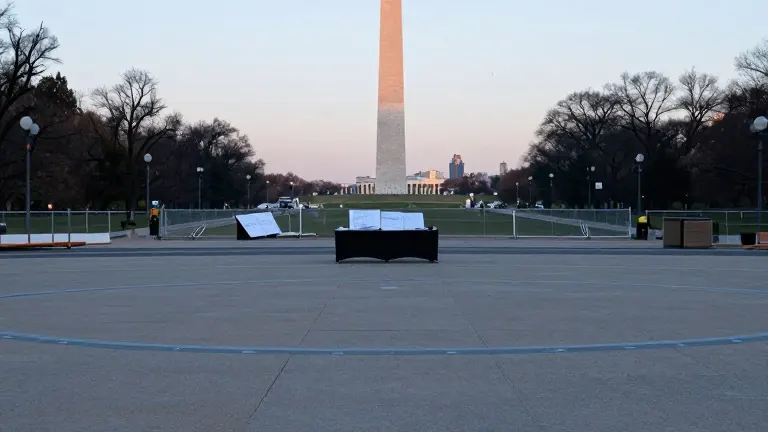
U.S. District Judge Tanya Chutkan mandated that the Trump administration provide notice within 30 minutes of any activity related to the construction of the memorial arch on Memorial Circle. The order, issued Monday, places a one-hour notification requirement on decisions made by the National Capital Planning Commission, the National Park Service, and the Department of the Interior. These timelines complicate the government’s plan to begin work immediately after the Planning Commission approves the project on Nov. 5.
The administration notified the court on Oct. 28 of its intent to proceed. A government filing stated that the National Park Service could publish the required notice as early as Nov. 5, allowing construction to commence that same day. The proposal describes a structure more than 12 stories high, featuring a winged bronze statue of Lady Liberty holding a torch with an eternal flame. The design includes an observation deck, an occupied roof, two mezzanines, and interior spaces for offices, staff lounges, and a fire command center. Officials also proposed rerouting traffic on nearby roads and noted the arch would serve a national security function.
Chutkan, who was nominated by President Barack Obama, issued the directive while overseeing a lawsuit filed by three Vietnam veterans and an architectural historian. The District of Columbia and Virginia filed a separate suit opposing the construction and seeking a temporary restraining order. The judge consolidated the cases and set a joint briefing schedule. Her decision on a preliminary injunction is expected to hinge on the actions taken during the upcoming Planning Commission meeting.
The judge warned that any construction or demolition in preparation for the arch before the National Park Service issues final agency action would violate previous court orders. Defendants must provide 14 days’ notice for such preparatory work. Chutkan specified that failing to meet these notification deadlines would constitute a breach of the court’s existing directives.
During a hearing on Oct. 30, Chutkan questioned the urgency of the project. She asked how the government would be harmed if she issued a preliminary injunction, aside from the executive’s desire to bedazzle the city. Administration lawyer Robert Stander argued that the arch is an absolutely a high priority project. He stated that judicial intervention would impede the work of the government.
The arch is part of a series of projects undertaken by President Donald Trump to remake Washington. These initiatives include renovating a public golf course and threatening to demolish the John F. Kennedy Center for the Performing Arts. Charles A. Birnbaum, founding president and CEO of the Cultural Landscape Foundation, commented on the legal developments. He said the order sends a message that the administration is learning they cannot ignore the judiciary in the way they have ignored the public.
The government submitted a 106-page plan for the arch on Friday. The document outlines the massive scale of the structure and the associated traffic changes in the area. The case now moves toward a decision on the preliminary injunction as the courts prepare for the Nov. 5 approval window.