
Mecca Pact: Islamabad Summit Tests Saudi, Pakistan, Turkey Alliance
Foreign ministers are set to convene in Islamabad to address Houthi attacks and operationalize a defensive agreement modeled on NATO.
By Adrian Kovalenko ·
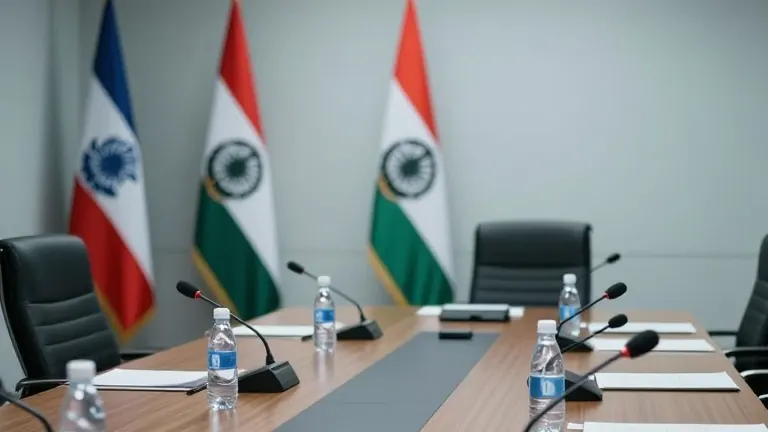
The Saudi Houthi conflict has put the new tripartite defense pact between Saudi Arabia, Pakistan, and Turkey to its first real test. The three nations plan to hold a summit in Islamabad on November 27 and 28 to discuss how to apply their mutual defense agreement amid rising instability in the Middle East.
Reuters reported that the foreign ministers of Saudi Arabia and Turkey are expected to attend the two-day session. The report relies on two Pakistani sources, while Arab News in Saudi Arabia has not yet confirmed the schedule. The alliance was formalized in Mecca in August, just as tensions escalated regarding the war between Iran, Israel, and the United States.
The timing is critical because the Houthi attacks on Saudi Arabia have intensified. This renewed fighting challenges the alliance's core premise: an attack on one member is an attack on all. This structure mirrors the collective defense commitment of NATO. The agreement was signed before the Houthis launched their latest sustained campaign against the Kingdom, leaving the members to define their response to current hostilities.
Pakistan has already faced a diplomatic squeeze in this conflict. In September, Pakistani Foreign Ministry spokesperson Sajjad Haider Khan told Reuters that a military response under the agreement was not currently under discussion. He made these comments while the country balanced its mediation efforts between the United States and Iran with its obligations to Saudi Arabia.
Turkey has maintained a similar cautious stance. In October, Reuters noted that Ankara was providing defensive and technical assistance to Riyadh rather than joining offensive operations. Turkish officials have sought to distinguish between helping defend the kingdom and participating in direct combat against the Houthis in Yemen.
Despite these hurdles, the alliance is moving toward institutionalization. In early October, the three countries agreed to begin implementing collective defense commitments. This includes the potential deployment of agreed military capabilities to Saudi Arabia. The text of the agreement was published later that month as Turkey moved toward parliamentary ratification.
The pact extends beyond mutual defense. It includes provisions for defense industry cooperation, joint military exercises, and intelligence sharing. The agreement also establishes a permanent secretariat in Saudi Arabia and leaves the door open for other nations to join the bloc.
The alliance also serves as a diplomatic tool. On October 26, senior officials from the three countries met in Tehran to discuss reducing regional tensions. This gives Riyadh another mechanism to pressure Iran regarding the Houthi attacks. The coalition combines Pakistan's nuclear weapons, Turkey's large military and growing defense industry, and Saudi Arabia's economic resources for long-term modernization.
For Israel, the bloc represents a shift in regional security architecture. It signals that Middle Eastern powers are taking more initiative in shaping defense frameworks rather than relying exclusively on Washington. The Mecca agreement contrasts with the Abraham Accords, which focused on normalization and economic integration, though both models address shared interests such as countering the Houthi threat.