New England Voters Decide Senate and Governor Races as Markets Watch Debt
Investors are closely monitoring New England's competitive races for signals on AI spending, trade policy, and the federal debt ceiling.
By Naomi Tesfaye ·

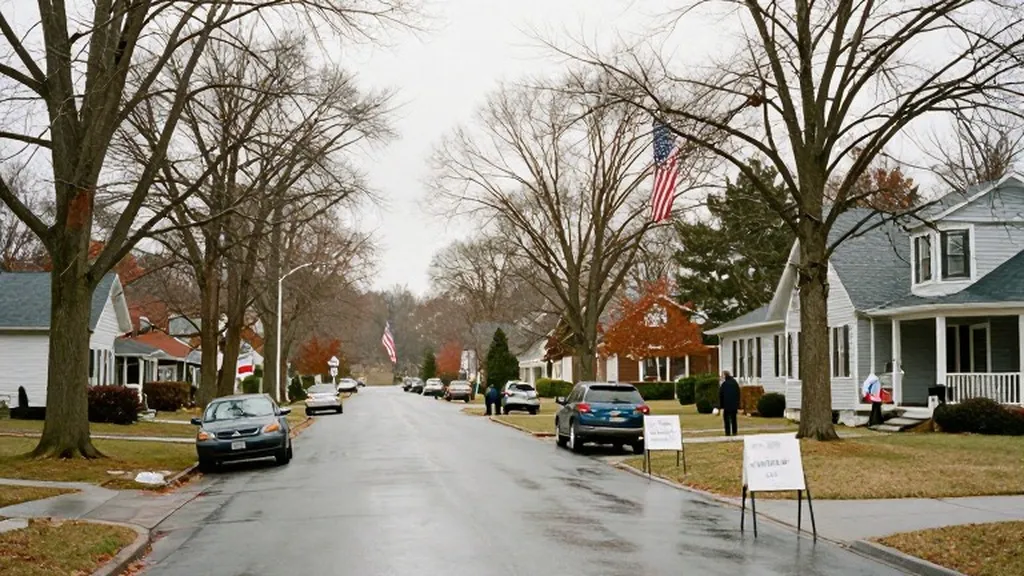
New Englanders head to the polls on Election Day to decide five Senate seats and four governorships, a set of races that Wall Street and global markets are watching for clues on fiscal policy and trade. According to Reuters, the outcome of these midterms could add to investor concerns regarding artificial intelligence spending and negotiations over the federal debt ceiling. The region is pivotal in the broader fight for control of Congress, with Republicans seeking to hold their majority while Democrats aim for a net gain of four Senate seats.
In Massachusetts, polls open at 7 a.m. and close at 8 p.m. for a contest that includes incumbent Senator Edward J. Markey and incumbent Governor Maura Healey. The state is a key battleground for Democrats, who need to hold their seats to challenge Republican control of the chamber. Similarly, Rhode Island voters will cast ballots between 7 a.m. and 8 p.m. in a Senate race featuring incumbent Jack Reed. The governor's race in Rhode Island is an open seat following the departure of Daniel McKee, adding to the unpredictability of the state's political landscape.
Maine presents a particularly tight race for the Senate, with polls open from 6 a.m. to 8 p.m. Incumbent Republican Senator Susan Collins faces Democratic former state Senate President Troy Jackson. The Associated Press notes that economic strain and tariffs have made the state competitive, a factor that markets are monitoring closely. If Collins loses, it would be a significant shift in a state that typically leans Republican in presidential elections but is increasingly competitive at the federal level.
New Hampshire voters face a different schedule, as poll hours vary by municipality, though polls must be open by 11 a.m. and close no earlier than 7 p.m. The state has an open Senate seat following the retirement of Jeanne Shaheen, with Democratic Representative Chris Pappas facing former Republican Senator John E. Sununu. The governor's race features incumbent Kelly Ayotte, a Republican in a state where Democrats have made inroads in recent years. The outcome here could signal the strength of Republican governance in New England.
Vermont rounds out the New England slate with polls opening between 5 a.m. and 10 a.m. and closing at 7 p.m. There is no Senate race in the state, but the governor's race features incumbent Phil Scott, a Republican defending his seat. Scott is one of two Republicans defending governorships in states that Kamala Harris won in 2024, the other being Ayotte in New Hampshire. These races are critical for Democrats, who need a net gain of two governorships to achieve a nationwide majority of governorships for the first time since 2010.
The mood among voters is described by the Associated Press as a referendum on President Donald Trump's second term, with many citizens struggling with high prices and an unpopular war with Iran. AP-NORC polling indicates that 35 percent of U.S. adults approve of Trump's job performance, while about seven in ten say the country is heading in the wrong direction. These economic concerns are central to the New England races, where voters are weighing the cost of living against the stability of the current administration.
Money in politics is playing a significant role, with the 2026 elections likely to be the most expensive in history. Republican committees have outraised and outspent Democratic committees, aided by Trump-affiliated groups and Elon Musk. However, at the candidate level, Democrats have outraised their opponents. An analysis of AdImpact data by the AP shows that 88.1 percent of Republican general election TV ad spending went to states and districts Trump won in 2024, suggesting a strategy to shore up his base while Democrats focus on competitive districts like those in New England.
Administrative challenges are also on the radar, with a federal judge temporarily barring the Trump administration from carrying out a plan to prevent noncitizen voting. Critics argue this risks disenfranchising eligible voters, a concern that is particularly relevant in states with diverse voting populations. The U.S. Postal Service has added hours and staff to ensure mail ballots are counted on time, a logistical effort that is crucial for states like Vermont, which relies heavily on mail-in voting.
The stakes for New England extend beyond local politics. If Democrats win even one chamber of Congress, investigations and possible impeachment proceedings become likely, which could have ripple effects on market confidence. House Democratic Leader Hakeem Jeffries has outlined a 100-day agenda focused on the cost of living and oversight, a plan that resonates with voters concerned about inflation. A strong Democratic night in New England would boost potential 2028 candidates and could complicate the path for Vice President JD Vance.
As polls close across the region, from 7 p.m. in Vermont to 8 p.m. in Massachusetts and Rhode Island, the focus turns to turnout. RNC Chairman Joe Gruters stated that everything depends on turnout, emphasizing the importance of mobilizing Republican voters. In contrast, DCCC Chair Rep. Suzan DelBene said the American people are angry and want change. The final results will determine the balance of power in Washington and provide a clear signal to investors about the future of AI spending and debt negotiations.
The election results will also impact the six states using new congressional maps after mid-decade redistricting, including California, Florida, and Texas. While New England is not part of this specific redistricting change, the overall shift in district boundaries affects the national narrative. Voters in New England are deciding not just who will represent them, but the direction of the country's economic policy for the next two years, a decision that Wall Street is watching with keen interest.