Campaign Spending Records and New England's High-Stakes Midterm Choices
As polls open across New England, the most expensive election in history sees a stark divide between committee-level Republican fundraising and Democratic candidate-level advantages.
By Julia Wang ·

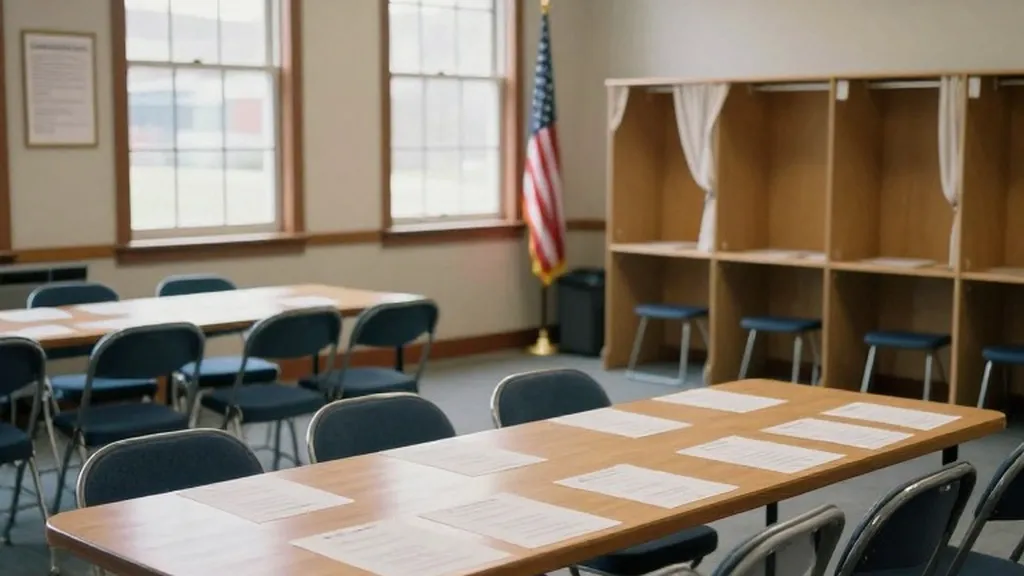
In the states of New England, voters are casting ballots in a midterm election that the Associated Press describes as a referendum on President Donald Trump's second term. The day is marked by high stakes for the control of Congress, with all 435 House seats and 35 Senate seats up for grabs. In these northeastern states, the focus is not only on the national narrative but on the specific contests that could shift the balance of power in the House and Senate.
The financial scale of this election is unprecedented, with the 2026 races likely to be the most expensive in history. According to an AP analysis of AdImpact data, Republican committees outraised and outspent their Democratic counterparts. This advantage was bolstered by Trump-affiliated groups and the influence of Elon Musk. However, the picture is more nuanced at the individual level, where Democrats actually outraised their Republican opponents. This divergence highlights a structural difference in how the two parties are deploying their resources in this cycle.
A striking statistic from the AP analysis reveals that 88.1 percent of Republican general election TV ad spending went to states and districts that Trump won in 2024. This targeted approach resulted in more than 850 million dollars being spent in areas where the president won by ten points or more. This strategy suggests a defensive posture, aiming to secure the Republican base in regions that already favored the president in the previous presidential election.
In New England, the Senate races are particularly critical. In Massachusetts, incumbent Edward J. Markey is defending his seat with polls open from 7 a.m. to 8 p.m. The state also holds a governor's race featuring incumbent Maura Healey. In Rhode Island, incumbent Jack Reed is seeking re-election in the Senate, while the governor's race is an open seat following the primary loss of Daniel McKee. Polls in Rhode Island are also open from 7 a.m. to 8 p.m.
New Hampshire presents a different dynamic with an open Senate seat following the retirement of Jeanne Shaheen. The race pits Democratic Representative Chris Pappas against former Republican Senator John E. Sununu. Polls in New Hampshire vary by municipality, opening by 11 a.m. and closing no earlier than 7 p.m. The state's governor's race features incumbent Kelly Ayotte, a Republican, defending her office in a state that voted for Harris in 2024 by a margin of 2.8 percent.
Vermont does not have a Senate race this year, but it does have a governor's contest featuring incumbent Phil Scott. Scott, a Republican, is running in a state where polls open between 5 a.m. and 10 a.m. and close at 7 p.m. The AP notes that Republicans are defending two governorships in states that Harris won in 2024, including New Hampshire and Vermont. These races are seen as key indicators of the party's strength in blue-leaning territories.
Maine stands out as a significant battleground, with polls open from 6 a.m. to 8 p.m. The state has an open Senate seat, though the race involves incumbent Susan Collins, a Republican, facing Democratic former state Senate President Troy Jackson. The AP cites economic strain and tariffs as factors making the state competitive. Collins is one of the few Republican senators in a state that voted for Harris in 2024 by a margin of 6.9 percent. Maine also has an open governor's seat, adding another layer of complexity to the state's political landscape.
The mood among voters is characterized by a mix of anxiety and engagement. The AP reports that more than 57 million people had already voted as of Monday, surpassing early vote totals from four years ago in many closely watched states. In New England, where mail-in voting is prevalent in states like Vermont and Maine, the final tally will depend on the volume of in-person votes cast today and the subsequent processing of mail ballots.
Republican leadership emphasizes the importance of turnout, with RNC Chairman Joe Gruters stating that everything depends on turning out voters. In contrast, DCCC Chair Representative Suzan DelBene argues that the American people are angry and want change. These narratives are playing out in polling places across New England, where voters are weighing their choices on issues ranging from the cost of living to border security.
The election also has implications for the 2028 cycle, with a strong Democratic performance potentially boosting candidates like Gavin Newsom and Pete Buttigieg. Conversely, a Republican hold on the Senate could complicate the path for Vice President JD Vance. In New England, the results of these races will provide early signals on the national trend, as the region's political history often reflects broader shifts in voter sentiment.
As polls close in the evening, the focus shifts to the counting process. The U.S. Postal Service has added hours and staff to ensure mail ballots are counted on time, a crucial factor in states like Vermont and Maine where mail voting is common. The final results will determine the composition of Congress for the final two years of the current presidential term, with significant consequences for investigations, oversight, and the legislative agenda.
Voters in New England are making their decisions in a context where the financial war between the parties has reached historic levels. The disparity between committee-level spending and candidate-level fundraising offers a glimpse into the evolving strategies of both parties. As the day draws to a close, the region awaits the outcome of a contest that is as much about money and strategy as it is about the will of the electorate.