Midterm Governor Races: Key Battlegrounds in Georgia, Ohio, and New England
Voters in ten states, including New Hampshire and Vermont, are deciding control of statehouses and Congress in a contest focused on economic pressure and congressional majorities.
By Julia Wang ·
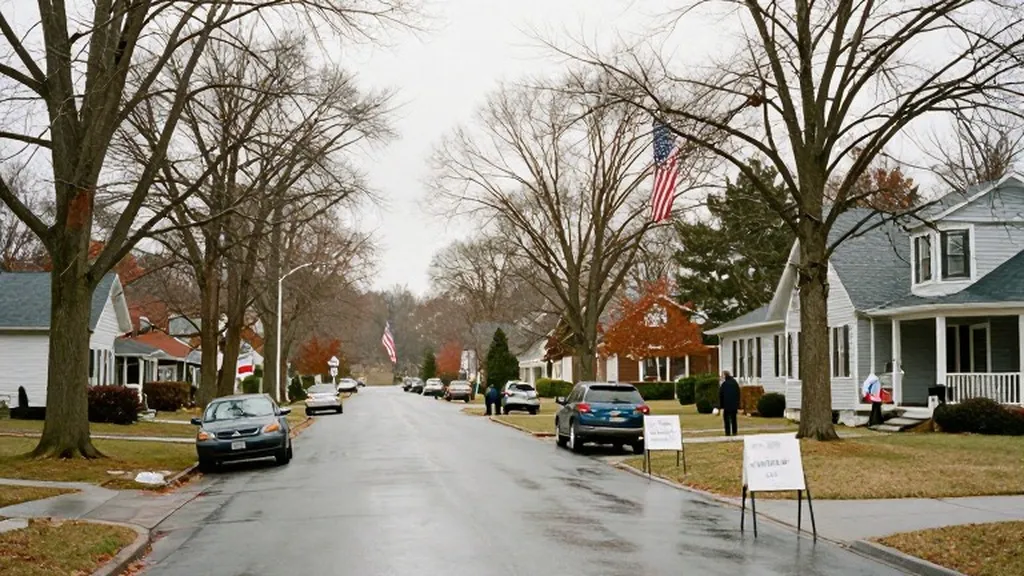
It is Election Day in the United States, with polls open across the country to decide the composition of Congress and thirty-six governorships. This midterm election occurs halfway through President Donald Trump's second term, determining who controls the legislative branch for his final two years. More than 57 million people had already voted as of Monday, surpassing early voting totals from four years ago in many closely watched states. The Associated Press describes the election as a referendum on the president's performance, with voters struggling with high prices and angry over an unpopular war with Iran.
Republicans currently hold 26 governor's offices, while Democrats hold 24. Of the eighteen offices on the ballot for each party, Republicans are defending their positions in states like New Hampshire and Vermont, while Democrats are holding onto power in states like Georgia and Ohio. Democrats need a net gain of two governorships to achieve a nationwide majority, a status Republicans have held since 2010. In the Senate, Republicans hold 53 seats and Democrats hold 45, with Democrats needing a net gain of four seats to take control. In the House, Democrats need a net gain of three districts to secure a majority, while Republicans can afford to lose no more than two seats.
In Georgia, Republican health care executive Rick Jackson is challenging Democratic former Atlanta Mayor Keisha Lance Bottoms to succeed incumbent Brian Kemp. The state is a key battleground where Republicans hope to maintain their hold on the governor's office. In Ohio, Republican Vivek Ramaswamy is running against Democrat Amy Acton. Ramaswamy's campaign recently faced backlash over an advertisement featuring Acton's estranged mother. The Associated Press notes that Ohio is one of several states where the race for the governorship is competitive, with new congressional maps also in play.
New Hampshire and Vermont represent critical Republican holds in states that voted for Kamala Harris in 2024. In New Hampshire, incumbent Republican Governor Kelly Ayotte is seeking reelection. Polls in the state vary by municipality, with voting hours opening by 11 a.m. and closing no earlier than 7 p.m. In Vermont, incumbent Republican Governor Phil Scott is facing challengers in a state where polls open between 5 a.m. and 10 a.m. and close at 7 p.m. The Associated Press identifies these races as part of a broader effort by Republicans to defend their majority in statehouses.
In Nevada, Republican Governor Joe Lombardo is running against Democratic Attorney General Aaron Ford. The state polls are open from 7 a.m. to 7 p.m., with much of the voting likely to occur by mail. In Arizona, Democrats are defending the governorship held by Katie Hobbs in a state that President Trump won in 2024. The Associated Press lists Arizona among the governor races where Democrats are holding onto power despite the previous presidential election results. In Kansas, the race is part of a broader fight for Senate control, as the state has become central to the national narrative despite being reliably Republican.
Michigan and Wisconsin are also key governor races. In Michigan, Democrats are defending the governorship in a state that Trump won in 2024, while in Wisconsin, the race is open following the decision by incumbent Tony Evers not to run. Polls in Michigan are open from 7 a.m. to 8 p.m., while in Wisconsin, they are open from 7 a.m. to 8 p.m. The Associated Press notes that these states are part of the group where Democrats are defending their positions. In Pennsylvania, Democrat Josh Shapiro is seeking reelection in a state that voted for Harris in 2024, with polls open from 7 a.m. to 8 p.m.
The Associated Press and NORC polling indicates that 35% of U.S. adults approve of Trump's job performance, while 25% approve of his handling of the economy. About seven in ten voters say the country is heading in the wrong direction, with most blaming the president for high prices. This economic strain is a central theme in the governor races, with candidates focusing on cost of living issues. The Associated Press reports that the 2026 elections are likely to be the most expensive in history, with Republican committees outspending their Democratic counterparts.
In the Senate, the race in New Hampshire is open following the retirement of Jeanne Shaheen. Democratic Representative Chris Pappas is facing former Republican Senator John E. Sununu for the seat. The state voted for Harris by a margin of 2.8 points in 2024, making it a competitive environment for both parties. In Vermont, there is no Senate race on the ballot this year. The focus remains on the governor's office and the broader national trends in economic policy and congressional control.
Voters in these states are casting ballots in a landscape shaped by redistricting and new congressional maps. Six states, including Ohio, are using new maps for congressional elections. The Associated Press notes that Republicans were bracing to lose the House and fighting to hold the Senate, with one or two seats potentially tipping either chamber. The mood is described as one of caution and strategic planning, with both parties focusing on turnout and economic messaging.
The Associated Press reports that Trump held dozens of rallies, ending Sunday in Salina, Kansas, where he urged voters to pretend he is on the ballot. His schedule included stops in Mississippi, South Carolina, and Texas. Many Republican candidates kept their distance during these events. The election administration has also been a focus, with a federal judge temporarily barring the Trump administration from carrying out a plan to prevent noncitizen voting. This legal move has raised concerns about disenfranchising eligible voters and infringing on state authority over elections.