Richmond Club Keeps 1927 Model A Fords Cruising Through Century-Long Service
Members of the Old Dominion Model A Ford Club in Glen Allen maintain the vintage vehicles to preserve the history of Ford's first major post-Model T production.
By Adrian Kovalenko ·
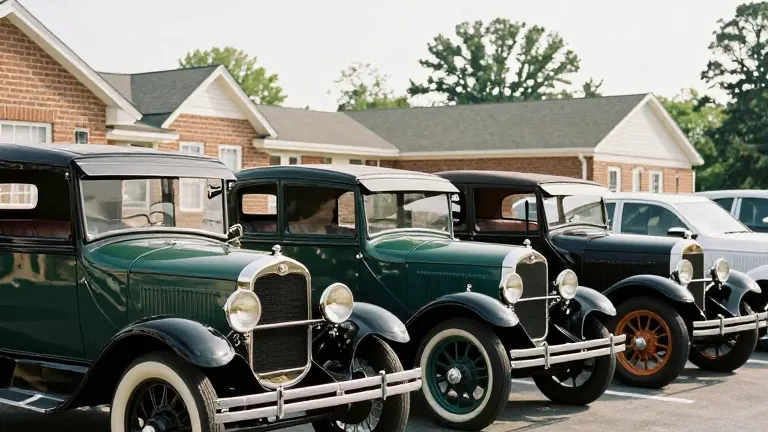
The Old Dominion Model A Ford Club of Greater Richmond met in Glen Allen, Virginia, on Sunday to maintain a fleet of vehicles built nearly 100 years ago. Club officers work to keep the engines of the Model A running, ensuring the cars remain drivable long after their original production window closed.
Henry Ford designed the Model A as a direct successor to the Model T. Henry Nelson, the club secretary, cited a December 1927 newspaper advertisement that announced the arrival of the new vehicle. Ford produced approximately 5 million of these cars between 1927 and 1931, though only a small portion remain on the road today.
Dennis Stone, the club president, described the gathering as a source of joy for members. He noted the visible excitement on the faces of attendees. "Oh, it's great, you know, to see the smile on the faces coming here today. Some lady was hanging out the window just waving," Stone said.
The vehicles attract attention from the public during drives. Stew Wolfe, the club vice president, explained that the cars generate high levels of enthusiasm from passersby. "We get a lot of smiles per mile. People get excited. And then if we blow the ahooga horn, they are ecstatic, especially kids," Wolfe said.
Stone characterized the cars as bare bones driving. He noted that most models lacked radios, air conditioning, or power brakes. They were the cheapest cars on the market at the time of their release.
Despite the lack of modern amenities, the Model A introduced several mechanical innovations. Nelson listed standard features that distinguished the vehicle from earlier models. "It had brakes on all four wheels. It had shock absorbers. It had a way to check your oil without having to get under the car. Had a dipstick. Also, it had gauges inside. You could tell how fast you were going," Nelson said. The cars also featured an electric start system instead of a manual crank.
Source: WHPM-LD