Trump links federal aid to state election outcomes in rally warnings
The president told crowds in Georgia, North Carolina, and Kansas that he may withhold funds or policy benefits if Democrats win key state races in November.
By Adrian Kovalenko ·
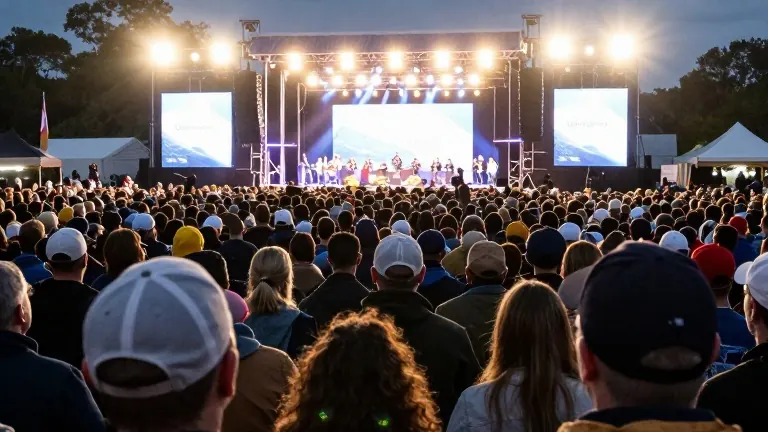
$1 billion in cash settlements for Camp Lejeune veterans has already been paid out, but President Donald Trump told a crowd in Greenville, North Carolina, earlier this month that the remaining claims would be settled quickly only if Republicans control both chambers of Congress after the midterms. The president said, “So, if we don’t win, there’s no money. If we do win, you’re getting it.”
This statement is part of a recurring theme at recent rallies where Trump has suggested his administration will treat states differently based on their election results. In Perry, Georgia, last week, the president said Democratic Senator Jon Ossoff could call him for help, but he acted out a scenario where he would respond, “I don’t give a damn what he wants.” Trump contrasted this with a call from Republican Senate candidate Mike Collins, saying Collins can call whenever he wants.
The White House framed the strategy as necessary to maintain a Republican majority in Congress. Spokesman Davis Ingle said Trump is committed to keeping a Republican majority so he can continue his agenda on taxes, prescription drugs, and immigration. Ingle added that Democrats have no clear agenda to improve lives. However, critics argue these remarks inject politics into processes like disaster aid and veterans' benefits.
In North Carolina, the comments have become a focal point in the Senate race. Former Governor Roy Cooper, the Democratic candidate, called the Camp Lejeune threats “insulting and frustrating.” His opponent, Michael Whatley, said in a local television interview that caring for affected veterans is a priority, though he did not directly denounce the president's comments. Jill Steen Dilgard, whose father served at the base, told the Associated Press that conditioning care on election results was “totally unacceptable” and made her “physically sick.”
In Kansas, Trump linked a temporary waiver for year-round sales of E15 ethanol-blended gas to the success of Republican Senator Roger Marshall. He told a crowd in Park City, “With Roger Marshall in the Senate, we will make year-round E15 permanent. But if Adam Hamilton is in, I’m not doing it.” Hamilton’s campaign spokesman Tyson Brody noted that Marshall had been in Congress for 10 years without passing the measure, saying Hamilton would work with anyone to deliver on it.
In Ohio, Trump used personal chemistry as a reason for potential withholding of aid. In Vandalia, he said he did not know Democratic gubernatorial candidate Amy Acton and that she was “never gonna call me.” He added, “I’m not gonna help her probably.” Acton’s campaign spokesperson Addie Bullock said the candidate is committed to working with anyone to make life better for working Ohioans.
Trump has also announced specific state benefits during these visits, including semiconductor investments in North Carolina and a submarine repair center. In Montana, he mentioned investing billions in mortgages through Fannie Mae and Freddie Mac. In Alaska, he pardoned truckers who pleaded guilty to federal environmental violations. These announcements serve to underscore the tangible benefits an all-Republican Washington might deliver, according to the administration's messaging.
The president acknowledged at the Georgia rally that his comments might be seen as inappropriate. “People don’t realize what a big difference it makes,” Trump said. He explained that having people he likes call him, rather than people he “can’t stand,” makes a big difference in how he operates. Ossoff responded to the rally comments by calling it a “losing strategy” for the president to insult voters while reminding them he made everything more expensive.
Source: ABC News
More Business · Business Watchdog · Report a business · Got a Story?