Owl Hill estate receives state grant to restore Revolutionary War home
Suffolk County will use $500,000 in state funds to repair the property, the only Long Island recipient in the latest infrastructure grant round.
By Adrian Kovalenko ·
Suffolk County has secured a $500,000 state grant to begin restoring Owl Hill, a historic estate in Fort Salonga that was recently listed on the National Register of Historic Places. The funding comes from the New York State County Infrastructure Grant Program and aims to prepare the property for heritage tourism. Governor Kathy Hochul announced the award, which is the only one granted to a Long Island site in this cycle. The state issued 48 such grants across New York.
The property holds a direct link to the American Revolutionary War. In 1903, patent attorney and preservationist Edmund Wetmore purchased the land on a hill near the site of the 1781 Battle of Fort Slongo. Wetmore, who served as president of the Sons of the Revolution, New York, from 1904 to 1914, intended his home to serve as a permanent memorial to the battle. The American victory there was planned by Colonel Benjamin Tallmadge, who also directed intelligence for the Culper Spy Ring. General George Washington praised the strategic planning of the engagement.
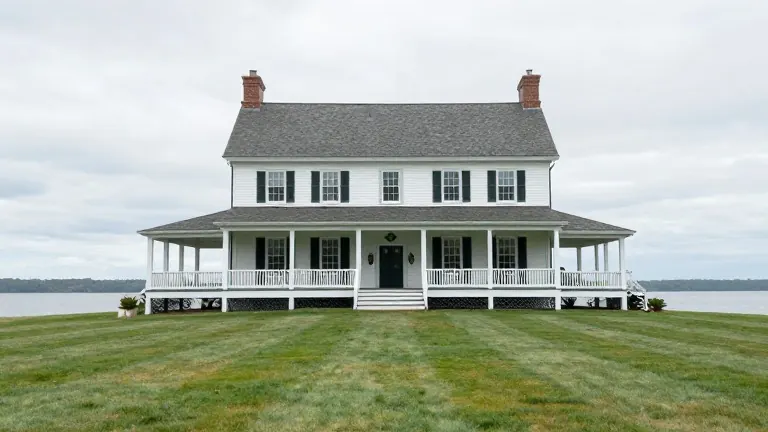
Wetmore commissioned architect Henry Killam Murphy to design the house in 1907. Murphy, who had recently established his own firm, incorporated Colonial revival elements into the design. These features include a hip roof with a balustraded platform, mirroring the restored Fraunces Tavern in New York City. The building also includes compass rose designs in the glass and a layout that utilizes natural breezes for cooling. The home was nearly complete when Fraunces Tavern was dedicated in December 1907.
The New York State Review Board nominated Owl Hill to the state and national registers in June 2026. The nomination was authored by historian Corey Geske and edited by the New York State Historic Preservation Office. Official recognition from the National Register followed in August 2026. Suffolk County purchased the estate in 2024 and now operates it as Owl Hill County Park.
Wetmore’s connection to the era extended beyond the local site. As a great-grandson of Rev. Samuel Kirkland, an Army chaplain who helped secure an alliance with the Oneida Nation, Wetmore carried a personal stake in Revolutionary history. He later led the campaign for the world’s first monument to unknown soldiers, which was dedicated by President William Howard Taft in April 1911. Wetmore also inspired the creation of the Knox Trophy in 1910, the oldest continuously presented award at West Point.
For decades, the specific origins of the home and its architect were obscured. Wetmore and Murphy’s names fell out of common association with the property until 2017. At that time, Geske located Murphy’s original drawings at Yale University and identified Wetmore as the client. The restoration grant is intended to preserve these architectural and historical details for future visitors.
The estate remains a rare intact example of Murphy’s early solo work. Before designing buildings in Asia and the Northeast, Murphy created Owl Hill as one of his first independent commissions. The site offers views of Long Island Sound, a connection Murphy valued due to his own maritime interests and family roots in Branford, Connecticut.